

writer BERT SPINKS photographer PEN TAYLER
The Tamar River is beautiful: I put the stress in there because there is a contrary view. I admit that at Launceston, where it’s most often seen, the river isn’t at its best. That city is ideally built where two rivers, the South Esk and North Esk, meet the Tamar; but a combination of urban problems has led to a few aesthetic and ecological issues at that meeting place. It’s not as beautiful as it ought to be.
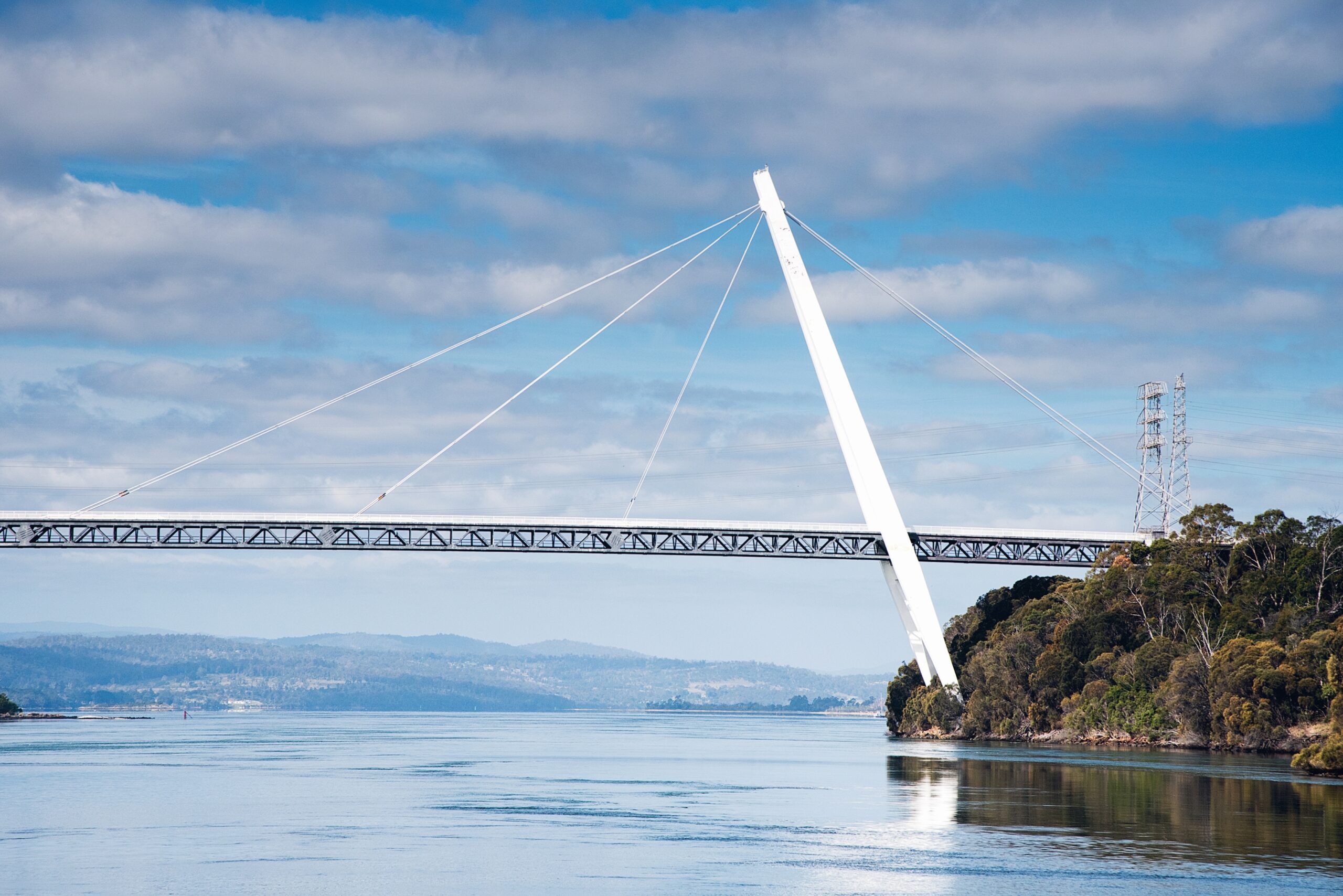
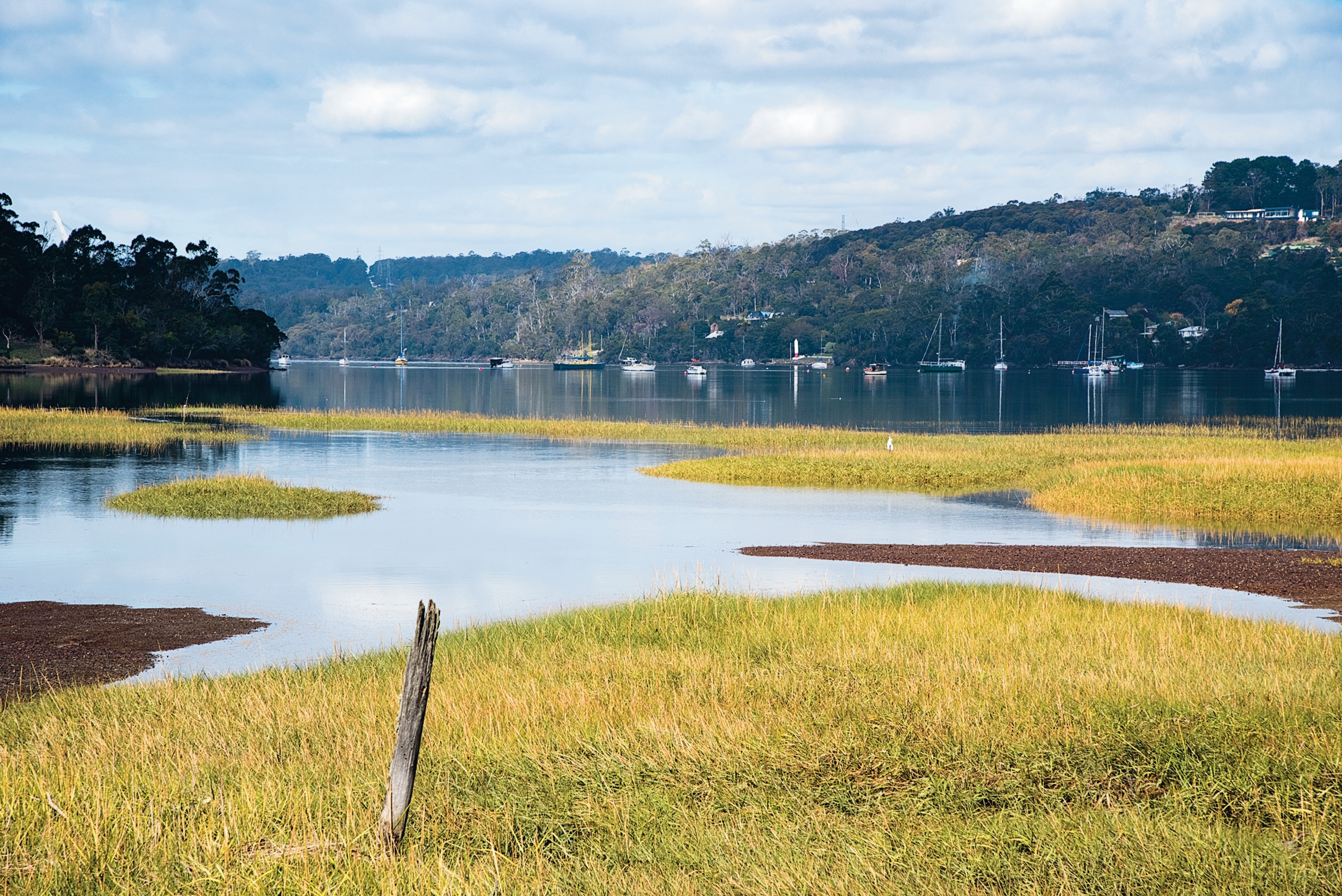
You don’t have to follow the river far, however, to see its elegance.
Current maps show two names for the Tamar River, the other being kanamaluka, a name given in the contemporary Tasmanian Aboriginal language of palawa kani. (To clarify, this language eschews the use of capital letters.) Once again we know that the first Tasmanians saw this river at its cleanest and most diverse. The rivers’ meeting would have been a special place, and the fecundity of the whole valley must have made this an attractive neighbourhood, for hunting, for harvesting, for the collection of bird eggs, for the creation of artwork, for cultural gatherings.
It still a place of fecundity. As glaciers melted off the northern edges of the central plateau, they receded through the chute of this valley, grinding up earth and turning it into fresh soil. So there is good farming country up the Tamar. For many years, this was apple country. Orderly orchards were arranged along the backroads, and plump apples were plucked and shipped elsewhere from this valley. Now, though, another crop has gained more popularity – the wine grape. The banks of the Tamar are lined with vineyards, all of them of high quality, and several considered world-class.
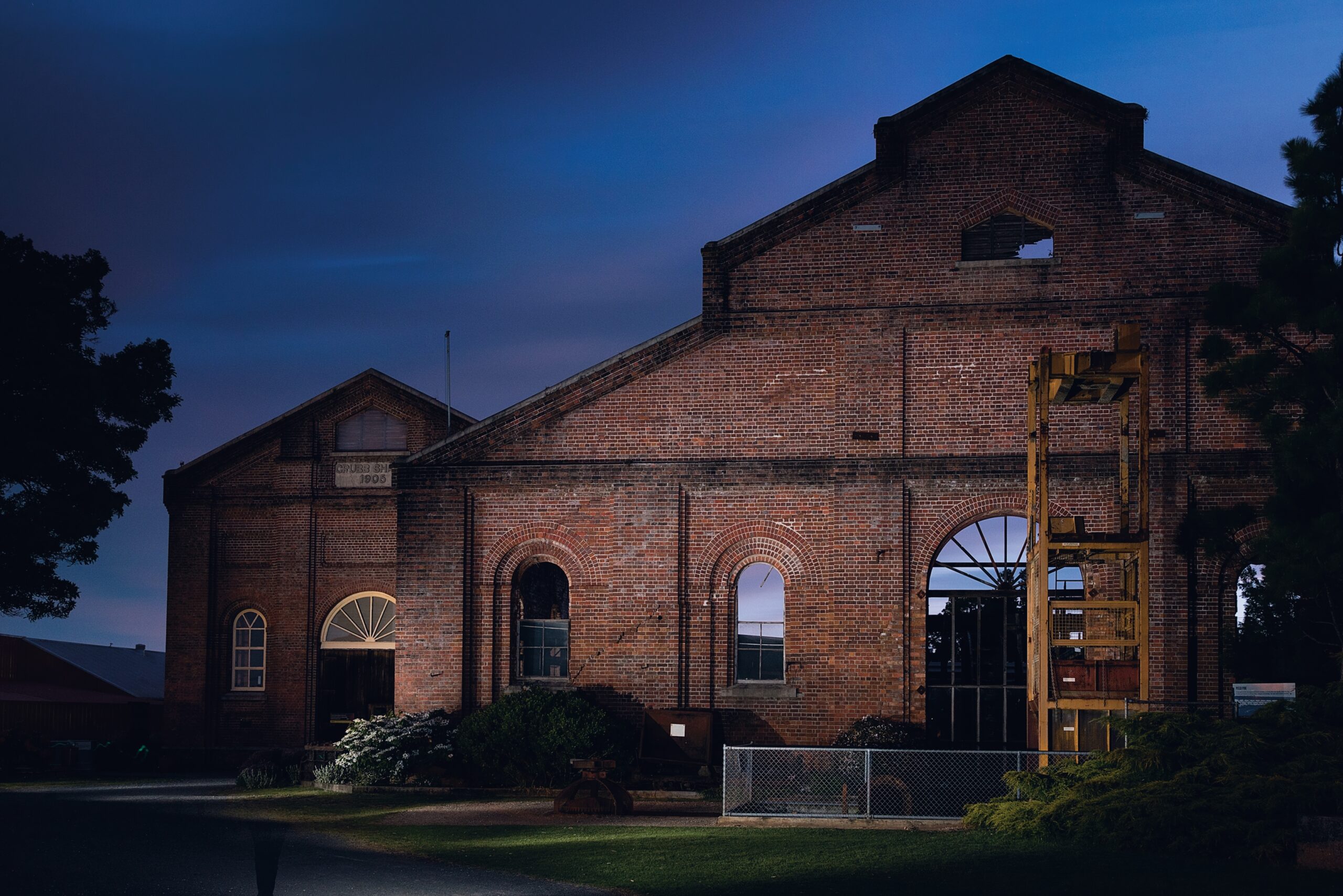
Beaconsfield is fortuitously placed for wine tours. It’s a fair-sized town, directly between Launceston and Bass Strait, just to the west of the river. There are historical buildings and the mine museum, a good place to pause between vineyards. Or, if you’re not on such a bibulous vacation, you might also have a break here on your way to the fabulous beaches of Narawntapu National Park.
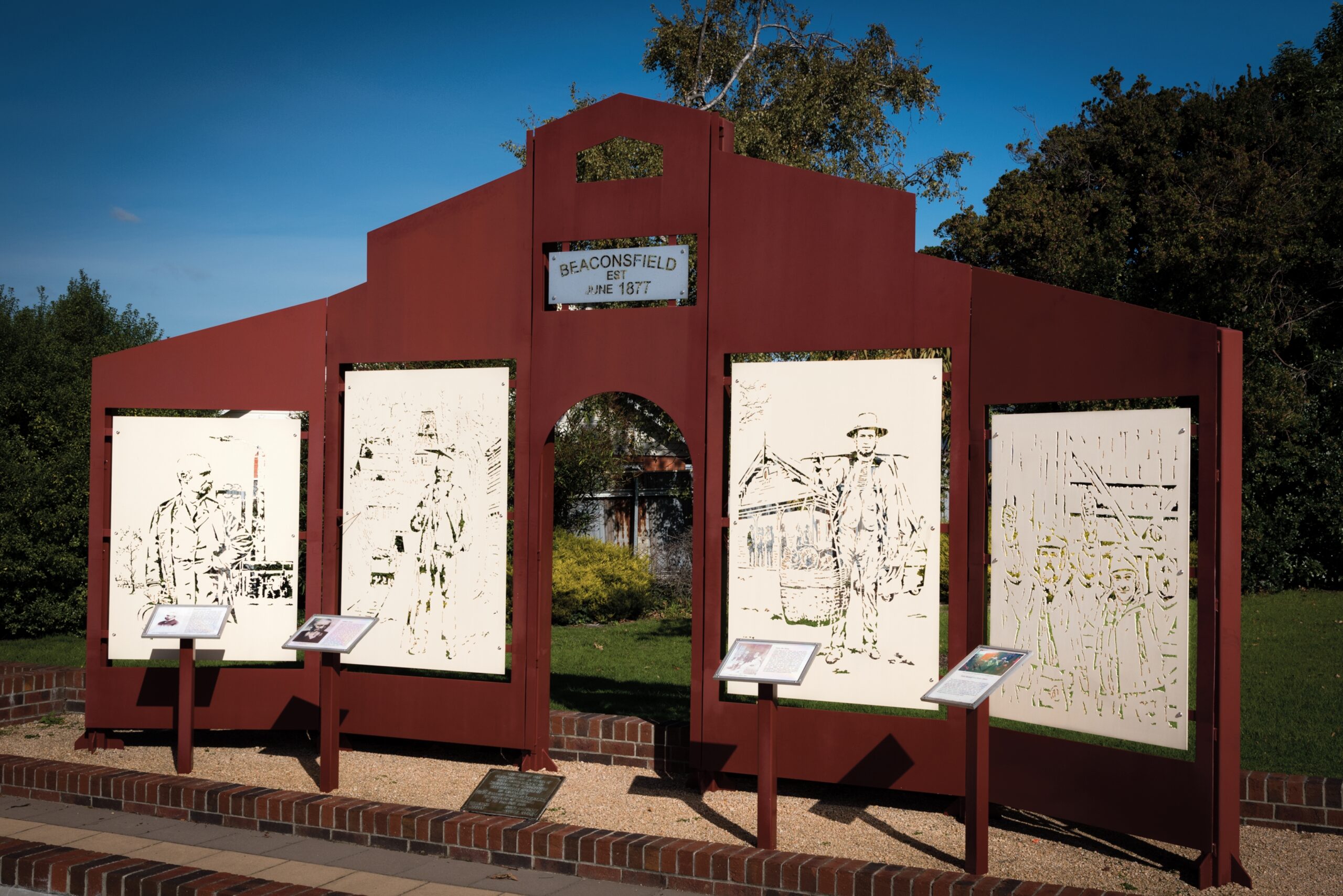
Beaconsfield was one of the later Tasmanian townships to be declared. Whereas other small agricultural settlements had sprung up closer to the river’s edge, this remained a general tangle of scrub. Two brothers, William and David Dally, came to this rarely visited spot in the 1870s in search of gold. Scrounging around in the bottom of a stream that someone once dubbed Brandy Creek, the Dally brothers found their colour. There was gold here, in the low hills. It quickly turned into one of the most lucrative gold mines going.
They say it became a town of more than a hundred pubs. When there are that many pubs around, it’s hard to trust that the auditor isn’t seeing double, but I have no doubt that it was a rambunctious place. It certainly attracted those inveterate itinerant miners from parts of China, who seemed to come tramping into mining camps however far flung the destination; their descendants still live in Beaconsfield.
The mine’s zenith as 1900, but it shut down in 1914, at the outbreak of World War I and didn’t reopen for quite some time. Technological improvements revived the mine eight decades later, and deep drilling went on until a shaft collapsed in 2006, caused by earth tremors. One man, Larry Knight, died in the rockfall. Two others survived a fortnight, extremely confined in a small pocket of a shaft. It became international news, and the world watched and cheered on Anzac Day as they walked out into the dim mizzle of pre-dawn to greet a media scrum and a crowd of grateful locals.
Their lives would never be the same. The Foo Fighters wrote a song for them and played a live show in Beaconsfield.
After the extraordinary events of April 2006, Beaconsfield has literally taken its place on the map’. That’s how the Beaconsfield Heritage and Mine Museum phrases it: possibly a misuse of the word ‘literally’, but it is true that whenever I mention Beaconsfield these days, people have heard of it. They recall where they were on that cold damp morning when two survivors, Brant Webb and Todd Russell, emerged above ground, pumping fists.
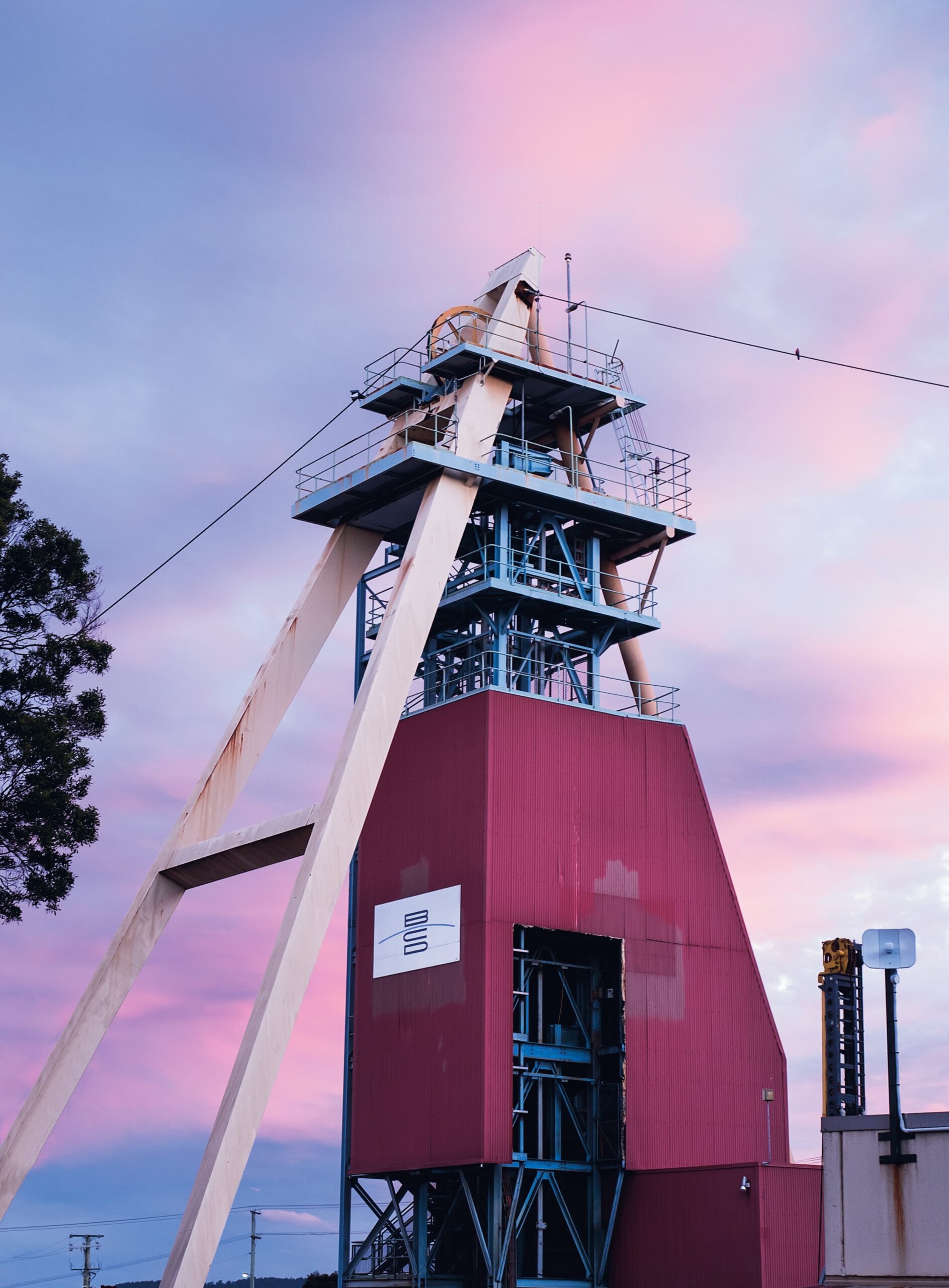
Today the mine site has been converted into a museum, one that adequately offers an insight into the history of those whose lives centred on the mine, up to and including the miners in 2006. It is still amazing to me that the bush-bashing of two brothers could yield so much change to a region, and shape a community for a century. But that is the story of the Dally brothers.
I will tell you another story, of two other brothers, who came here much later. Imagine two small thin boys, each with a fine mullet of hair, scampering through the shrubbery a couple of kilometres outside of Beaconsfield, much like a couple of feral animals or rabid carnivorous marsupials. They are chasing a ball or a dog or each other, rummaging through the undergrowth for nothing in particular, catching tadpoles and climbing trees.
That was my brother and me. We spent the vast majority of the first years of our lives outside here, amongst the blackwoods and black peppermints; we had five useless acres, and whatever game you can imagine – anything that could possibly be played upon that wonky, weedy field – we played it. Most of our activities ended in tears, bloodied knees, or jack jumper bites, but none of the injuries lasted more than a short while. Meanwhile, the upside of this outdoors childhood has been permanent.
Perhaps I am being a little presumptuous, assuming that a visitor to Tasmania might be interested in this little piece of autobiography. There is no particular destination I’d urge you to see. I won’t direct you to the primary school, and you aren’t likely to go past my childhood home, which is on a small gravel backroad that leads nowhere. There is no plaque where I had my first kiss or where I found a green plastic Styrakosaurus, but perhaps as you drive into Beaconsfield, you will find the place comes somewhat more alive for reading these anecdotes.
This is where it all began for me. I will never lose what I received from Beaconsfield – a basic understanding of the characteristics of life; how it could and should be. So I still stride around with a wide gait – even in a crowded city I’ll stroll about as if I’m on five empty acres. Most days I wind up with dirty hands, and every week I find a new scrape or scratch somewhere on my person. I’m still a boy, exploring the corners the landscape, finding a game to play with every item I come across.
I once went to Florence, Italy, with my father and brother. We visited the Uffizi Gallery. I think we were peering at a Botticelli when I remembered where I grew up, in a small village up the Tamar River, fringed with grey-green eucalypts, rosellas appealing from the branches. I was suddenly stunned by our presence in one of the greatest art galleries in the world. There’s a great deal of distance between Botticelli and Beaconsfield, and we had traversed it.
I hope that as you drive into Beaconsfield, you find yourself making similar reflections. Here is a useful question to ask: how in the world did I get here? Perhaps you’ve come from very far, or perhaps just across Bass Strait – which was once a low series of plains, part of the Tasmanian peninsula. Either way, to get you here, a unique sequence of events has unravelled. It’s a long history that’s brought you into this landscape, and the land goes deep beneath your feet.