
As we approach the 10-year anniversary of the failed first attempt, it is worth celebrating the eventual but inaugural successful circumnavigation of Tasmania by jet skis. ~ David Gray, 2026
It’s official – two local daredevils have become the first people to circumnavigate Tasmania on jet skis, completing the journey in nine gruelling days while raising funds for the Leukemia Foundation. ~ SCTV News
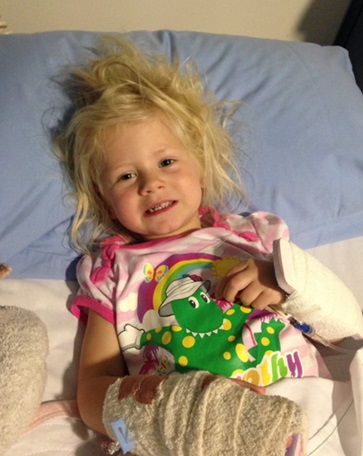
The first jet ski circumnavigation of Tasmania was about courage, coastline and a little girl named Pippa.
My first ride on a jet ski was in 1989, off a Queensland island. The moment I pulled the throttle, I was hooked. It felt like a motorbike on water – wild, responsive, and intoxicating. Almost immediately, a ridiculous idea popped into my head: Could you ride one all the way around Tasmania? I started looking at maps to figure best spots to camp and refuel along the way.
At the time, it was nothing more than a daydream. Life had other plans — work, family, and a long line of boats that quietly continued to feed my love of water and adventure.
That love began much earlier, in Malaysia where I lived as a lad with my parents and sister. My first “boat” was a shaped slab of wood. We spent hours leaping into low waves, laughing until our faces hurt. We later upgraded to an inflatable — no motor, just oars — and explored rivers on the Malaysian east coast.
Those river trips felt like another world. Malays in dugout canoes rowed past. Small communities with thatched huts lined the banks. Monkeys clambered coconut trees, sometimes tethered by farmers who sent them scrambling upward to knock the fruit loose.
Back in Tasmania to start high school, I stayed with my grandparents in Rosevears. I spent endless hours after school rowing my grandad’s homemade boat across the Tamar to Native Point. When a massive Holyman trading ship rounded the bend near Gravelly Beach, it would blast its horn as I scrambled out of the way – and I’d shriek with laughter and a mix of adrenaline while surfing its towering wake.
The boats changed over the years – a Canadian canoe, Moth dinghy, raft for the Franklin, Windrush catamaran, tinny, Zodiac, half-cabin, bowrider runabout – but the pull of water never faded.
Our daughters grew up with wind in their hair and salt on their skin. But as teenagers do, they eventually found better things to do than ride around with dad. That’s when jet skis came roaring back into my life.
The idea takes shape
I joined JetskiTas and discovered a community of riders who loved endurance, exploration, and innovation (as well as respect for other water users and beach goers – we go long distance on purpose). In the early days, long-distance riding meant wrestling jerry cans during lunch stops — balancing on a rocking ski while refuelling. Eventually, smarter solutions emerged: large, plumbed-in auxiliary tanks, GPS units, VHF radios, heated grips. With the right gear and enough layers, we could ride year-round.
While exploring Tasmania’s coastline, I met Dale Quinn, a local electrician who was very practical and had done lots of jet ski rides and was key to setting up improved systems. Over many rides together, the idea kept resurfacing: a full lap of Tasmania. By jet ski. No one had done it.
We tested our limits with long trips, including a crossing to Flinders Island. Confidence grew. Autumn seemed the safest window. We decided the adventure should mean something more than personal achievement.
That’s when Pippa entered the story.
A work colleague was selling homemade biscuits to raise funds for his three-year-old niece, recently diagnosed with leukemia. We met Pippa’s family and asked if they would allow us to use the name Ride for Pippa, raising money for the Leukemia Foundation. It was a solid yes. The foundation was also grateful to have us on board and other created promotional gear and set up links for donations.
Seeing what brave young Pippa and her family were enduring put everything into perspective.
2016: The first attempt
With guidance from good jet skiing mate Carolyn Pillans, we prepared a risk assessment: what could go wrong, the likelihood of it happening and what we would do about it. We submitted it to Marine and Safety Tasmania, and they were rapt! We also applied for and gained permits with strict conditions to ride at night just in case of delays.
Our first attempt ended almost as soon as it began. On Day 2 after leaving Catamaran, Dale’s ski took on water. A split hull. No repair possible. Just like that, it was over!
Disappointment hit hard, but no one died or was injured — and we hoped we’d be back.
2018: The second attempt
With Dale Quinn unavailable, Carolyn suggested John Beswick, a practical, experienced fun guy up for adventure. John didn’t hesitate. Our wives, Jen and Christine, became our road crew. Fuel in the south-west was arranged with a fishing boat rendezvous in Port Davey.
John had an older Sea-Doo jet ski, I had a Yamaha (think Holden vs Ford). On a whim, we contacted Sea-Doo Australia to ask for support as we figured it would be good publicity for a brand to achieve a major first. They said yes. Reg Turner from Maynes Marine phoned us with that awesome news.
Suddenly, we had a demo GTX 170 and a brand-new GTX 300 still in the box. With minimal notice, we stripped, rebuilt, plumbed tanks, fitted radios, fuelled up, and got ready to depart Hobart the following day.
Day 1: Hobart to Triabunna, 170km
We launched at Domain ramp before sunrise, did a quick SCTV interview, hugged our families, and at first light, rode straight into the unknown. Carolyn joined us for an hour through Storm Bay, then waved goodbye as she turned back.
We were on our own. Had we bitten off more than we could chew?
The goal was to circumnavigate the mainland of Tasmania – no short cuts. Tasman Island rose dramatically from the sea. Cape Pillar’s cliffs were sheer and unforgiving — no place for mechanical failure. I took John through one cave that he had not seen before but we were on a mission so pushed on, stopping only for fish and chips at Eaglehawk Neck where Jen and Christine had arrived by road. Then we battled headwinds into Triabunna.
A dolphin rocketed across my bow and nearly knocked me off my ski, then vanished.
We arrived at the ramp soaked, grinning, and exhausted. It felt like a good start. That night, the first of many, the women washed our wetsuits, packed energy snacks and lunches, and re-filled our camel packs.
Day 2: Triabunna to St Helens, 194km
A glassy sunrise meant a fast start. We preferred dawn starts in case of any delays later each day. Seals and birdlife were prolific at Ile Des Phoques Nature Reserve –with no humans living there, the wildlife loved the solitude. We made Wineglass Bay for lunch, having had the pleasure this morning of dolphins skimming alongside and underneath us.
We rode respectfully through tourist hotspots, then opened the throttle along empty coastlines. Let’s face it – skis are not built to go slow.
The new Sea-Doos were a game changer – stable, huge storage area and a larger flat deck with rear seat removed for the additional fuel tanks that were strapped on and plumbed in.
In the afternoon, the wind returned. We called into the Bicheno Gulch for fuel (no jerry cans for us), then tucked in behind a flying Shark Cat that was moving like smoke across water. We crossed the St Helens barway and rolled into town in the late afternoon to waiting cold drinks and hot showers.
Days 3: St Helens to Weymouth, 184
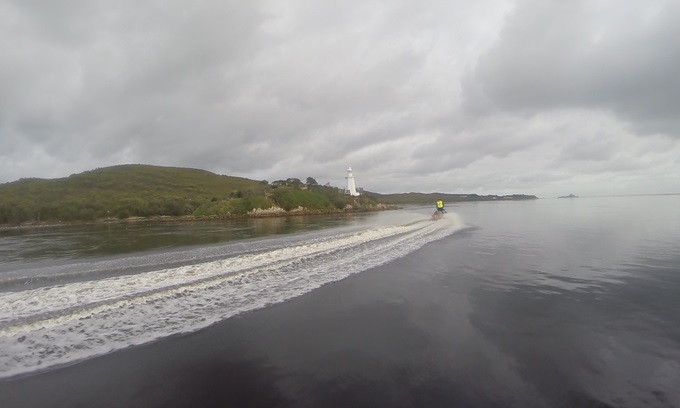
Another awesome sunrise awaited so fast riding was enjoyed across the bay. Past Eddystone Lighthouse and wind farms then around the top corner to the clear waters and white sand of Waterhouse Island for a break. Then blasted across waves adjacent to Barnbougle Golf Course and were met by a few locals at Weymouth. Accommodation had been ok to this point but John & Christine’s house took luxury to the next level.
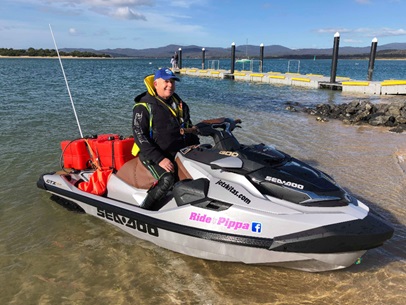
Day 4: Weymouth to Port Sorell via Beauty Point, 91km
This was the shortest day but the wildest weather. Head winds of 40 knots meant troughs of six metres to crest. John saw a bull seal in one of the waves – as if we didn’t need to be reminded that we had to hang on tight. Falling off would not be fatal, but it would have been very challenging to reboard.
The ocean was delivering a brutal lesson in who was in charge. Progress was slow and punishing and our fuel consumption was dreadful. We wondered what the west coast would be like, but the difficult days were a constant reminder that young Pippa was doing it much tougher than us – and for much longer.
Day 5: Port Sorell to Smithton
Calm conditions allowed great progress along the scenic north-west coast. The women met us on spectacular Boat Harbour Beach for lunch, then it was past Rocky Cape, Port Latta and The Nut and more dolphins before we arrived at Smithton.
Day 6: Smithton to Bluff Hill Point, 104km
The ride through the Robbins Island channel was at full speed as the outgoing tide meant we were in frightfully shallow water. When we got through and stopped to catch our breath, we could see waves breaking over the large swells on the west coast. We had to be on our game. We rode rough seas between the Dough Boys then past Cape Grim, and I reflected on the dreadful events that forced so many first nations persons over the cliff. Unbelievable!
The west coast was raw, remote, and relentless. Past the civilised farm land of Marrawah, we were guided by the lighthouse at Bluff Hill Point. The women flashed the car’s headlights to help identify the tiny entry to the small, sandy bay. We felt relieved that we had made a good start on the west coast. Every safe landing felt like a victory.
Day 7: Bluff Hill Point to Strahan, 176km
A very early start, the support crew watching us leave from the nearby lighthouse. Due to the huge swells and unforgiving waves crashing onto the rugged coastline, we stayed about 1km offshore, giving us an easy ride to Strahan, although we had to keep a watch out for each other as we regularly lost sight of each other either side of the enormous swells.
I would have liked to get closer to renowned Conical Rocks on the southern side of the Pieman Heads, but the seas close to shore were just far too aggressive.
Traversing Ocean Beach meant we were nearing Hells Gates and again the lighthouse guided us to the entry and into the calm waters of Macquarie Harbour.
Reg Turner joined us in Strahan to ride the final two days as it was the longest and most remote areas and we figured an extra set of eyes and hands would be sensible.
Day 8: Strahan to Bathurst Harbour, 186km
This was the most spectacular day of the trip. Heading south past Hells Gates was easy, and we cruised into Hibbs Pyramid for our first snack. We had scoured Google Earth to view the whole coastline in preparation, but the sight of this rocky formation still stunned us. It’s just offshore so had plenty of protection, seals, birds, clear water and a sandy beach. The dolphins on the west coast were the largest we had ever seen.
The coastline was very impressive – a backdrop of mountains and forests and a rugged but beautiful coastline.
With daylight was running out, we zoomed through the Narrows and, with the sun setting behind us, entered a large bay and Clayton’s Corner. With high tide we tied up on the mossy bank next to the jetty as darkness fell. It was only a few metres to the old shack that we had permission to use. The Claytons had lived here years before. She was the sister of another local legend, Deni King.
Reg made a fire and we had a hot meal, but sleep didn’t come easily because we were thinking of the a massive day ahead.
Day 9: Bathurst Harbour to Hobart, 232km
We would have liked to spend the day exploring Bathurst Harbour, Old River and Davey River up to the famous cliffs, but we could not afford an extra day.
On arriving at our skis, the tide was a long way out so we had to unload one ski, push it over the mud to the water then tie ropes onto it and tow the other skis out one by one; then reload the first ski. That all took a while and was exhausting.
Out of the Narrows and past Breaksea Island, we headed for South West Cape and did our daily log-in with Tas Maritime Radio. It was comforting to be able to communicate with them morning and night.
The seas were large, light rain was falling, and we entered several bays but as it was Day 9 without a break, we had been late departing, and we didn’t have time for sightseeing.
We zoomed over the large swells past the challenging entry of New River Lagoon, taking in the sights of the enormous vertical cliffs before turning the final corner towards Storm Bay.
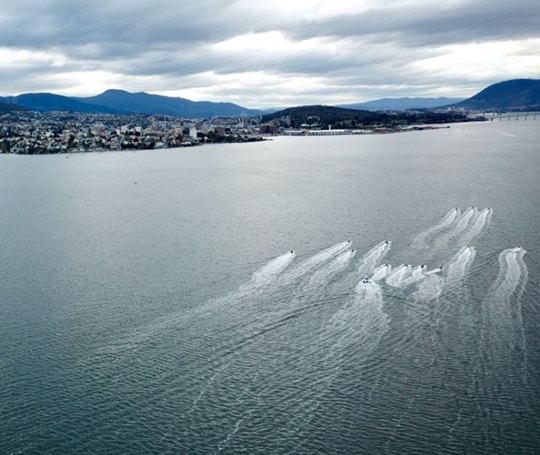
And then, to our surprise and delight, we were met by a flotilla of jet skis and a couple of boats arranged by Carolyn. One of the boat skippers, Matt Nutting, had thoughtfully collected Jen and Christine so they could witness the final bit of the journey with us. Renowned photographer and jet ski rider Ian Macleod took drone footage of us riding in formation through the D’Entrecasteaux channel and the Derwent River.
The realisation that we were nearly back at the starting ramp was a overwhelming for both John and me. The failed first attempt, the gruelling trip, Pippa still fighting – emotions hit hard. But we were about to get this done …
After nine days, more 1,500 kilometres, and countless challenges, we returned to Hobart as the afternoon came to a close. STCV were at Domain ramp to record the occasion along with supporters and friends. People had donated more than $15,000 to the Leukemia Foundation to help families like Pippa’s and to undertake more research in a bid to overcome this insidious disease.
There were many people to thank which we did as adventures like this take a lot of planning and a range of helpful people sorting logistics. I contacted Pippa’s family to let them know we had completed the mission. They were really pleased for us and grateful for the exposure.
Just over a year later, an adventurer from South Australia circumnavigated Tasmania on a jet ski in 13 days, becoming the first person to do it solo. Others have done it since, but they have all cut through the canal at Dunalley, missing the decent chunk of the south-east corner, meaning to date a true circumnavigation has only been done by two Tasmanians and a South Australian.
It would be theoretically possible to reduce the time from our nine days to probably five or six if a support boat was able to refuel the skis each day and the skiers slept on board the boat, but with no small sense of wonder and accomplishment, John and I were first and no one can take that away from us.