“This is no local park. It is a curated global choir of trees, voices from every temperate shore brought together to teach and delight. It’s a library in living wood, a seed bank that whispers to the future, a pact between yesterday’s planters and tomorrow’s dreamers.”
FROM THE PATHS OF THE TASMANIAN ARBORETUM
writer and photographer KATY ROGERS
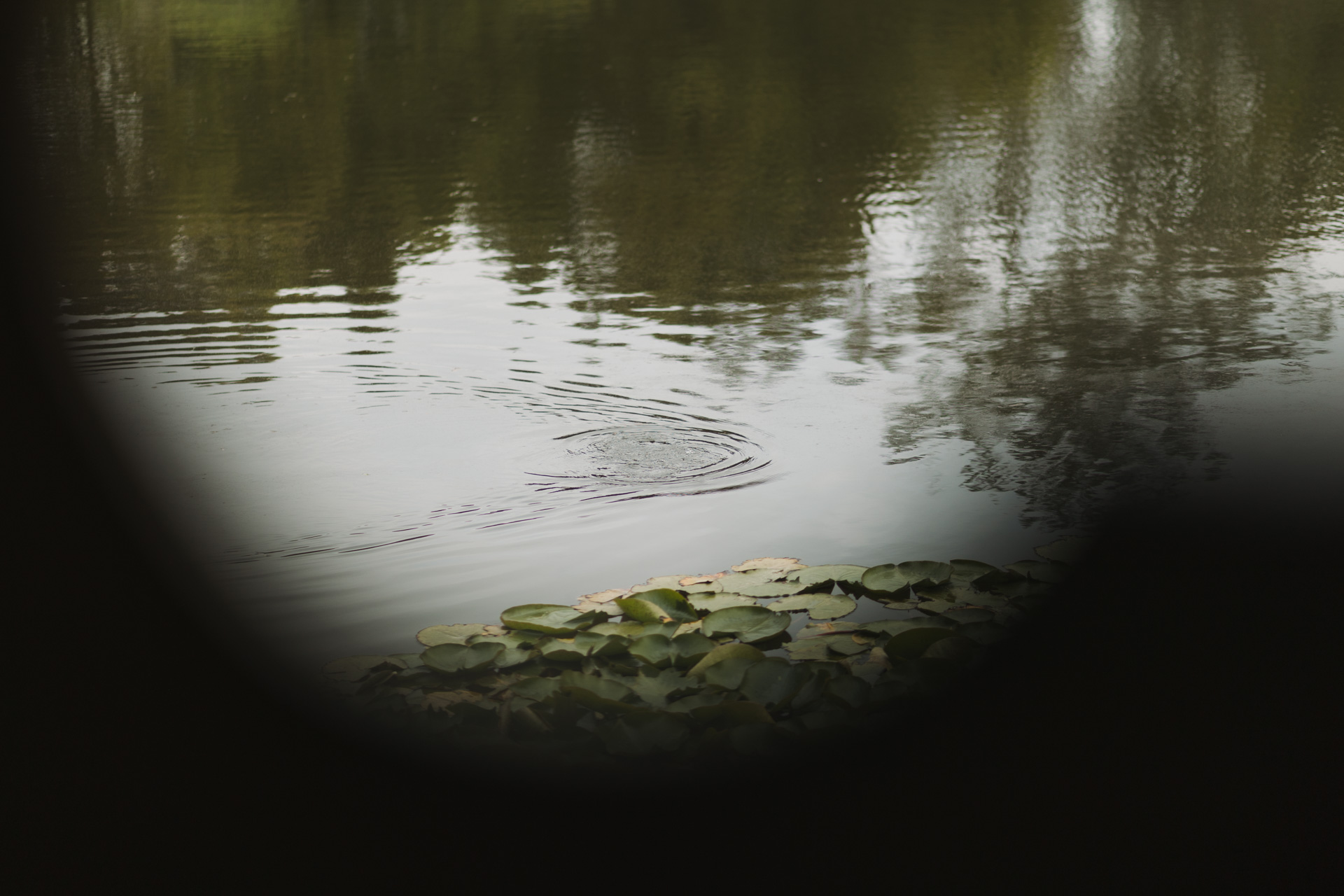
Often, the first thing you notice is not a platypus at all, but the ghost of one; a neat ring of ripples spreading on the surface where it used to be. By the time you look, it’s gone, ducked under like a magician who refuses to stay for applause. You’re left staring at the water, camera in hand, as if patience might undo the fact you were too slow.
At the Tasmanian Arboretum, where platypuses in Founders Lake are not exactly hiding behind velvet ropes, the ripples become less a taunt and more a nudge. Stop fiddling with the camera strap. Stop hurrying. Miss one and, within moments, another three surface, bobbing like strange little wind-up toys, perfectly unbothered by your clumsy delay.
We’ve never walked away from the arboretum without seeing several, which is a fairly outrageous thing to be able to say about a creature that elsewhere is more rumour than sighting. Even my five-year-old (whose attention span can be measured in the distance between one “why?” and the next), has spotted at least one on every visit. We’re lucky in Tasmania; lucky enough that even the moments we miss are quickly replaced with others.
But the platypus is only the hook. It’s what keeps you long enough to notice everything else.
An arboretum is, at heart, a museum. A living museum of trees and wildlife. This isn’t how we usually talk about them. Museums are solid, declarative places, full of glass cases and captions that begin with circa. Arboretums are sprawling, slightly untidy, alive. They don’t announce themselves as repositories of knowledge; they just are. But like any museum worth its salt, an arboretum is designed with tomorrow in mind, preparing for visitors who don’t know they’re coming.
The crucial difference is time. A museum might take decades to assemble. An arboretum will take centuries to fully reveal itself. Many of the trees growing at the Tasmanian Arboretum were planted by people who knew that they would never sit in their shade. They planted anyway. Not for recognition or profit or even gratitude, but because they believed that someone else would one day stand beneath that canopy and feel something loosen inside them.
This is the kind of generosity we don’t celebrate enough.
Traditional museums are often built on a complicated inheritance. They are curated by people who love history, yes, but are often also shaped by colonial collecting, by extraction and exchange, by the movement of objects through money and power. Arboretums, by contrast, begin with seeds. Someone puts a small, hopeful thing into the ground and walks away. No invoice. No display case. No contested provenance.
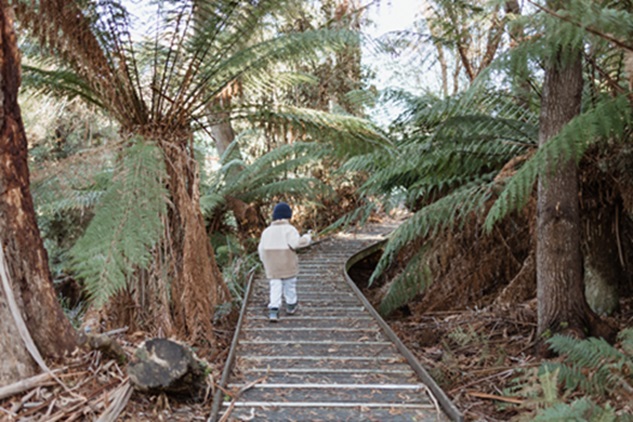
And yet, this is no local park. It is a curated global choir of trees, voices from every temperate shore brought together to teach and delight, long after any one of us is gone. On a single visit you can move from the cool dimness of a fern gully to Tasmanian natives, only to then find yourself standing beneath conifers so old in their design they’re described as living fossils. Canadian maples turn rich vibrant colours in the autumn while the Norway spruce remind me of Christmas in Europe. It’s a library in living wood, a seed bank that whispers to the future, a pact between yesterday’s planters and tomorrow’s dreamers. Here, the arboreal gallery intersects with the world of wing and water; over eighty species of birds, shy mammals and amphibians making a home beneath the same green cathedral the planters once imagined.
All of it is assembled with quiet intent, and left to get on with the business of growing. It doesn’t demand reverence. Children scramble over logs and invent games among the trunks. Adults wander with coffees growing cold in their hands, forgetting to check their phones. There are moments where it feels less like a curated space and more like a benevolent accident; nature briefly organised itself and forgot to stop.
Yet nothing here is accidental. The work done by the arboretum’s staff and volunteers is meticulous and ongoing, the kind of care that never draws attention to itself. It is sustained not by corporate sponsorship or government largesse, but by people. Paths are cleared. Species are recorded. Trees are protected from the simple human enthusiasm of people who love them. This invisible labour allows the rest of us to have visible experiences: a platypus surfacing, a leaf turning, a child discovering that a stick is still the best toy ever invented.
Ghost of platypus past
In Japan there is a practice called shinrin-yoku, or forest bathing, which sounds suspiciously like something invented by a tourism board but is in fact backed by decades of research. Spending time among trees lowers stress hormones, improves immune function, steadies the nervous system. You don’t have to do anything. You just have to be there. Your body remembers what it’s for.
That slowed state has a way of sharpening your attention. Last year, near the lake, a woman flagged me down with exaggerated hand movements and loud whispers to point out the slow, almost ancient movement of a freshwater crayfish crossing the grass. For the uninitiated, freshwater crayfish manage to be even less visible than platypuses, despite looking as if they belong to another era entirely. We shared our excitement in muted whispers, briefly co-conspirators in noticing something we weren’t meant to interrupt. It seemed appropriate to notice it here, in a place built around patience.
What we gain from spaces like this is hard to quantify, which may be why we undervalue them. You can’t ticket serenity or monetise a sense of belonging. Arboretums don’t shout about their usefulness. They don’t flash. They wait.
In a world increasingly curated for speed and profit, that waiting is a radical act. The Tasmanian Arboretum is carbon storage and biodiversity refuge, yes. It is also a commons for wonder. A place to be, to move, to linger. To run and climb and laugh, to stop and look closely, and to let your thoughts wander further than you planned.
Museums look back.
Arboretums grow forward.
As we leave, my son points excitedly at fresh ripples on the lake. I think of the people who once stood here with a sapling in their hands and imagined none of this exactly – only that, one day, someone else would notice.
Katy Rogers grew up in England, and has thus spent much of her life explaining why she no longer sounds particularly British. After emigrating to Australia at nine, she meandered through several countries, picked up an Australian husband, and eventually washed up on the scenic north-west coast of Tasmania, where they now live with their children and an ever-growing collection of seashells and sand. A photographer by trade and a writer by compulsion, Katy once taught fully-grown adults to fly broomsticks for a living and remains quietly convinced that dragons are real. Of Italian heritage, she believes nostalgia is a food group and that ordinary life, if you squint at it sideways, is full of magic. More about her can be found at www.katyrogers.com.au.