“Cradle Mountain is to Tasmania what the Matterhorn is to Switzerland, Niagara Falls to Canada or the Grand Canyon to the US. Gustav Weindorfer knew it 116 years ago; our Parks and Wildlife Service knows it today.”
writer ROB SHAW
photographers ROB SHAW and CRAIG SEARLE
On January 4, 1910, a 35-year-old Austrian accountant-turned-botanist stood atop Tasmania’s most famous skyline, stretched out his arms and declared, “This must be a national park for the people for all time. It is magnificent, and people must know about it and enjoy it.”
He had just helped his wife become the first white woman to scale the peak which has given its name to the park he envisioned. Gustav and Kate Weindorfer were on the summit of Cradle Mountain with their neighbour, Ronnie Smith, who described the moment and recited the famous quotation in an article 25 years later.
Reminded of his mountainous homeland, Gustav felt an obligation to share such great natural beauty with any fellow human inclined to visit this remote outpost 17,000 kilometres from his birthplace. He was to get his wish. Where he stood is now a national park for the people and, hopefully, for all time. It remains magnificent and people do “know about it and enjoy it”.
More than a quarter of a million people every year, in fact.
Paradoxically, the scenario Weindorfer desired has become his personal paradise’s biggest challenge.
Established in 1922 (a decade before Weindorfer’s heart failed within sight of the mountain he so loved), Cradle Mountain-Lake St Clair National Park became a part of the Tasmanian Wilderness World Heritage Area in 1982. Since then, Tasmania Parks and Wildlife Service has faced the tricky problem of protecting the iconic location while also accommodating the increasing number of visitors keen to experience it. This is a balancing act as precarious as the rocky staircase up to Marions Lookout. It is also often a thankless task which rarely pleases all parties.
Anyone sharing the view which so inspired our adventurous Austrian would now see an access road, car park, toilet blocks, shuttle buses and a sprawling triangular viewing shelter – as in keeping with its surroundings as a swimming pool on the moon. Before long they may also be able to see a cable car. What sounds like to Arnold Schwarzenegger grunting might just be a compatriot rolling in his grave.
But something had to be done. Now one of 19 Tasmanian national parks, Cradle Mountain-Lake St Clair attracted 268,000 visitors in 2024-25, just behind Freycinet and ahead of Mount Field. It was obvious the narrow, windy access road to Dove Lake wasn’t up to the task, even before the 2001 bus crash that killed four people. Boom gates, shuttle buses and cable cars may not get everyone’s vote, but might be necessary to keep the dream alive.
Inclusion in both the 60 Great Short Walks and the 158-strong Abel series (detailing the state’s peaks above 1,100 metres) guarantees Cradle Mountain plenty of visitors, most of whom swiftly discover there is nothing short about eight hours, 13 kilometres or 600 metres of climbing.
Summer sun, autumn fagus, winter snow and spring flowers plus abnormally friendly fauna ensure the year-round appeal of a skyline as famously Australian as Uluru which attracts celebrity endorsement ranging from Nicole Kidman and Kevin Rudd to Chinese actor Duan Yihong and K-pop singer Eric Nam (me neither, but the latter has 4.2 million Instagram followers).
Most visitors limit themselves to the mountain’s picture-postcard view across Dove Lake and venture little farther than the photogenic boat shed, glacier rock lookout or, at a push, the splendid two-hour walk around the lake. But for the more adventurous, Tasmania’s fifth highest mountain remains as glorious today as it was when Kate Weindorfer sat on top of it in a long skirt and bone-neck blouse.
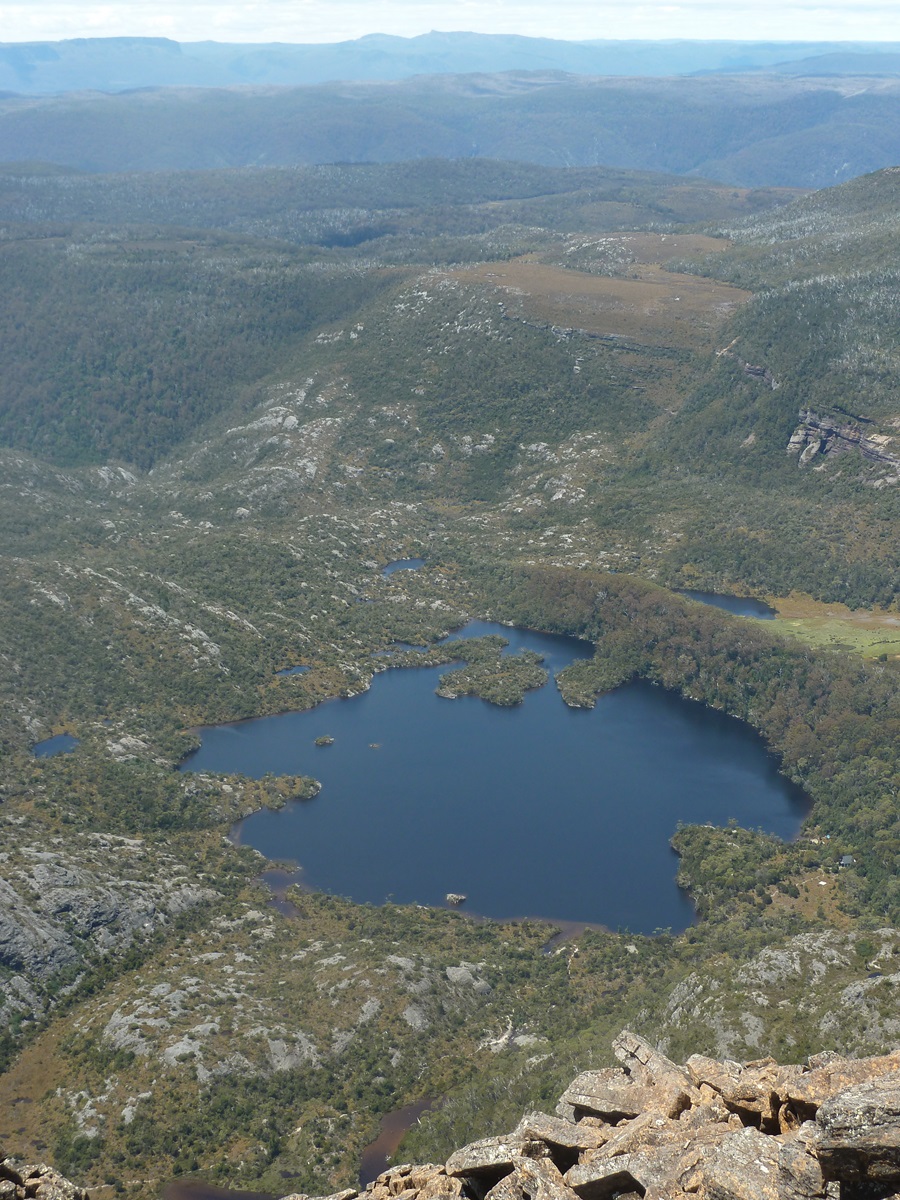
Sightseers share those shuttle buses with bushwalkers, climbers, canyoners, utramarathoners, skiers, botanists, geologists, photographers, Instagrammers and even wedding parties, all keen to have their special moment in this special place.
As a direct result of all the visitation and subsequent access work, it is possible to experience so much more of this Tasmanian mountain than almost any other with the exception of Hobart’s kunanyi – another peak that has contemplated a cable car solution to alleviate visitor congestion.
While so many Abels feature a single track to the summit and back, Cradle can – thanks to Face Track, Lake Rodway Track and the Overland Track – be comfortably circumnavigated in a day.
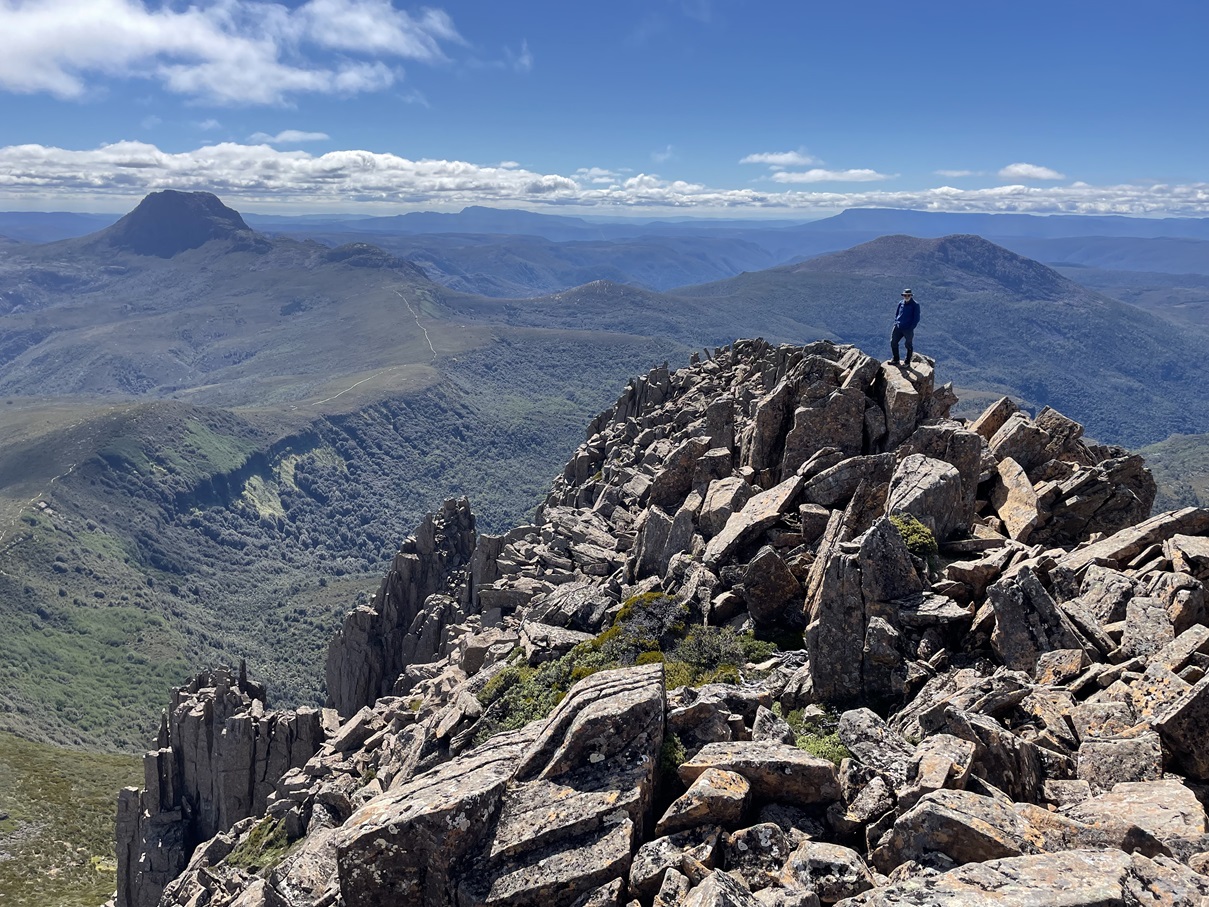
The deviation that leads to the top, from close to where Face Track meets the Overland Track, is barely 1km in length but rapidly ascends 350m and features several unnerving pinch climbs totally at odds with the concept of a great short walk (but that’s a discussion for another day).
In addition to the 1,545m summit, the supplementary high points of Benson Peak (1,368m), Smithies Peak (1,527m), Weindorfers Tower (1,459m) and Little Horn (1,355m) are accessible to climbers of a reasonable pedigree.
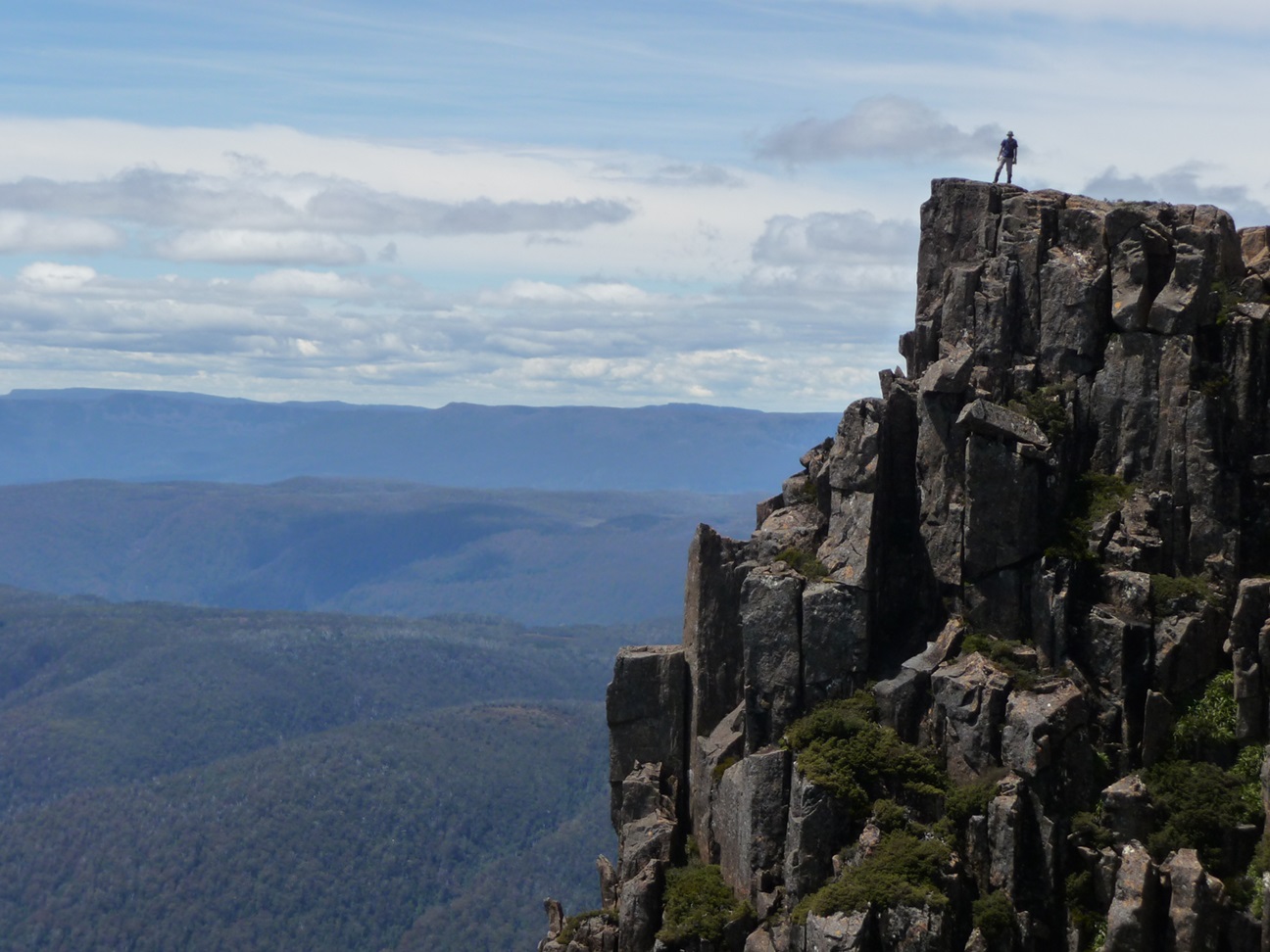
Even at the top, there is more to explore and photograph than just the cemented cairn. A short wander east offers a sensational view over Lake Rodway and southwards down the Overland Track towards three of the four Abels of superior height.
There are no fewer than four emergency shelters on the lower slopes: one at the base of Little Horn, plus Kitchen and Scott-Kilvert huts and the bizarre but potentially life-saving igloo-style creation on the Cradle Cirque. The excellent Scout Lodge, on Horse Track north-west of Crater Lake, and the collection of accommodating structures at Waterfall Valley, are also within walking distance.
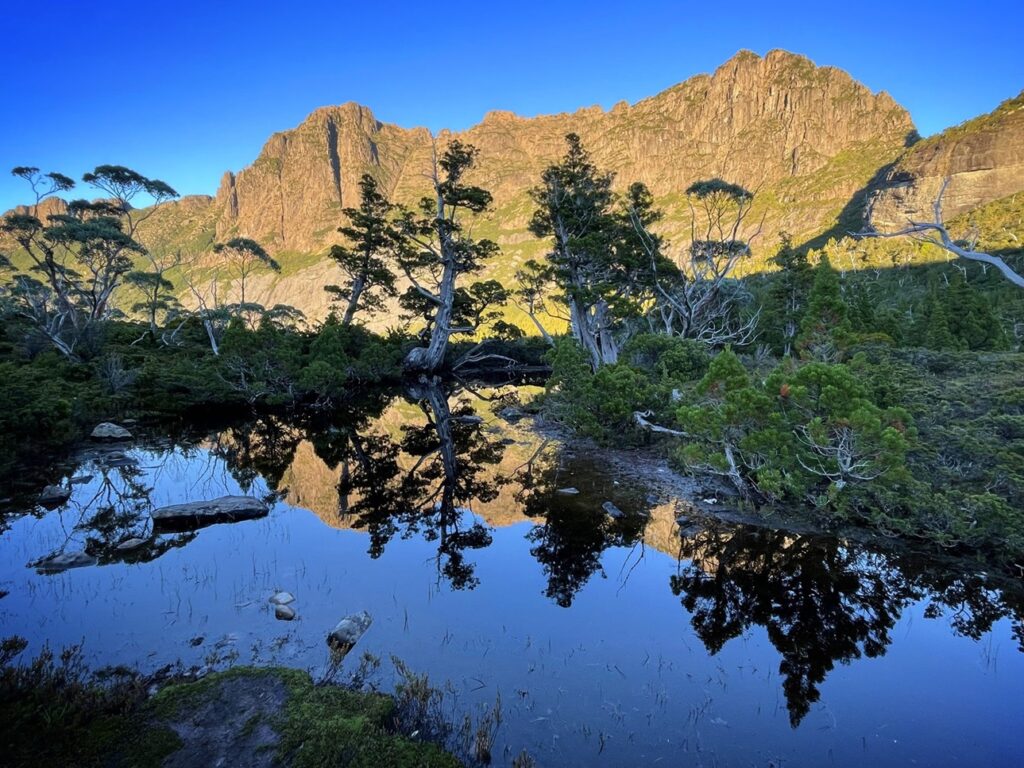
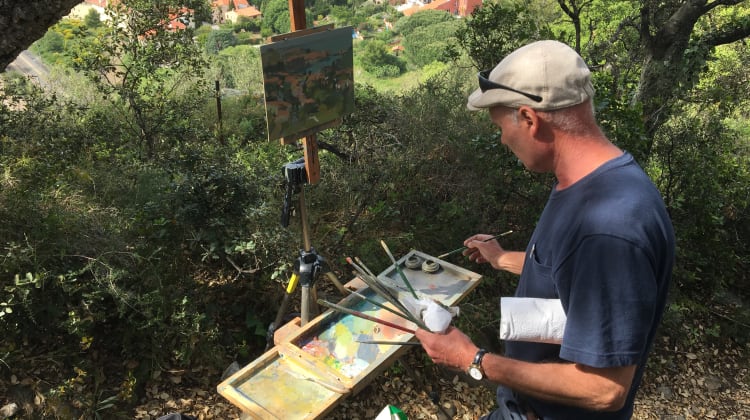
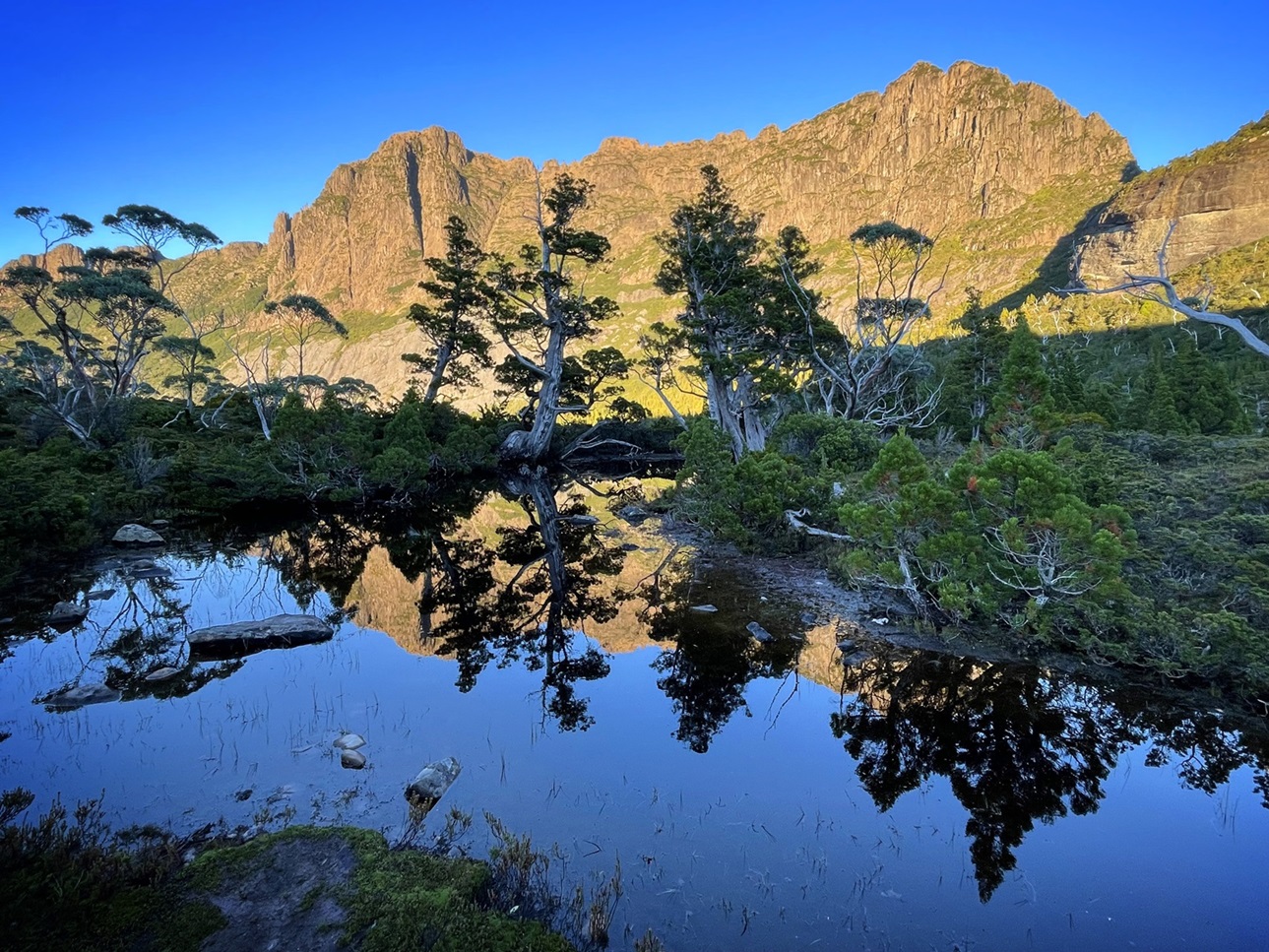
And here’s the other kicker: from every angle, Cradle looks magnificent. Northern approaches either side of Dove Lake, via Crater Peak, Marions Lookout, Lake Wilks or Hansons Peak, offer variations of the classic ridgeline. Sibling Abels Barn Bluff (1,559m) and Mount Emmett (1,410m) provide stunning southerly perspectives, while morning sunlight viewed from Lake Rodway generates a radiant shade of orange unattainable even to US presidents. Artists Pool was so named because its beauty could inspire anybody to pick up a brush.
Even the toilet at Scott-Kilvert Hut offers a treat for the eye, if not the nose.
Bill Wilkinson, who logged and named The Abels series, recalled the park’s origins when he wrote, “Weindorfer’s vision for the future was inspired by one of the most beautiful mountains in the world.” Never averse to a spot of adjective overdrive, Wilkinson also gives “exquisite”, “romantic”, “attractive”, “delightful”, “wonderful”, “majestic”, “superb” and “remarkable” a run in his book The Abels Volume 1. And so he should.
Cradle Mountain is to Tasmania what the Matterhorn is to Switzerland, Niagara Falls to Canada or the Grand Canyon to the US. Gustav Weindorfer knew it 116 years ago; our Parks and Wildlife Service knows it today. It can still inspire the same breathless delight and will always be the jewel in the crown of the Abel series.
Thanks for sharing, Gustav.