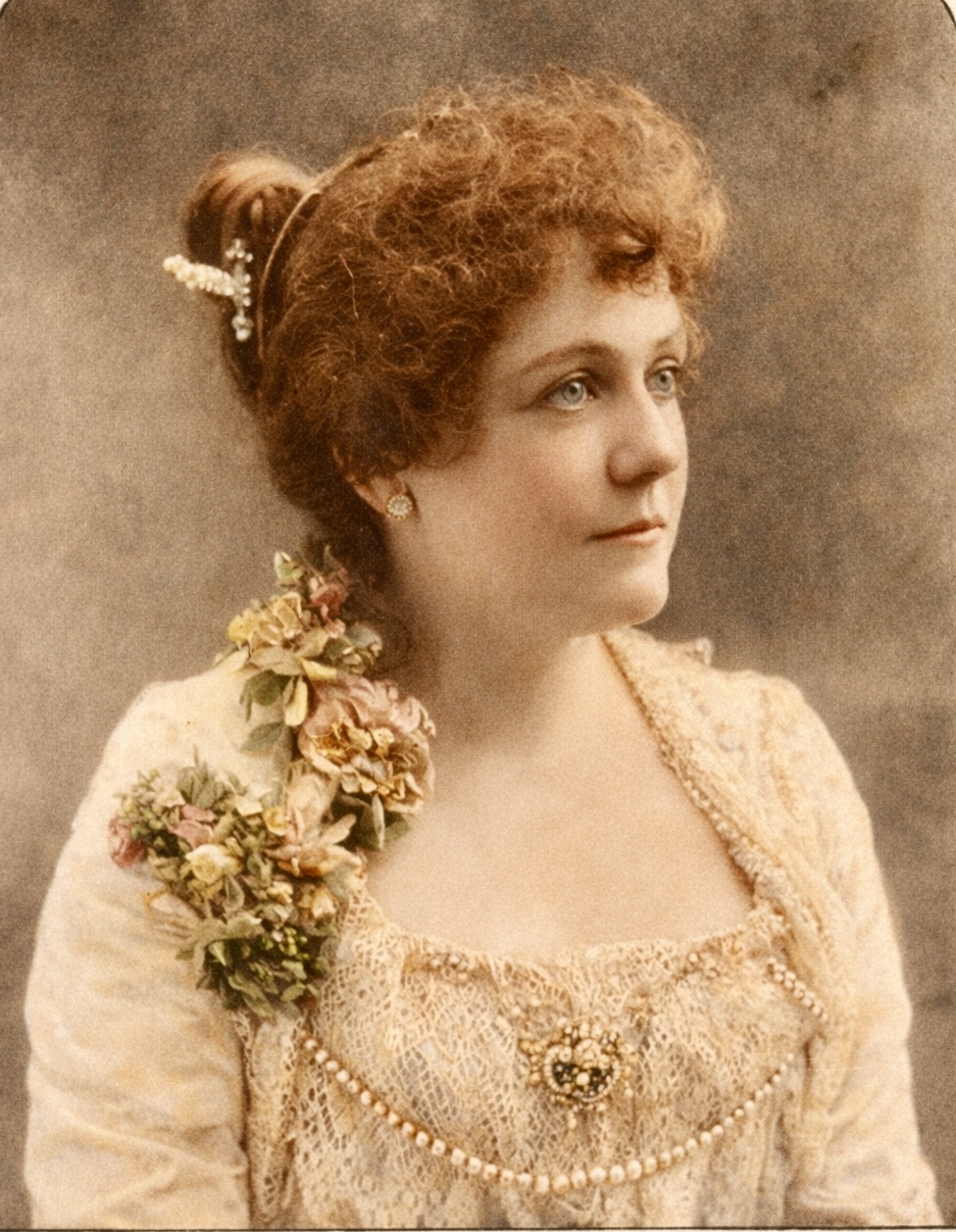

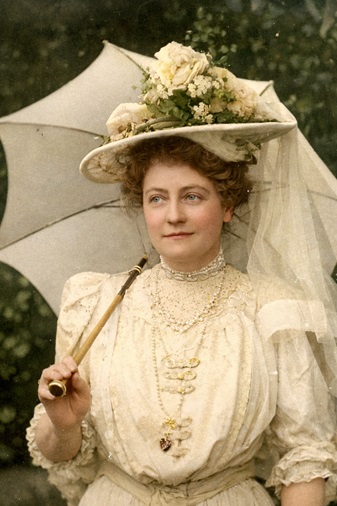
In the 1880s, the prima donna assoluta (absolute first lady) of song in Britain and the US was Amy Sherwin. Her good looks were the subject of frequent comment, and she galvanised admirers with her most likeable personality. She was the most famous Tasmanian in the world.
The question of whether Amy Sherwin or Nellie Melba, who came a decade later, was the better singer is irresolvable, and not helped by a contemporary view that while Melba was better at trilling, Sherwin had the stronger voice.
Yet, when a full-house literary festival in Sydney in 2025 was asked who knew of Amy Sherwin, not a hand went up. So why, more than a century later, is Melba so widely celebrated but Sherwin hardly known? One clue is that Sherwin was in her prime in the decade before the arrival of the phonograph. Melba’s primacy was perfectly timed for her remarkable voice to be inscribed forever on the Edisonian cylinders, but there is no record of Sherwin’s equally remarkable voice.
Amy Sherwin was from Tasmania and, throughout her 80 years (1855-1935), she missed no opportunity to say so. In London in 1899, she recollected her island origins, “The scenery of Tasmania is peculiarly beautiful and romantic in its diversity of lofty, snow-capped mountains and rolling, sunny plains. In the spring and early summer the bush has very special attractions, when the wild orchids, the many-coloured heaths, and the golden profusion of fragrant wattle make an indescribable picture. Then there are the deep shady gullies, where the giant tree fern, with far-reaching fronds, and the beautiful sassafras flourish, as in fairyland, in the vast eucalyptus forests. Amid such surroundings my childhood’s days were passed, and they have left such an indelible impression that to the end I shall remain a child of the bush.”
This was the London where, at Sherwin’s first performance at Covent Garden, the 3,000 opera aficionados erupted, throwing their hats in the air and demanding repeated encores. It was also where her other endearing qualities drew great attention. At an invitation-only concert, the “London Salon” effused that “the gem of the evening was the faultless singing of a former Boston, as she is now a London, favourite … every word came out as clear and distinct as a bell … her manners are engaging, her amiability is boundless … the songs of Miss Sherwin were the crowning glory”.
In Boston, the thriving centre of American culture, a critic reported that “the charming simplicity of her style, the freshness of her voice and delightfully true intonation, were happily exemplified in all her efforts, and in her operatic selections the purity and clearness of her staccato effects, on high notes, lent an added charm to her work”.
Sherwin’s “boundless amiability” was rare in the exalted realms of 19th century opera and is a clue to her popularity with the masses as well as her later preference for the concert hall and its more relaxed and enthusiastic audiences. Acknowledged as Great Britain’s prima donna assoluta, she yet remained a gregarious and delightful personality. After her return to Sydney and Hobart, Sherwin sat for hours in flower-bedecked chairs at both cities’ town halls, agreeably shaking the hands of the thousands of fans who queued up to meet her.
In Adelaide she brought politics to a standstill. “My last experience at Adelaide was very amusing,” she recalled. “My hotel was opposite the Houses of Parliament, and on the night of my arrival the Gaming Bill was to be passed. Seven thousand people had assembled outside my hotel, and in their welcome kept clamouring for me to sing. Eventually I went out on the balcony and sang Home, Sweet Home, and so many members (of parliament) came over to hear me that when the critical time came there were not enough votes to secure the passing of the much desired and hitherto strongly supported measure.”
. . .
During her return tours of Australia and New Zealand, Sherwin made more than 300 appearances, from Dunedin to Perth and Brisbane, and including Waratah (Tasmania), Broken Hill and Ballarat and, on each occasion, her home city of Hobart went wild. On a July night in 1887, the winter air dropping to two degrees as Sherwin stepped off the train from Launceston, thousands greeted her. Despite the chill, it seemed every Hobartian was at the station. Her carriage received a tumultuous welcome from crowds lining Liverpool Street, with church bells ringing, rockets fired and a leading brass band playing Home, Sweet Home. It took an hour to get the local heroine from her carriage to the stage, through the throng of 4,000 people besieging the Town Hall.
Victorian-era writers were given to hyperbole, but the critics’ enthusiasm for Sherwin seemed universal, if briefly punctuated by the obligatory need to include a sentence about some or other minor shortcoming.
In Auckland The Evening Star’s scribe was starstruck, writing that Sherwin’s “concert was an unparalleled success in every sense. The theatre was crowded in every part and the charming prima donna sang more enchantingly than ever. The stage was a carpet of roses. Ladies were longing to throw their bracelets. If we had had our own jewel case there, all our diamonds and rubies would have gone too … we have never before heard such applause or seen such enthusiasm. Nothing seems to be too exacting for this fair artiste. Her E flat (final high note) was clearer than a silver flute and purer than the liquid dew-drops that tremble in the sunlight”.
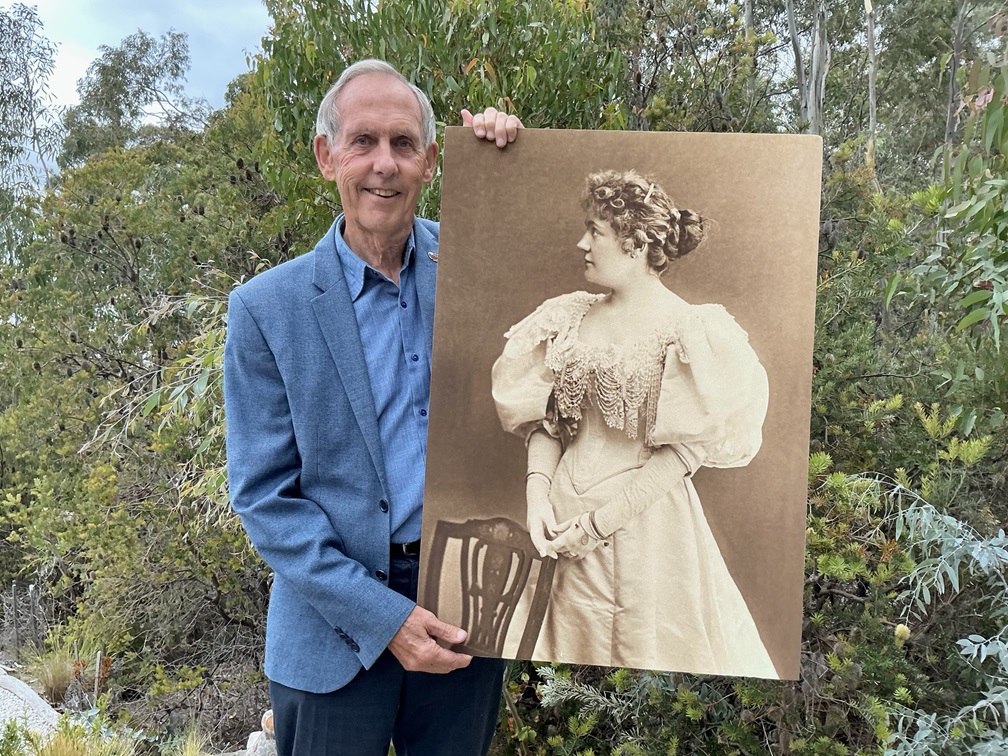
Amy Sherwin was an inexplicable prodigy. But it helps to know that, in her words, in their house in the forest beside the remote upper Huon River south of Hobart, graced by a precious piano, “my sisters and I all inherited singing voices from our mother, who was a particularly gifted woman, and to whom I owe all the success of my career. In addition to great musical talent, she possessed a truly beautiful character and this, with her indomitable energy, enabled her to ride triumphantly over the hardships and vicissitudes of early colonial life and to carry on personally the education and training of her children”.
As a child, Sherwin rode four hours to get singing tuition. She then had the remarkable fortune to find a teacher, a Mr Russell, in Hobart, who had worked at the Covent Garden. Sherwin spent two late-teenage years in Launceston and, at her last concert in that city’s Mechanics Institute, was showered with bouquets and a gold watch after “sending the audience into raptures”.
Sherwin’s global career began in Hobart’s Theatre Royal in 1878 where the visiting Royal Italian Opera Company signed her up and then, on June 17, had her take the lead role in Lucia di Lammermor at the Melbourne Opera House. No other Australian had sung there in a foreign language. The Argus reported that “in power, Miss Amy Sherwin’s voice is much greater than we expected to hear. The ‘mad scene’ was, of course, the test of her highest powers, as actress or singer, and we have to record her complete triumph. The young prima donna was summoned before the curtain amidst a storm of applause in which the cry spread in many parts of the house of ‘Bravo Tasmania’. There never was a more hearty scene in any theatre”.
In the following months, Sydney was “spellbound with pleasure” and her Christchurch concert was “packed to suffocation”. Four thousand people greeted her arrival by train at Dunedin where, after a whirlwind romance, she married her young German manager Hugo Gorlitz. He then arranged Sherwin’s triumphant appearances at the San Francisco’s Grand Opera House, her consequent success in the eastern states of America and then, in Europe, including a command performance before Tsar Alexander III of Russia.
. . .
Sherwin’s optimism and good heart saw her sing at many charity concerts, including for bushfire victims in Tasmania and World War I soldiers in London. In her later years, she taught promising girls from the London’s East End slums, two of whom became stage successes in their own right.
And then, unable to get an English pension, she ended in poverty and was buried in a pauper’s grave in the Bromley Cemetery in 1935.
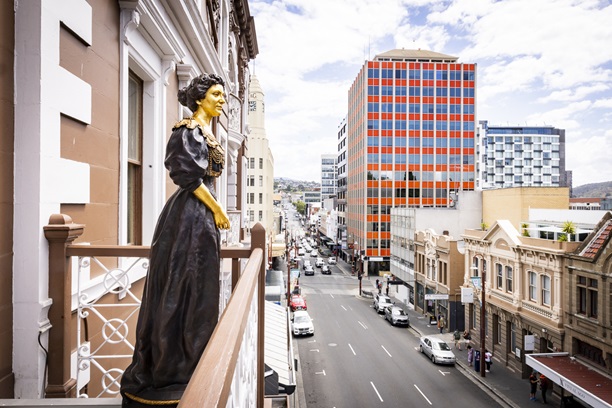
Ninety-one years later, in February 2026, Amy Sherwin came home to Hobart. After two years’ work, the volunteers of the Amy Sherwin Fund had two statues of the prima donna placed in the gracious Hadley’s Hotel in Hobart, where she had stayed and sung at the height of her career and fame. Open for public viewing, the marble statue by Melbourne sculptor Peter Schipperheyn is in the Hadley’s Atrium and, outside, a gilded bronze version, funded by proprietor Don Neil, stands on a second floor balcony looking over Murray Street to St David’s Cathedral.
Amy Sherwin is back, and her fame is spreading again. The Amy Sherwin Fund has made sure that the once-most famous Tasmanian in the world will never be forgotten again.