
In a lifetime of travel, I have been fortunate to experience some of the natural wonders of this planet. But, as I pass another milestone birthday, I realise I’m unlikely to witness all the wonders that continue to whet my imagination.
I’m not sure if it’s the onset of the surliness of age, or if my natural optimism can no longer withstand the barrage of gloomy news, but more and more I notice the scars which rend the landscape I inhabit, and I was ill-prepared for the ravaged hills and rills of Queenstown on Tasmania’s west coast.
On a recent visit to the magnificent south-west of the remnant of Gondwana, I took my time to study the storied history of three key communities: the aforementioned Queenstown, Zeehan and Strahan. When my journey ended, I could not forget the century-long impact of mining on the landscape and the people.
Not for me summer’s salad days. I choose the ragged cloak of winter for my travels. Perhaps it’s the high, murky clouds, or the pallid, skewiff light that suits my macular vision of life. I enjoy the solitude of empty roads, snowy, silent cafes and the cozy promise of white chimney smoke.
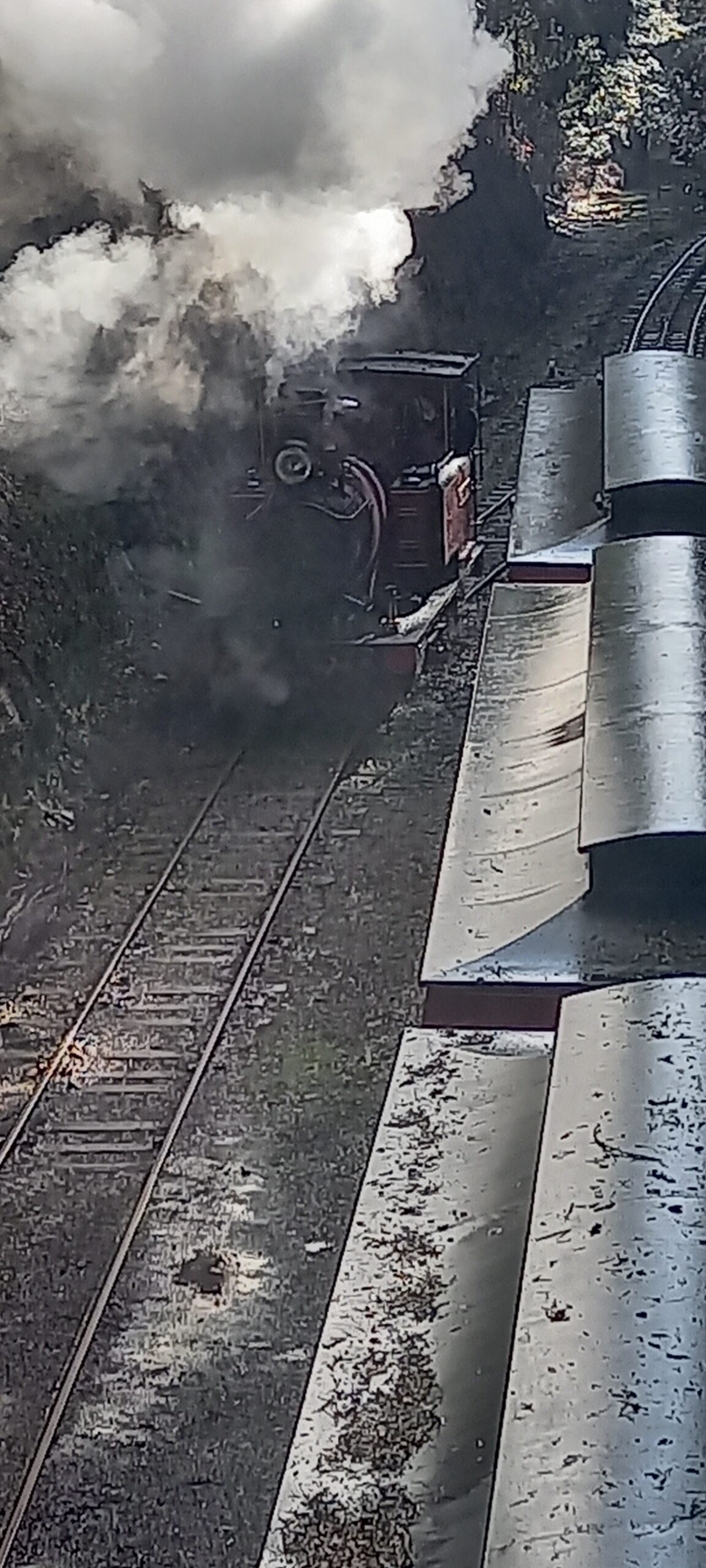
I accepted an offer of a short train trip through the west coast wilderness, departing from the restored Queenstown rail station.
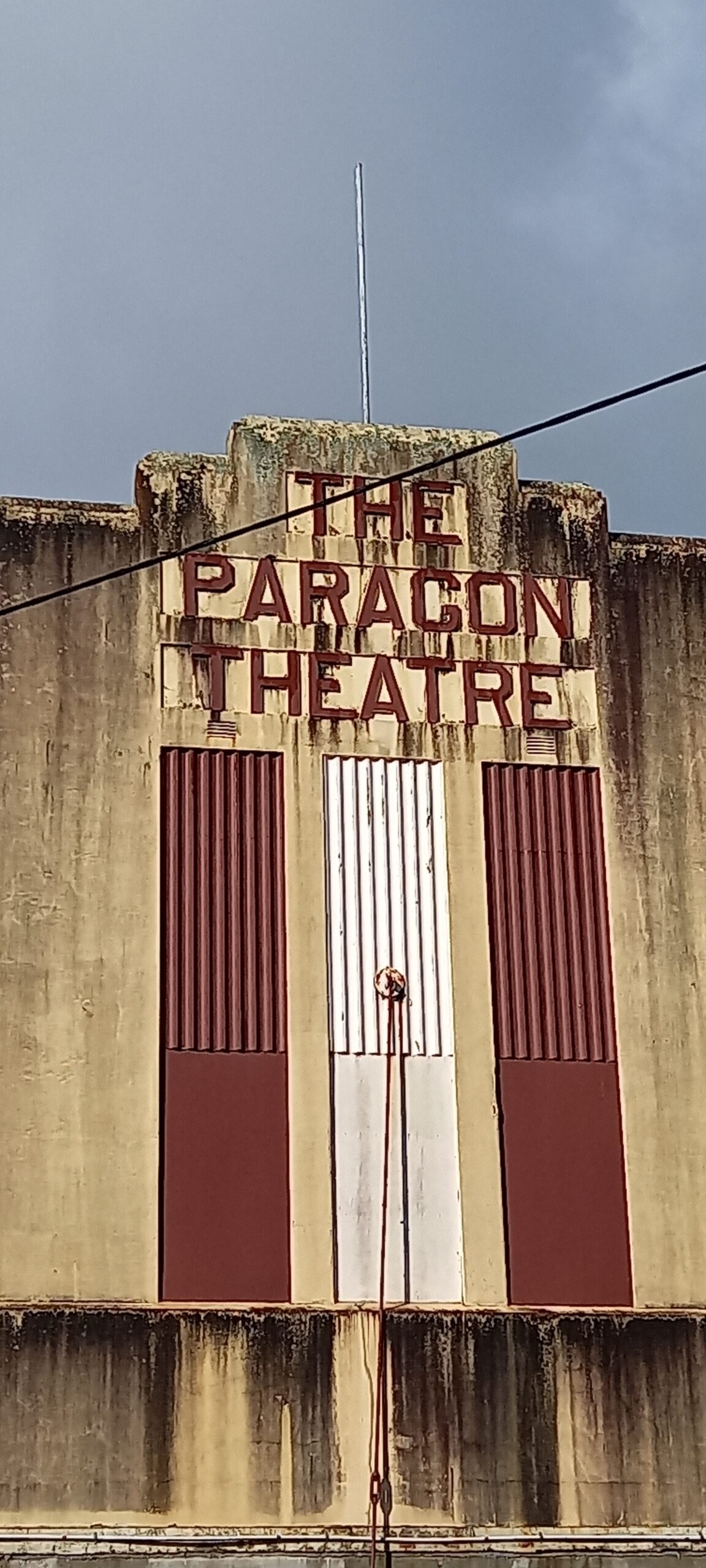
The morning streets empty and wet. Behind Driffield Street the faded art deco façade of the Paragon Theatre, with its promise of a perfect example of a particular quality. Further up the hill the Victorian magnificence of a stairway inside the Empire Hotel. Snow and cloud atop Mounts Lyell, Sedgwick and Owen. White waterfalls misting down the ragged, bony cliffs, still barren after centuries of acid rain burnt away the remnant vegetation. Yet there amidst the mineral-coloured striations, one or two hundred doughty symmetrical trees, fighting for the right to grow on their ancestral slopes.
Tasmania measures its life cycle in eons, and I believe these trees, like the good people of Queenstown, will prevail.
. . .
The story of the Queenstown train through the wilderness to the port of Strahan is the stuff of grit, smoke and pig-headed determination. I don’t intend to recount it here, other than to cite the efforts of two determined Irishmen, one from the County Galway, the other from the County Clare. Both came to Tasmania in the years of the Irish Famine, or An Gorta Mór, the Great Hunger, as it is called in Eire.
Those who followed, spellbound by the lure of gold, bent their backs, swung their picks and scaled a mountain, building a small-gauge rail line, using rack and pinion technology, to carry the smelted product of sulphide rich ore, for transhipping.
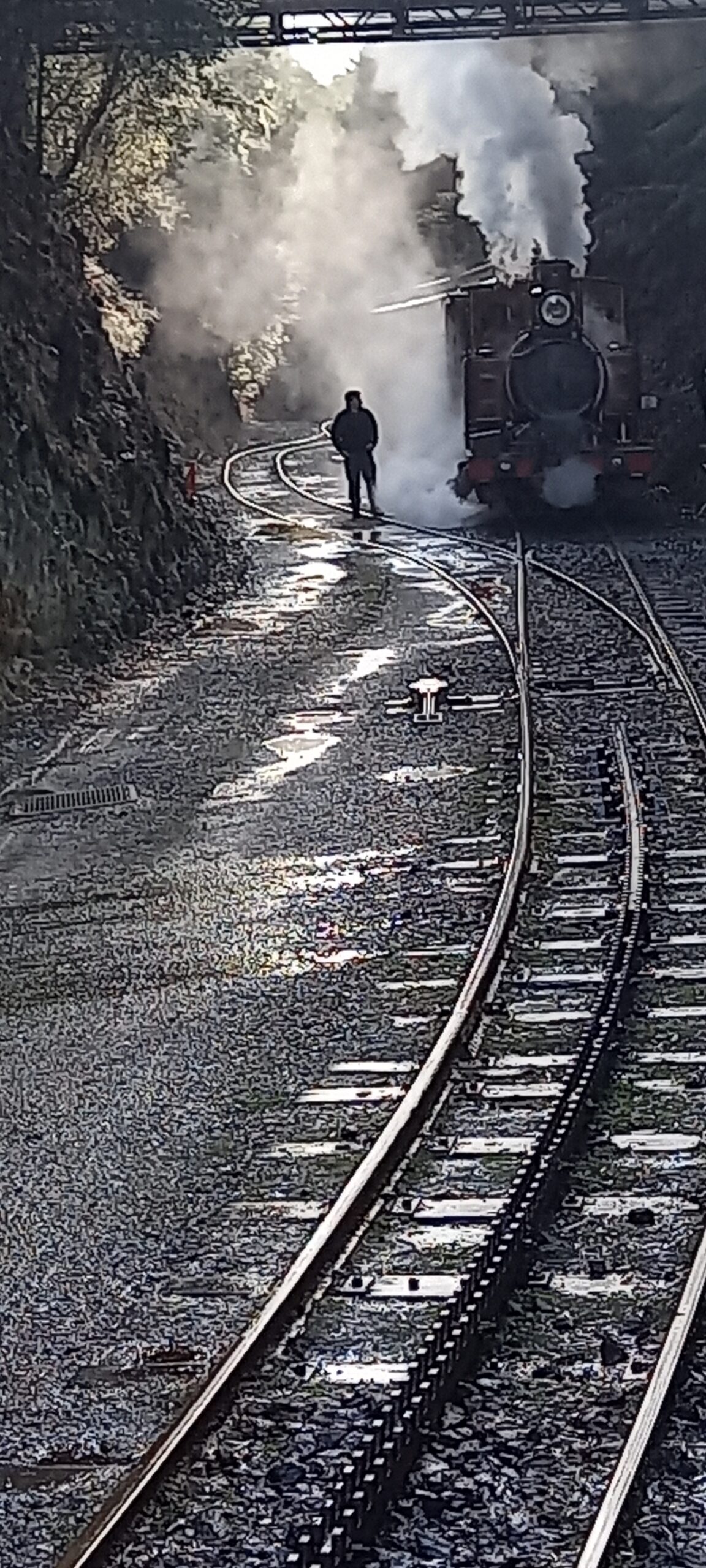
On the days before my journey down that dark twisty line, a huge Antarctic front brought rain by the metre to the west coast. The river along the train’s route was in full flow, its waters still polluted and toxic, decades after the closure of the mine and smelters. Yet along the river’s banks, dense tree ferns, towering gums and forest plants beyond description, crowded out the light. Their leaves deflected the heavy drops of the passing squalls, and for gilded moments the sunlight shone through, reflecting off the wet silvery rail lines, now shrouded in steam from the lurching locomotive.
I sensed the magnitude of the endless struggle of humanity against its environment. “Tame the wilderness,” is one refrain. Another is, “There’s gold in them thar hills,” and, of late, the spiteful, “Drill, baby, drill.”
We are a fearful species, terrified of the unknown, challenged by the unconquered, tantalised by hidden wealth buried in rocks, or challenged by the size and height of towering trees. Chop it down, or dig it up, we remain spellbound by Maslow’s Hierarchy of Need, without thought of consequence or legacy.
A young fellow traveller fell under the spell of gold. The train stopped at Lynchford where we visitors could pan and swirl the dirt. The youth found a speck the size of his little finger nail. The look on his face as a tour guide dropped the nugget into a small glass container, spoke of gold fever. The boy did not want to rejoin the now tooting train for the ascent to the Rinadeena Saddle.
. . .
Later in the afternoon during our drive from Queenstown back to Strahan, I felt a pang of admiration for those who chopped, and hewed and dug. I smiled to myself recalling the story of an extra train put on, to return tipsy miners back home, after a day’s partying at the works’ picnic. An innocent time.
Next morning, after a walk to Hogarth Falls via Strahan’s People’s Park, off to Zeehan on the coast road. Nary a car. Scudding clouds. A tattoo of rain on the windscreen. So cold even the creatures of the byway avoided the risks of crossing the road.
I am a sucker for museums, and there is none better than the West Coast Heritage Centre located in the old school of Mines and Metallurgy. Apart from front-of-house staff, not a soul inside. Cabinet after cabinet of minerals with odd-sounding names, from Tasmania and around the world. Display cases of mining paraphernalia.
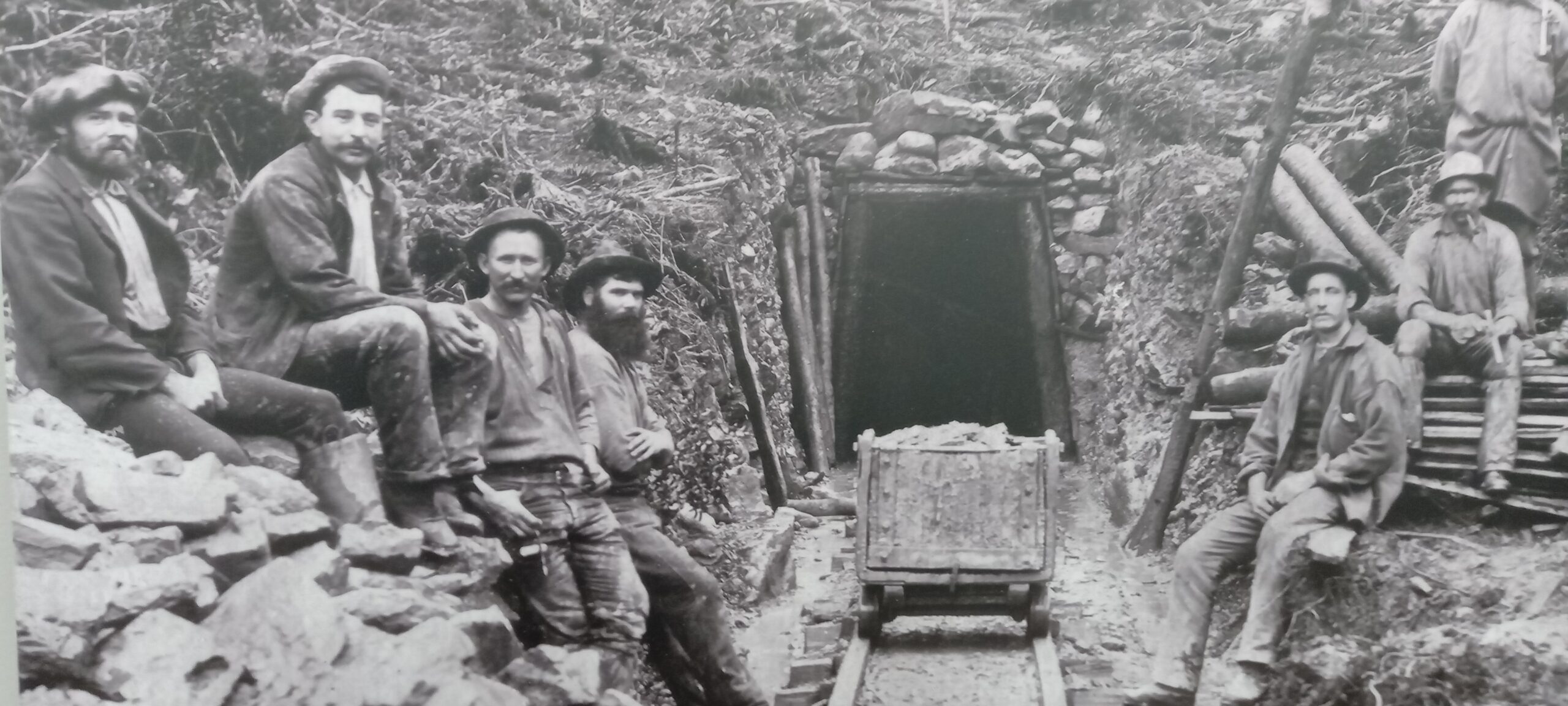
Room after room displaying the ephemera of mining but it was the early photographs of miners that stopped me in my tracks. Young faces. Bearded and moustachioed men. Arms crossed. Unsmiling. Holding steady for the flash and pop of the large format camera. Frozen lives. And then photographs of an unspeakable tragedy.
On October 12, 1912, a fire erupted in a mine in Mount Lyell. Of the 170 that started their shift on that day, 42 died. I urge you to read the descriptions of that awful day, and marvel at the tenacity, the humanity of those who set out to rescue the trapped. And yes, the story involves one of the steam engines I rode in Queenstown.
In closing an extract of a note that elicited big globular tears on my day in the West Coast Heritage Centre, Zeehan.
Seven hundred level. North Lyell mine, 12-10-12.
If anyone should find this note convey to my wife.
Dear Agnes. – I will say good-bye. Sure I will not see you again any more.
I am pleased to have made a little provision for you and poor little Lorna.
Be good to our little darling.
My mate, Len Burke, is done, and poor old V. and Driver too.
Good-bye, with love to all.
Your loving husband, Joe McCarthy.