

Interest in Tasmanian edible plants has seen a resurgence over the past decade, with culinary publications and businesses singing the praises of the island’s native plants. For the most part, the way the plants are used, and to a degree the choice of species used, reflects modern culinary practice rather than historical tradition. While acknowledging that the contemporary approach may better suit modern tastes, exploring the way plants were used in the past helps to sustain knowledge that is in danger of disappearing. Here, Brendan Kays presents some largely forgotten bush beverages, which in the past served as medicine or creature comforts, and in some cases both.
writer and photographer BRENDAN KAYS
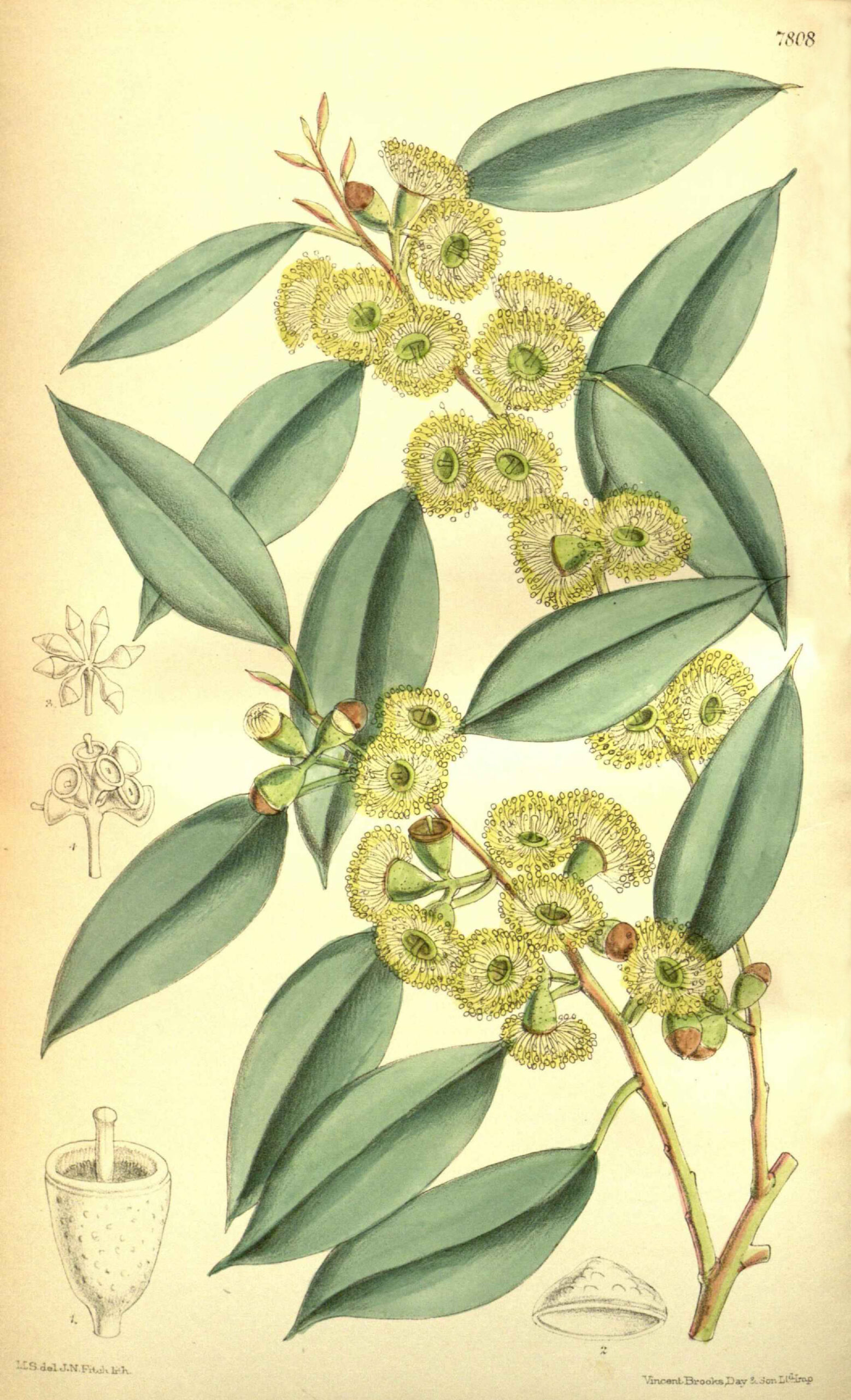
Jacques Labillardière images courtesy Biodiversity Heritage Library
In the Tasmanian highlands, on the lands of the Braylwunyer, Larmairremener and Luggermairrernerpairrer people, the Miena cider gum (Eucalyptus gunnii subsp. divaricata) provided an intoxicating beverage. Each year in early December, these bands and others would gather on the marshes and plains between Lake Echo and Arthurs Lake to harvest the sap.
In 1822, James Ross, editor of The Hobart Town Almanack, observed many tapped trees, reporting, “The Natives have a method at the proper season of grinding holes in the tree, from which the sweet juice flows plentifully, and is collected in a hole at the root. We saw some of these covered up with a flat stone, doubtless to prevent the wild animals from coming to drink it. When allowed to remain some time, and to ferment, it settles into a coarse sort of wine or cider, rather intoxicating, if drunk to any excess.”
Aboriginal people would also suck the fresh sap directly from small holes in the trees, using hollow reeds or straws of twisted bark.
By the mid-1820s, highland shepherds and stockkeepers had adopted the practice, cutting grooves in the trees from which they suspended cans to collect the sap. At peak season, which is December and January, they would find up to two litres had issued overnight.
The practice continued until at least the 1870s, decades after the Aboriginal inhabitants had been exiled from the region. Overly frequent burning of the plains by the stockkeepers saw a reduction in tree numbers, and in recent decades climate change has caused an increase in drought and fire, furthering the decline of the species. Today, the Miena cider gum is a protected species, and harvesting the sap is illegal without a permit.
In 1788, William Bligh visited Adventure Bay as captain of the ill-fated HMS Bounty. Here the crew collected the leaves of the common tea tree (Leptospermum scoparium) to brew as a tea for scurvy prevention. Bligh adopted its use from Captain James Cook, with whom he had sailed in the past. The species was first documented by Europeans in New Zealand during Cook’s first voyage, and it was here that it was initially used for tea.
Accompanying Cook on his second voyage was German naturalist Georg Forster, who later recalled, “Its leaves were finely aromatic, astringent, and had a particular pleasant flavour at the first infusion; but this fine taste went off at the next filling up of the tea-pot, and a great degree of bitterness was then extracted. We therefore never suffered it to be twice infused.”
The tea was also drunk by Tasmanian colonists, along with other species in Leptospermum and Melaleuca genera, all being commonly referred to as “tea-tree”. Bushrangers were particularly reliant on the tea, being unable to easily procure fresh tea from the settlements due to the risk of capture. Along with the prevention of scurvy, the tea was believed to be good for kidney and bladder stones and other disorders affecting these organs.
When the D’Entrecasteaux expedition was anchored in Recherche Bay during 1793, naturalist Jacques Labillardière experimented by making beer from celery top pine (Phyllocladus aspleniifolius). He noted, “The leaves afforded a bitter aromatic extract, which I imagined might be used as that of spruce; and on making a trial of it with malt, I found that I was not mistaken.”
Labillardière hoped that the resulting beverage would help prevent scurvy, the crew detested it, and the surgeon considered it too astringent for the desired effect.
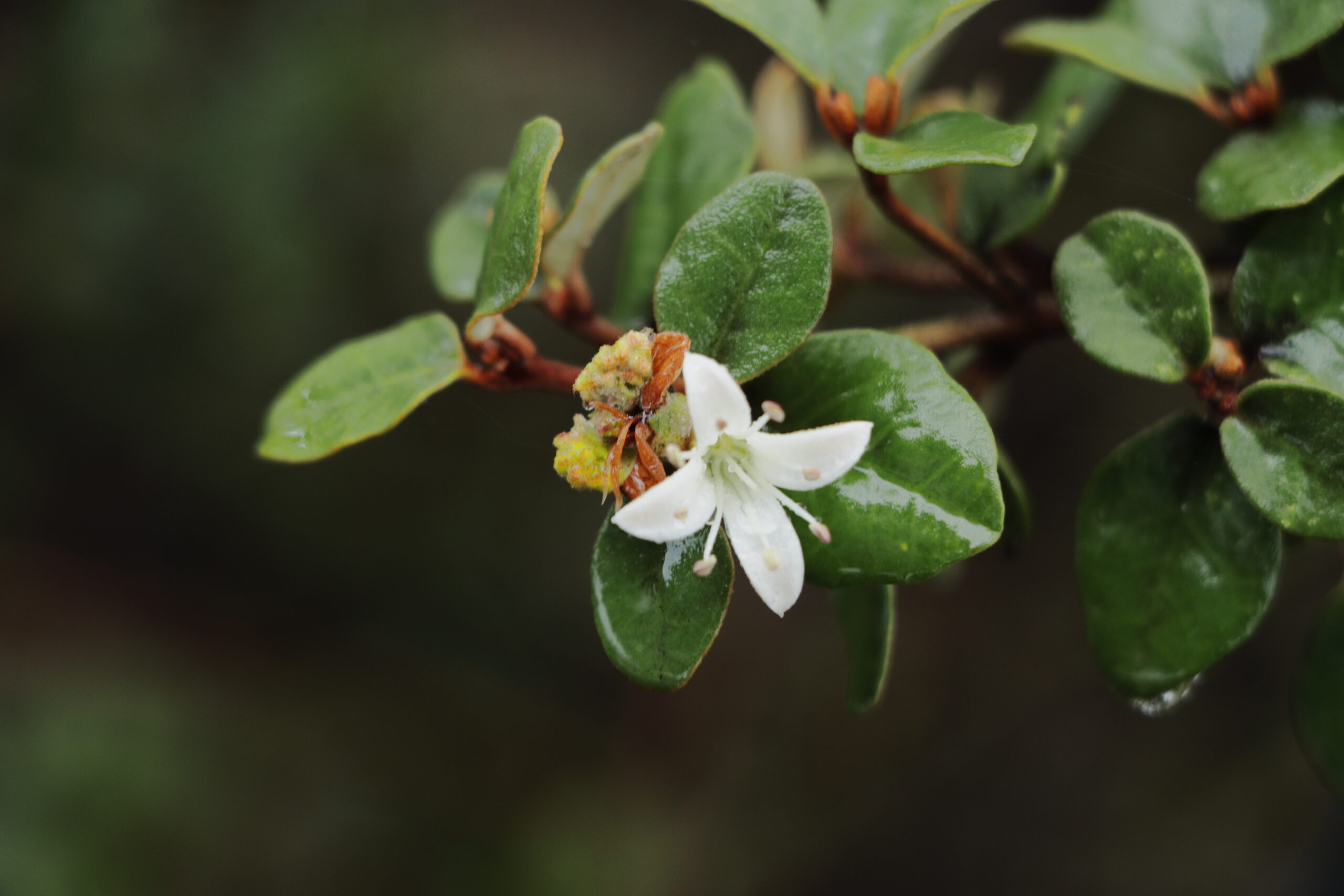
During the first decades of Sydney, colonists used the leaves of white correa (Correa alba) as a tea substitute. The practice spread to the Bass Strait islands with sealing crews, and by the 1820s it had earned the moniker of “Cape Barren tea” due to the plant’s frequent use there. A particularly strong brew of correa was used to treat toothache and facial neuralgia, as it has a numbing effect. The leaves of common correa (Correa reflexa var. reflexa), a red-flowered variety, were also used. Correa tea continued to be used on Cape Barren Island into the 20th century.
The great burnet (Sanguisorba officinalis) of the Northern Hemisphere had been used as a tea and for medicinal decoctions in both Europe and China. In Tasmania, colonists used the dried leaves of the similar looking common buzzy (Acaena novae-zelandiae) and the hairy sheepsburr (Acaena x ovina) for tea and medicine, as they recognised their close relation to the great burnet. In 1826, an article in the Hobart Town Gazette discussed the use of the native species, “Both kinds make a drink which very much resembles that which good tea affords, but the greener variety [hairy sheepsburr] is in the estimation of all those who have tried it, fully equal to the best. It relieves a headache, restores from fatigue, and exhilarates the frame while it strengthens the stomach.”
The common buzzy is also native to New Zealand, where it came to be used in the same way. In the 1930s, a herbal concoction made from the plant was sold in Australia under the Māori name “Hutuwai”, as a treatment for numerous disorders. As late as the 1990s, some older Tasmanians in rural areas continued to make health tonics from the boiled seed heads.
Since the 1600s, the root and bark of American sassafras (Sassafras albidum) had been imported into Europe for medicine, and by the late 1700s, sassafras tea had become a staple of the working poor in London. Colonists in Tasmania associated the aroma of Tasmanian sassafras (Atherosperma moschatum subsp. moschatum) with the American plant and began using it in the same ways. Eventually, Tasmanian sassafras bark was also exported to London. Both plants, though not closely related, have similar properties due to a high presence of the chemical safrole. In 1842, botanist Ronald Campbell Gunn described the way the tea was generally made in Tasmania, “A decoction of the bark, either when in its green state, or after having been dried, is used in many remote parts of the colony as a substitute for tea, and, when taken with plenty of milk, has a pleasant taste. Its effects are, however, slightly aperient.”
Decoctions of the bark were found useful in the treatment of bronchial ailments. In remote areas the sweet inner rind of the bark was used as a raising agent in bread. A tonic beer was brewed from the bark, with some recreational huts on kunanyi having secret stone enclosures for its storage. In more recent times, bushwalkers have added a few leaves to their billy-tea for extra flavour. A myth that the plant is psychoactive stems from safrole being a precursor to the recreational drug MDMA. Safrole on its own is not psychoactive, although it may have a mild placebo effect on those who believe the myth! Safrole has been found to be carcinogenic, so use of the plant is now discouraged.
The leaves of hop bitterpea (Daviesia latifolia) were found to have an intense bitterness, a property sought after by colonists, and known as the “bitter principle”. This principle, a core part of Western herbal medicine, is considered a holistic preventative medicine and a treatment for ailments that have their root in the digestive process.
The shrub was commonly found growing on Tasmanian sheep pastures, where shepherds were known to chew the leaves for their tonic properties. A tea was made from the leaves, considered not just a general health tonic but a treatment for arthritis. An infusion of the leaves, made below boiling point, was used to treat low fevers and to expel tapeworm.
It was once harvested commercially in Tasmania, where it was known as “native hop” for its role as a hop substitute, but by the 1880s there were some concerns over toxicity. It continued to be used in homemade health tonics well into the mid-20th century.
. . .
The plants discussed in this article are only a few examples of those used as beverages in Tasmania’s past. The stories of these plants capture the diversity and cultural resonance of Tasmanian bush beverages, from bitter tonics and wild ciders to the enduring tradition of bush teas.
Following the trail of Tasmania’s edible plant history brings the subject into focus, shattering myths and revealing a history full of surprises.