
A night with good people around the campfire, with tucker and something to drink and a shared passion, is about as fine a way as possible to pass your time.
writer and photographer BERT SPINKS
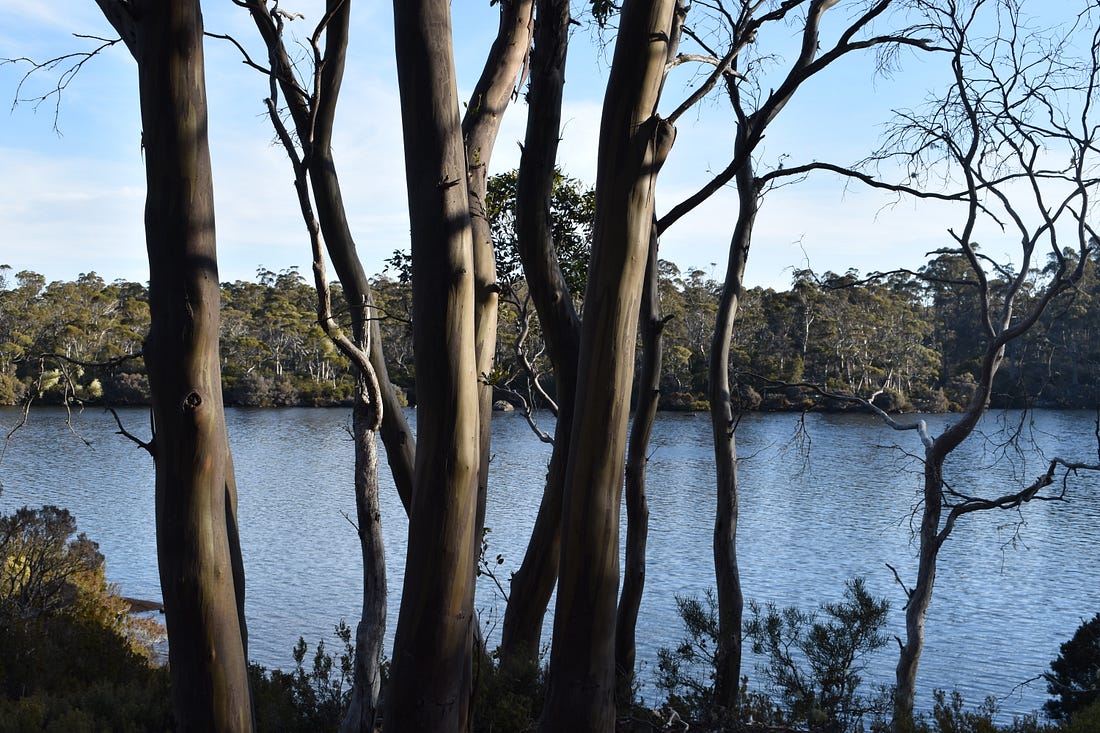
On the lake, there is an island; on the island, there’s a hut. All told, we are talking about a small landmark in the middle of vast country – the island less than ten hectares in size – yet, as often happens with a place, it is more than the sum of its parts. You barely scratch the surface when you know only the geographical facts.
To suggest the deeper meaning of the island, let me tell you a story. It’s a story about a young man in his undies.
This young man was an eager bushwalker. He had found his happiness in the open spaces of the high country and built an identity around getting to know it. For years, he’d heard yarns about the shack on Halls Island, open to the public but only accessible by foot. The image of its timber and rusted tin façade was fixed in his mind; he knew about its cosy fireplace and its small library, a shelf of books with pages bloated from moisture.
It was also the case that the island was a refuge for rainforest species, which had otherwise succumbed to flames on the plains around it – a reminder, as were the recurring bushfires of recent years, that you must not take what exists at present for granted.
The island was on his mind, but he was yet to get there. Planned excursions fell through. One autumn, he had tried to traipse there with a friend – taking a different (more difficult) approach than usual – but got redirected due to weather. A memorable trip, but not a trip to Malbena.
Meanwhile, despite its position inside a national park, a private development had been proposed for Halls Island, making it seem that its days as a destination for fishers and bushwalkers might be numbered.
Finally, the young man made it to the shores of Lake Malbena. He stripped off on the bank and leapt in, swimming the narrow channel to the island and arriving to the front door of the old hut in sodden knickers, euphoric.
Soon afterwards he found that the developer had put a surveillance camera on this remote island. A development application had been stuck up on an alpine yellow gum, using a staple gun.
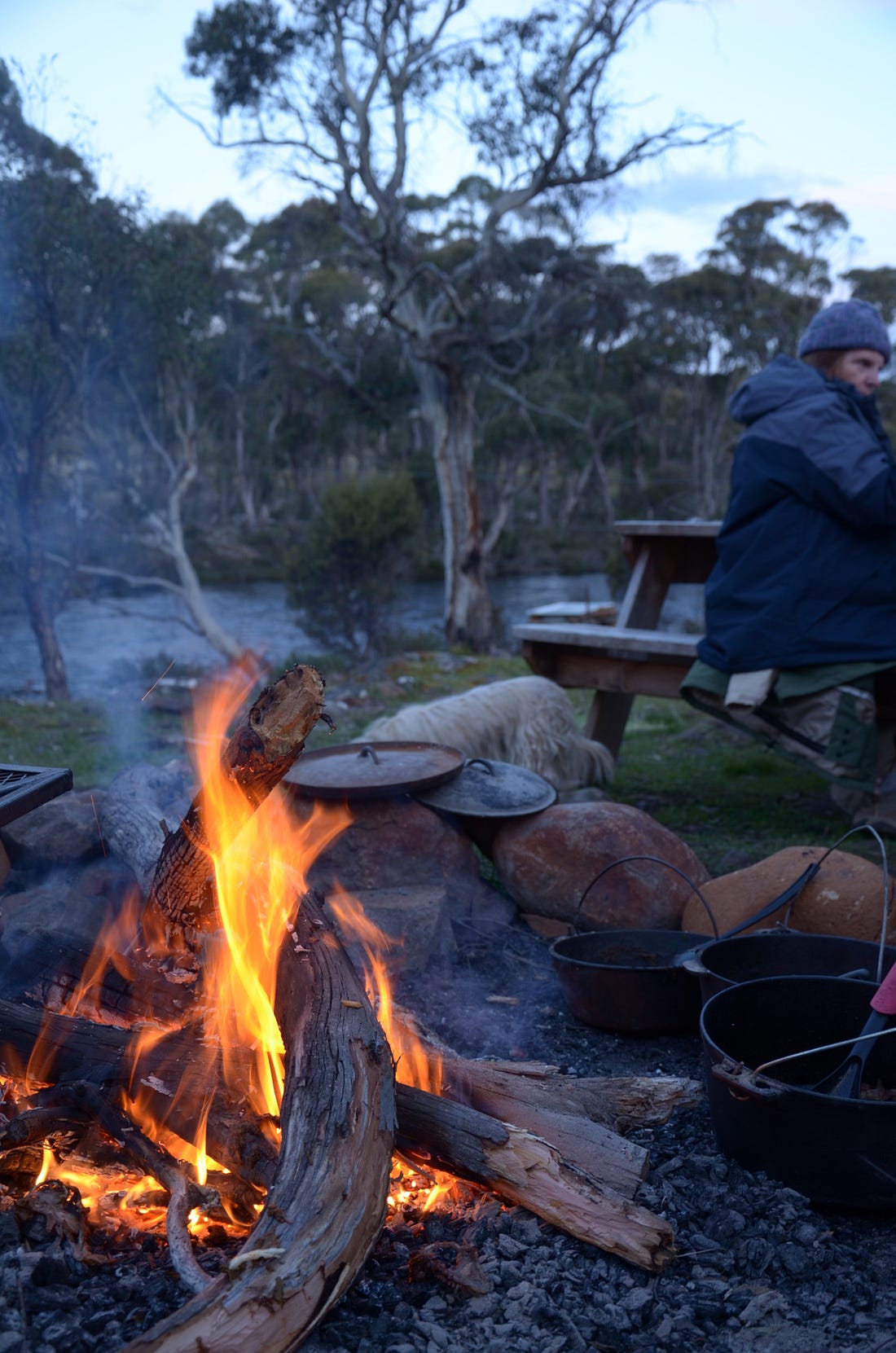
Now I am sitting around a campfire as the sun sets over the highlands. Cast iron pots have been settled onto coals, generously filled with wallaby and muttonbirds. Twenty or thirty of us have gathered, leaning back in portable chairs, sipping whisky or stout or billy tea.
The property we are on is called trawtha makuminya, a community-owned Aboriginal property within cooee of Lake Malbena. These are the traditional lands of a nation remembered as the Big River people, home country that corresponds to the big dolerite slab that makes up the centre of Tassie.
I am often on Big River lands. Most of it these days is part of the World Heritage Area, where anyone is welcome to roam, camp, rock-hop and skinny dip. Here is where I’ve refined my life into its present shape.
I have never been anywhere on the planet that makes me feel as free as the Central Plateau of Tasmania, which makes it all the more important to remember those who lived here from the beginning and who fiercely defended themselves against dispossession two centuries ago – to think of what we might still learn from their example and their descendants.
Around the campfire is a curious cast of characters. We have come from all almost every corner of Tasmania; the age range spans at least five decades. There are foresters and farmers, guides and writers. I knew few people before I arrived, but I easily join the jumble of voices, leaning in to converse over the loud soliloquy of the river that runs behind our campfire.
We are naturally gathered in a circle around the boisterous flames. An exchange of stories about the plateau soon begins. There are fishing yarns, accounts of getting lost, stories about strange encounters in the huts that are left open to the public all across the plateau. There are a couple of drinking stories; at least one account might be considered bawdy. We laugh a lot.
The open space of the high country creates room for big narratives. It is the perfect backdrop for shaggy dog tales, odd coincidences, epic ballads. But not all stories are campfire stories. Indeed, many of them are poems, short lines of minimalist verse about how such a place stirs emotions, quickens the spirit, moves the mind and brings a powerful sense of peace into your heart.
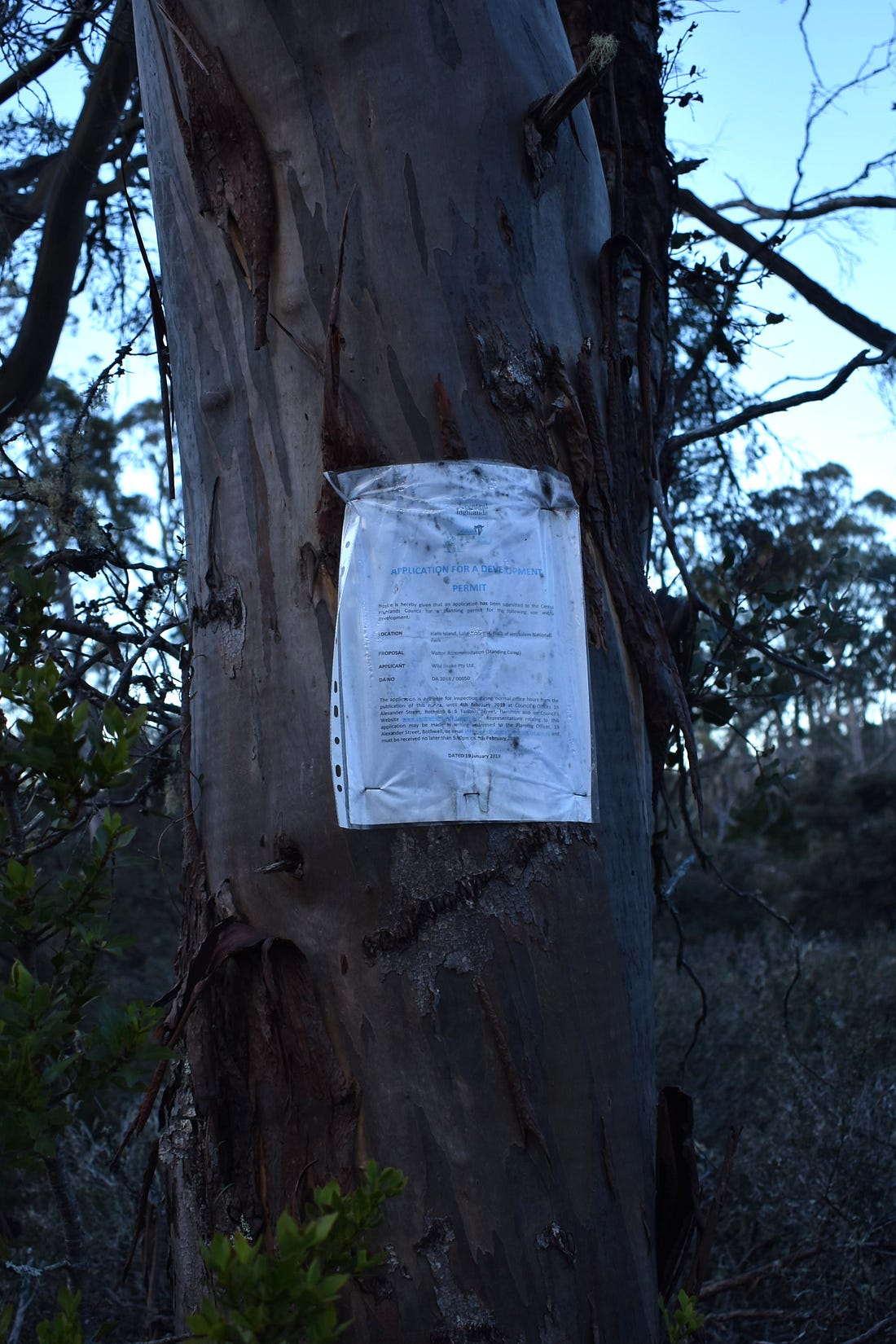
The developer’s plan to make Lake Malbena a playground for well-heeled travellers was revealed a decade ago. The state government had solicited proposals for businesses within the boundaries of national parks, a move that didn’t represent a change in legislation but suggested a threat to the principles that underpin our reserves.
What was being mooted for Lake Malbena was helicopter tourism. The punters would be whisked onto their own private island. The flight path crossed other remote bushwalks, fishing lakes and trawtha makuminya.
But in theory, this would affect few individuals; indeed, most Tasmanians have no idea that Lake Malbena exists. For those looking on from the outside, it must have seemed like a pretty easy land-grab.
It took very little, apparently, to get the first tick of the government’s approval process; the proposal for Halls Island was ushered hurriedly over the usual hurdles. What neither the government and proponents reckoned on was that Tasmanians would see through the veneer of this project and into its deeper implications.
Privatising a part of this national park would make it easier to pinch other parts of the reserved country from beneath our noses. A tunnel of subterfuge was being built; if dug, it would undermine our national parks. We pushed back.
. . .
Sitting around the campfire, it was my turn to tell a yarn. So I told the group about a morning when I went up the steep switchbacks to the plateau’s edge, with a botanist mate who had said we might find a rare liverwort in a gully there. No-one, he said with a touch of drama, had ever seen this plant’s reproductive parts.
We had been at a party the night before; perhaps that’s when I had agreed to join this mission of international biological importance. I didn’t have the heart to say that I was unlikely to identify any kind of liverwort, especially not in my post-festive state, but I went through the motions anyway, poking and prodding at lichens and mosses, and possibly overlooking the sought-after species and its secretive sexual organs.
I told the story around the campfire to illustrate a point. The expanse of the high country is a place where we are free to indulge almost any curiosity. There are nearly no limits on the activities. True, you can’t drive a vehicle or build anything, but that’s about it. You can walk for days on end, through habitats that have been protected for a diverse range of critters. You can scramble to the highest summits or you can squint at miniature plants, wondering which of them are liverworts.
Sane people will not call it a “resource”, a word we use to describe the most important elements of life only when we are brainwashed, but among the valuable things that we have in Tasmania is open country where a person can be themselves.
People everywhere live in cramped quarters, with no privacy, in stale air and apart from photosynthesising beings. They reduce their worlds to the size of a phone screen, perhaps because they lack opportunities to stretch their legs or test their mettle against the might of a dolerite crag or a westerly. I am grateful that I can do otherwise.
There’s a trite old line that gets trotted out by Tasmanians who want the enterprises of capitalism to sprawl into every arena of existence like an infestation of blackberry canes. Upset that they can’t make a buck out of them, they say that national parks are “locked up”, as if money-making is the only activity that their impoverished minds can come up with as a way to pass the time.
Developers will cynically tell you that their projects make such places more accessible. Oh, of course my heart-strings are tugged, as much as anyone’s, when I think of these long-suffering, high-end tourists forced, like the rest of us, to trudge through beautiful tracts of bush to get to Lake Malbena. Yet I am still not quite convinced they need this island to themselves as much as they think.
The businessman who wants to put a Keep Out sign on Halls Island has done us a favour. It has never been more apparent that it is business operations that restrict the use of these special places. When public land is left alone, there is so much that we can do in it.
As the campfire is lit, one of the party’s organisers party gives us an update on where the proposal stands at present. It’s the first comprehensive wrap-up I’ve heard in several years. The status of the island has been contested in courts. The news is mostly good, although the idea won’t go away. For now, it remains in an uncomfortable limbo state.
We ought to give medals to environmentalists who can read fine print, who untangle and demystify the languages of law and economics and mediate between the material reality of the bush and modern legal system’s various artifices. I can’t think of a job to which I’m less suited, but without teams of staunch individuals like these, so many of the protections afforded to our public lands would have been peeled back and lost forever.
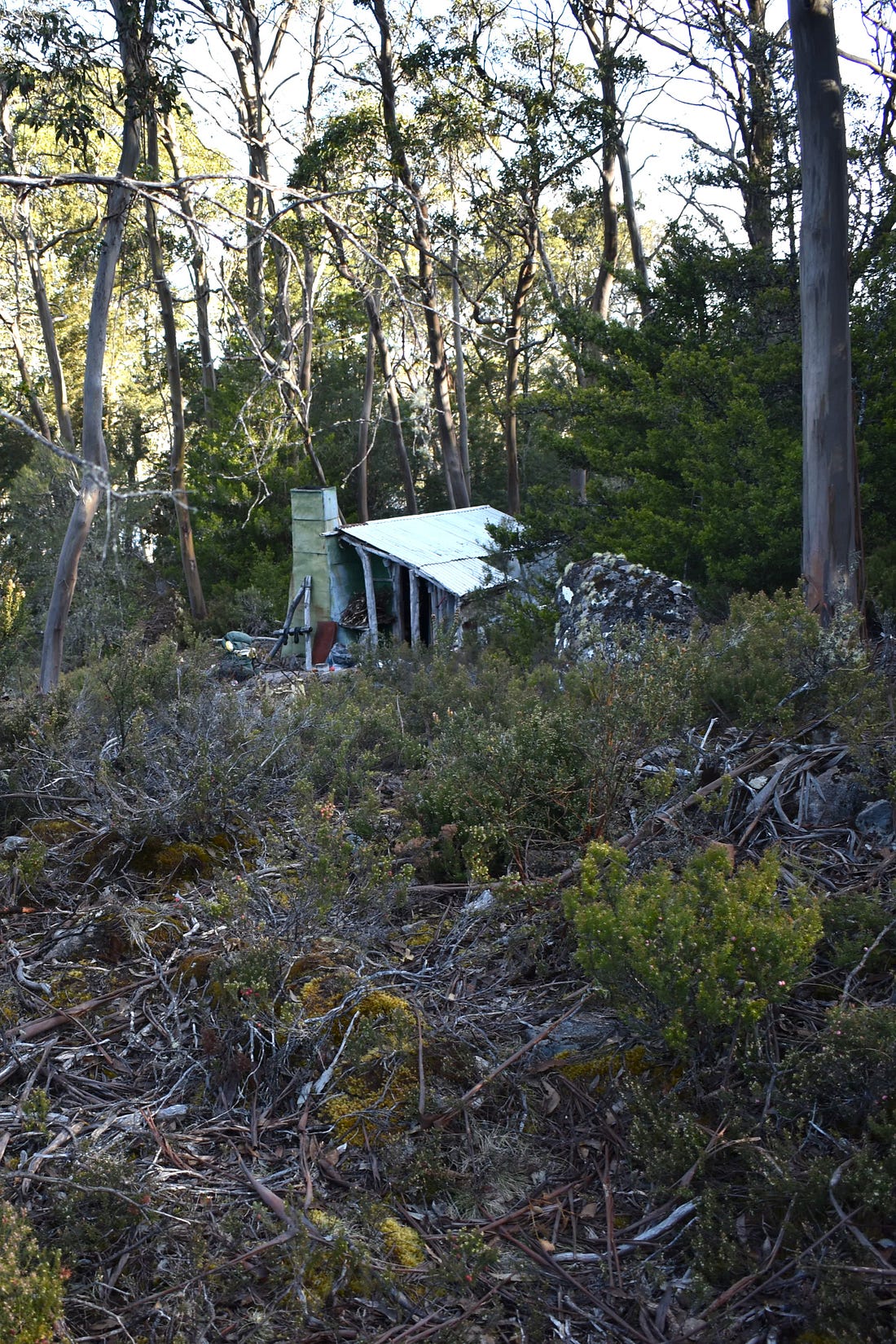
Around the campfire, someone mentions the name of Reg Hall, who built that hut on Lake Malbena in 1952. Not only an inveterate and innovative bushman, Reg was also a lawyer. He took out a private lease on what was then “unallocated land”. It was inherited by his daughter, who transferred it to the tourism proponent in the hopes that this would help look after the hut’s history. This has failed to occur: the hut is falling into disrepair, despite its heritage listing.
An older gentleman around that campfire recounts that he worked with Reg on a conservation case many decades ago (Reg died in 1981). The man’s soft voice quavered with emotion as he reflected on what has transpired with his island hut. “Reg would be rolling in his grave,” he said.
The fire is stoked, the stars rise, the stories span the decades and last for hours. It’s a good night at trawtha makuminya, eating and yakking and listening to the river have its say as well. I suspect that there are few better ways to remind a group of people why it’s worth pushing back against the banality of greed. For me, at least, this fellowship of the bush has made me keen to play my part.
I think almost everyone would agree that a night with good people around the campfire, with tucker and something to drink and a shared passion, is about as fine a way as possible to pass your time. It costs practically nothing to do this. Yet I feel that I have repeatedly had a different vision of the future foisted upon me, in which the only way to enjoy each other’s company is by forking out a whole bunch of money. It is one of the most absurd confabulations of capitalism.
I like to hear the stories of people I don’t know. Meeting strangers is an act of resistance. It’s one of the reasons why public land is so important. When you waltz into a walkers’ hut, as when you shuffle in next to a campfire, the etiquette is that you will be made welcome. Such is the nature of the place.