
writer and photographer KATE BOWN
The ferry frolics in the swell. I close my eyes and drift. My velvet chair and the rolling sea are a lullaby for an exhausted mother. A tangle of blonde hair and wind flushed cheeks falls into my slumber.
“I’m bored. Can we go back to Maria?” my five-year-old daughter huffs. It’s the first time in a week I’ve seen the mists of melancholy in her blue eyes.
We are on our way home from a magical family holiday on Maria Island, six kilometres off Tasmania’s east coast. The entire island is a national park, but its tranquil shores harbour a sad past. Like most islands of Tasmania, it is haunted by colonial occupation and convict heritage.
Last time I visited Maria Island I was a teenager. I remember long days exploring red bricked ruins, bike riding on marsupial manicured hilltops, and brilliantly bruised sunsets. And at night, in our sleeping bags, sharing whispers and laughs with my bestie.
I wonder why it has taken me so long to visit again. Perhaps we are just beginning to discover the magic places for family holidays. Like most things, I learn from others who have been before. And Maria had been on my bucket list ever since I’d heard stories from families who return every year.
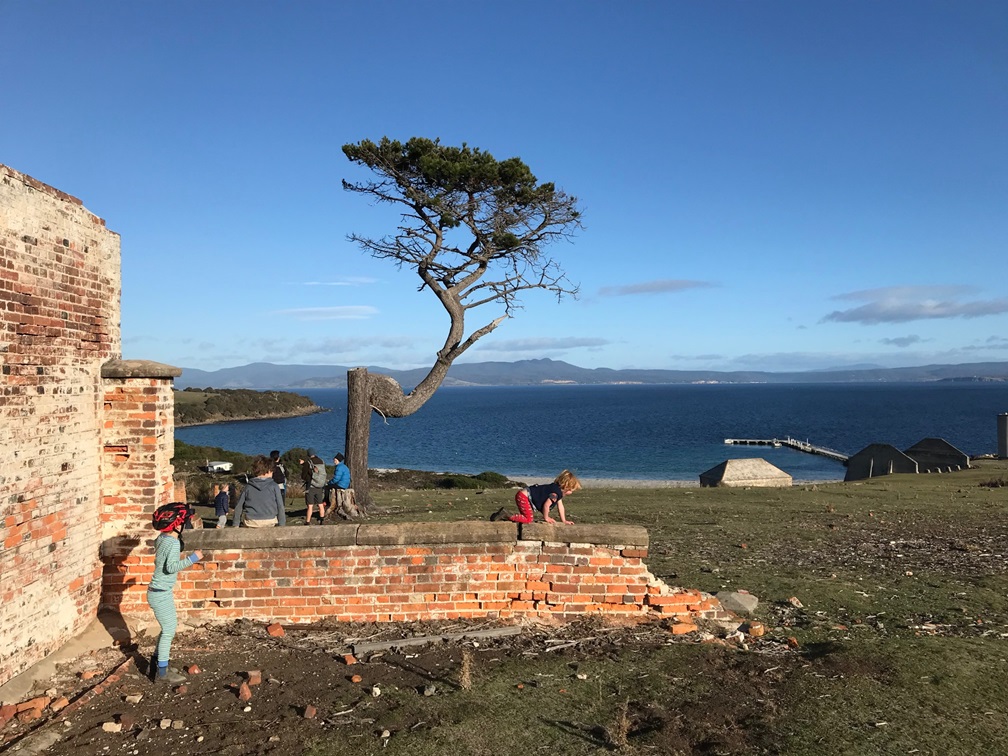
We share a dorm room in the old convict penitentiary building with another young family of five. Everything goes smoothly despite coughs, sleepless nights, and grazed chins. Our friendship is strong enough. We know many of the families holidaying and we share the load: meals, washing up, keeping an eye on the children, and stories by the wood fire before the day’s first light.
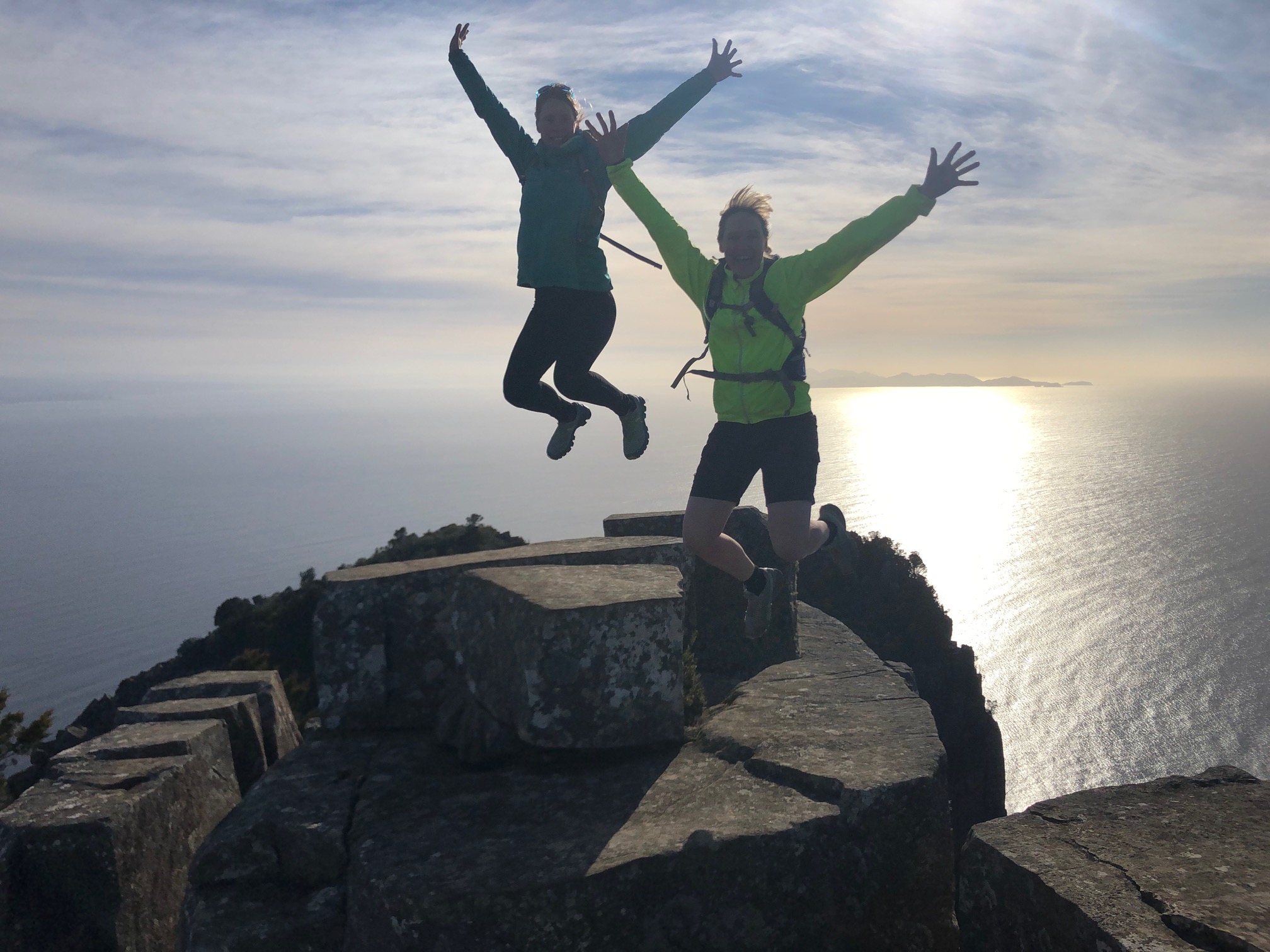
On Maria we are free from the constraints of city living. Our children roam wild, their grubby faces glowing with delight. Parents divide and climb the twin peaks of Bishop and Clerk, which rise 620 metres from the sea on Maria’s northern tip. I ascend with a motherhood: four women delighting in a shared adventure. We stand atop towering dolerite columns, smiles bursting and legs burning. The view is spectacular: a sun-salty swell lashing Maria’s coast, Freycinet Peninsula, Schouten Island and Isle des Phoques in the hazy distance.
Magic Maria.
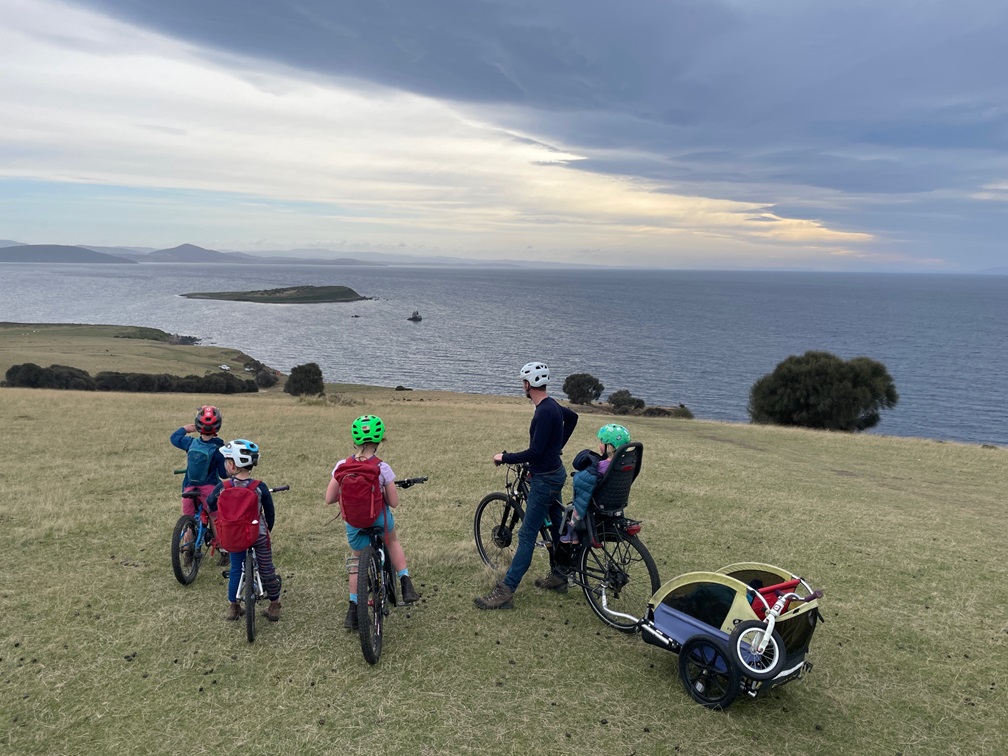
We explore the island on wheels. We are a circus troupe, a menagerie of bikes. One of us rides an e-bike with a chariot pulling children, puffer jackets and Vegemite sandwiches. We fly our kite on top of an old quarry where deep cuts have exposed 250,000 year-old fossils, paddle in rock pools and collect starfish. We spot seals and wedge-tailed eagles, and strip down to our t-shirts in the afternoon sun. Should I wonder if we are getting sunburnt in the middle of winter? Or perhaps, I am worrying too much, a mother’s prerogative.
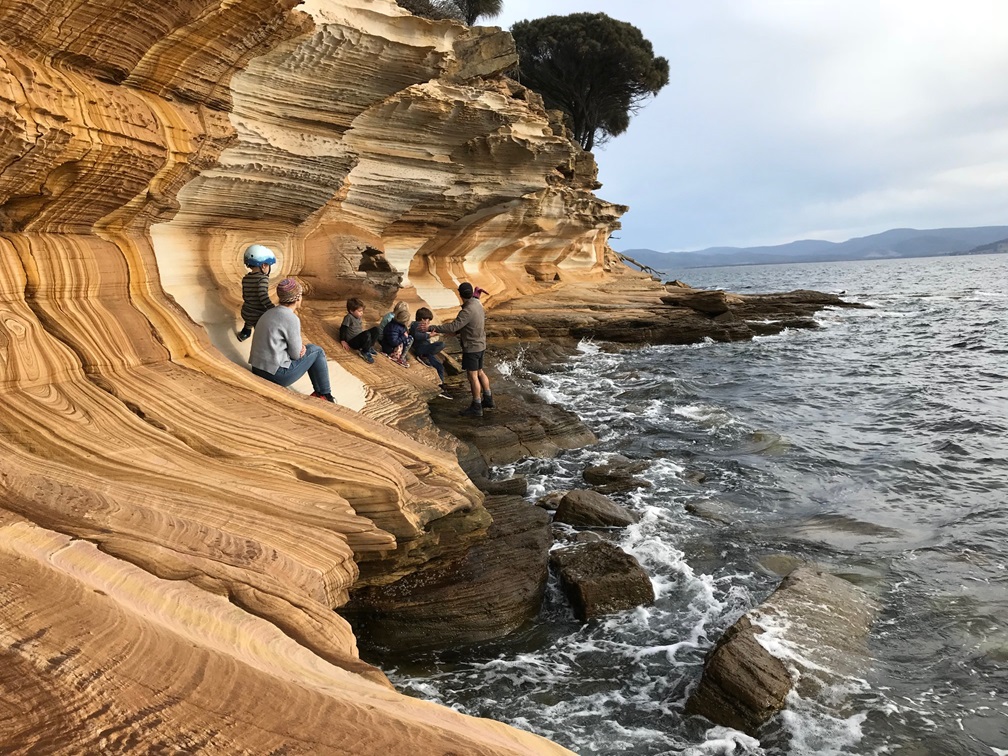
We marvel at convict ruins and relics of forgotten industries, but there is a deeper, more profound history to be found on Maria: 40,000 years of Aboriginal existence, visible in shell middens that offer windows into a more balanced past. Older still are the stories written in the island’s geology, the beautiful patterns of the Painted Cliffs created by ancient iron-rich deposits and thousands of years of erosion. And the creatures immortalised in rock at the Fossil Cliffs mark a burial ground from a Permian mass extinction.
Maria is a magical time machine for inquisitive little minds. I hope we can protect it.
In the evenings, we gaze at the sky and imagine mythical creatures. The stars are brighter away from the glow of city lights. And at night, we dream of other Maria dwellers: devils, kangaroos, and the littlest penguin. Maria has become an ark for our most precious endangered animals. Even the wombats on Maria are magical, grazing in the midday sunshine or in the middle of the bike track, not a whisker ruffled.
Our youngest chats to a “bat” and tells it to “eat”. The wombat politely nudges him out of the way and goes on in search of greener shoots.
Magic Maria.
The wind began to howl on our last day. And I felt like Mary Poppins, returning home with the west wind, the children dreaming of our next magical adventure. If only I was carrying a small handbag like Miss Poppins. Instead we reverse a mammoth logistical operation: packing food, sleeping bags and equipment into upsized supermarket trolleys, and pushing it all to the jetty for portage on the ferry.
At the end of our trip, we share fish and chips with friends. The sun sinks and washes the marina in purples and pinks. The children hover and swoop, like seagulls. Never still for long, they play chase around the table and spill onto the road. Perhaps they have forgotten how to play safely in the city. Or perhaps we are all still on Maria time.
As we round up our free spirited offspring, I exclaim, “Let’s go back to Maria.” We all laugh. Another Maria Island holiday is brewing.