

Summer holidays at Robigana, West Tamar, Tasmania (1950s)
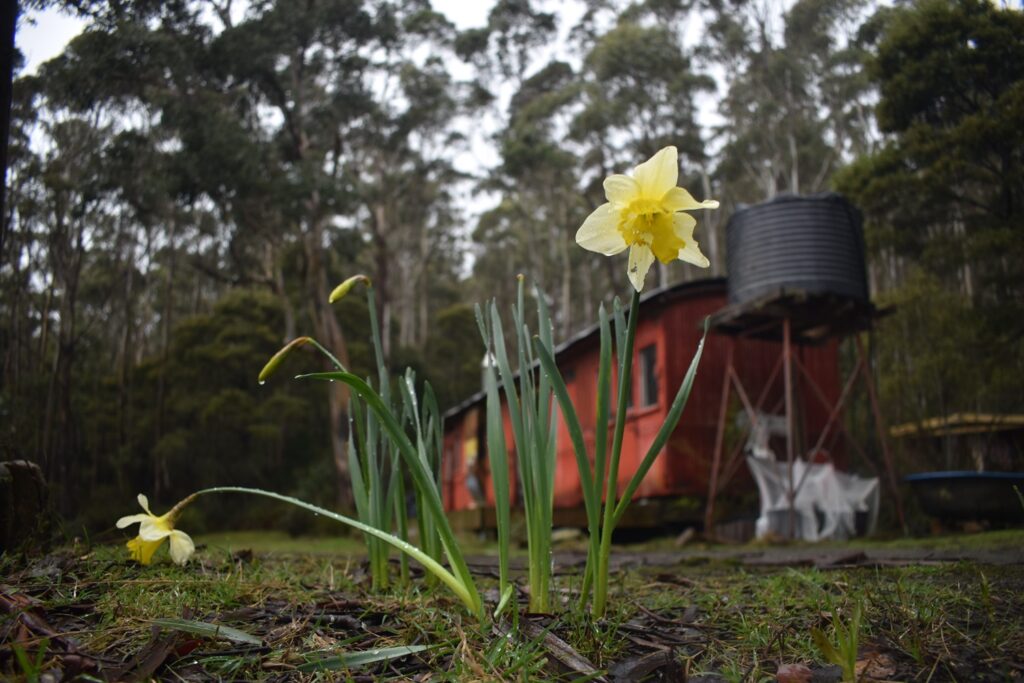
Each morning, we wake to birdsong.
It catches in the rim of eucalypts,
swells to fill the curve of sky,
as sunlight falls on the family cottage
and filters into bush, our only neighbour.
From my verandah bed I watch
as crazy fantails scratch the ground
or flit their low-flight antics,
as wrens and robins drink and splash
in the birdbaths I fill each day,
as honey-eaters breakfast upside-down
on bottle-brush, preen and feed again.
The river waits for us, brother and sister,
old enough to take Grandfather’s dinghy
into the bay to fish for mullet and cod,
or row around the point, taking turns to be towed,
grasping the stern, kicking to aid the rower.
Today, we set a course for the river.
Rowing under the bridge,
we beach the boat just short of a waterfall:
visit the ruins of a mill,
desperate to see three mounds of stone
where, folklore tells us, convicts are buried.
We vow next time to dig them up.
We lie in swirling, falling water,
share our lunch with gulls and terns,
sunbathe on smooth boulders, swim or doze
until the sun loses its warmth,
before it sinks behind the tallest trees.
We row past treeless Egg Island
where multitudes of black swan breed,
back to the bay of Robigana*, beach the boat
and pull it above high-water mark.
Reporting to our mother we’re home,
we cook at the makeshift outdoor fireplace,
and fall asleep in our verandah beds
as the moon lights up the rim of trees.
The birds are silent.
*Robigana is a First Nations word for black swan