

Alex Lithgow composed world-acclaimed brass band music in Tasmania more than a century ago, one piece becoming particularly famous, but to those who know and revere his work it is too rarely played and heard. In 2026, the 100th anniversary of Lithgow conducting five bands simultaneously in Launceston’s Albert Hall in 1926, perhaps it’s time to remedy that.
By day Alexander Frame Lithgow was a printer, an inky-fingered trade now largely lost. His speciality was composing event programs and invitations, rather than piecing together the hot metal galleys of type for news pages and advertisements in The Examiner and The Daily Telegraph, another Launceston newspaper company at which he spent much of his working life.
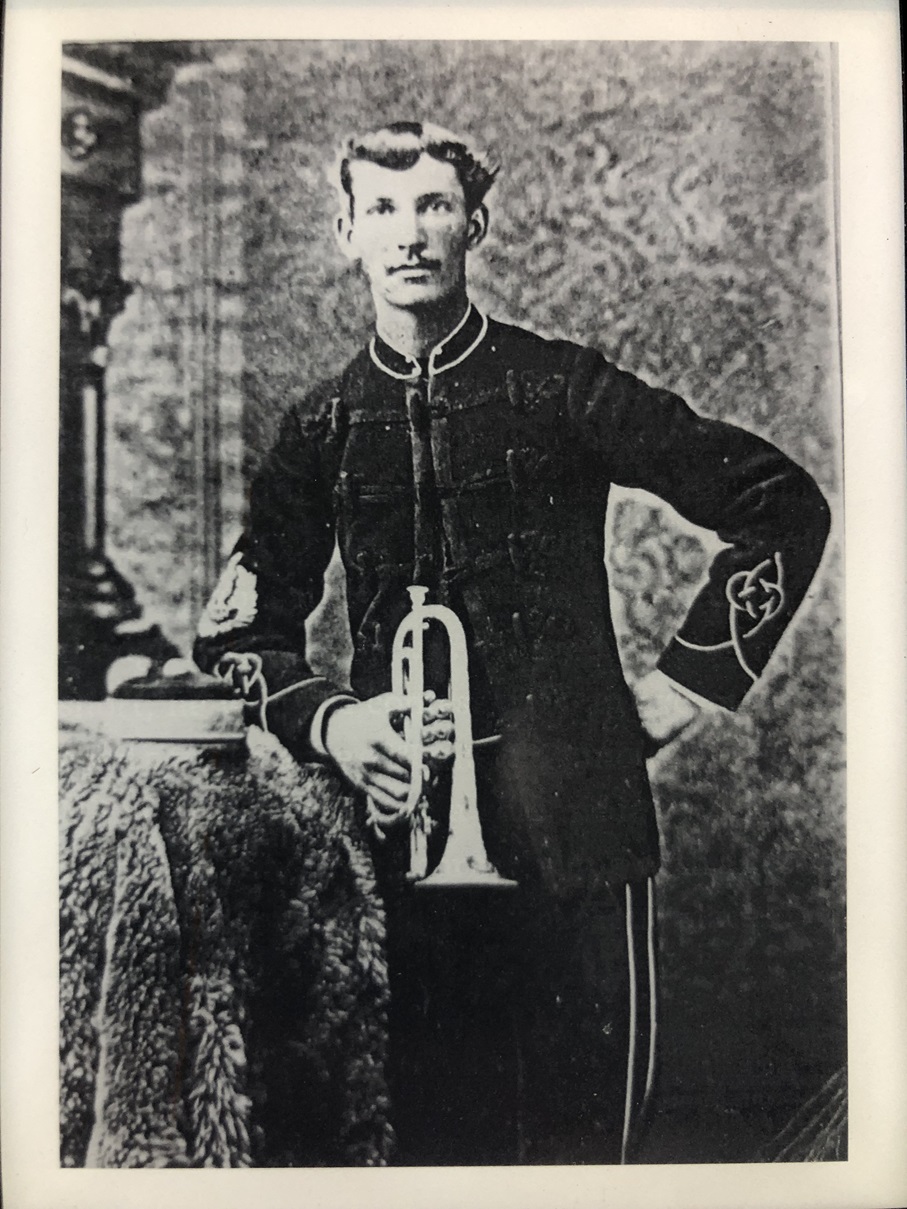
At night and weekends, Lithgow was an industrious composer of another sort, acclaimed around the world from the early 1900s for his brass band music. He composed more than 200 marches and other pieces for bands, orchestras, piano and voice. He was a cornet player, a conductor and a band leader.
His most famous march is Invercargill, named after the southern New Zealand city where Scottish-born Lithgow had spent his youth, but it was written in Tasmania. Invercargill was adopted long ago by the US Marine Corps, and the United States Marine Band still plays it regularly.
Another of Lithgow’s works is The Australian Wedding March, written for the nuptials of his eldest daughter Jean, who wed soon after Lithgow’s premature death in 1929. In 2004 it was played at another wedding, that of Tasmania’s Mary Donaldson to Denmark’s Crown Prince Frederik.
The many events at which Lithgow’s music has been played include the 1924 Empire Exhibition at Crystal Palace in London and the 1970 World Music Festival in Kerkrade, Holland. His marches also went with Australians and New Zealanders to the first and second world wars. One was Sons of Australia, another The Anzacs. His works lifted spirits in Singapore’s infamous Changi prison camp and some were performed at a victory march in Tokyo in 1946. Lithgow also composed marches for most Australian states and various cities, while others have Tasmanian names such as Cataract, Westbury, Ellerslie and Evandale.
Lithgow had been taught the cornet at nine by his father Samuel. He soon joined the Invercargill Garrison Band, won the NZ solo cornet championship as he reached manhood and became his band’s leader. A critic in NZ’s Canterbury Times named him “Bellbird” for his “liquid and beautiful tone”. It was said that his playing of the cornet “left nothing to be desired” and that “when Lithgow takes the baton, salvation is assured”.
. . .
In his early 20s, Alex Lithgow accepted an invitation to become conductor of Launceston’s St Joseph’s Band, Australia’s oldest civilian ensemble. It was to be a 30-year association, although Lithgow returned to NZ briefly early in his married life.
In 1895 St Joseph’s – or “The Joes” as the band became known – defeated the Hobart Garrison Band in a Tasmanian championship that was said to have been an “instrumental treat” which created “infectious excitement”. “The Joes” also won the quickstep competition. Other successes, at home and interstate, followed.
Lithgow was concurrently bandmaster of the Campbell Town Band. At this time – the early days of radio and long before television – bands were a major form of entertainment.
Among the highlights of Lithgow’s career in his adopted hometown were: a performance in 1906 to mark the centenary of Launceston’s founding as Australia’s third-oldest city, “Made in Launceston”, a 1923 concert at the National Theatre comprising entirely works composed and conducted by him, with The Examiner describing him at the time as “an irresistible prime mover”; and The City Band’s Jubilee at the Albert Hall in 1926, which concluded with Lithgow conducting five massed bands playing his Invercargill.
America’s “March King”, John Philip Sousa, was an admirer of Lithgow and included the Tasmanian’s works in his own concert performances, calling Invercargill “a masterpiece”. As part of a world tour, Sousa visited Australia with a 55-piece ensemble in 1911. It played twice in Launceston. Sousa and Lithgow surely met, but extensive research has failed to find any record of it.
Lithgow came to be known as “The Sousa of the Antipodes”. NZ critic Stanley Newcombe, in an article for Music Maker, described Lithgow as “not only known for his outstanding ability as a composer, conductor and cornet virtuoso, but also for his character, charm and great modesty. Those who played under him report that he was truly a gentleman in every way and was noted for his kindness, patience and forbearance. There was never any petulance of a prima donna about him, and it would be hard to find a more sincere and unassuming person anywhere who has reached such heights.”
Lithgow was tall, slim, with brown eyes and brown hair, a moustache and, it was said, a whimsical air. He loved sport (following Test cricket, wrestling and boxing, and had played rugby and ice hockey), read current affairs (avidly in The Bulletin), was a circus buff and had a fondness for fruit cake.
Throughout his life in Launceston, Lithgow enjoyed the friendship and patronage of The Examiner proprietor, music lover and violinist WR Rolph, despite working so long for the opposition Daily Telegraph.
Alex Lithgow died just shy of 60, of pernicious anaemia (now easily treatable).
. . .
Despite record sales of many of his compositions, Lithgow never received the financial rewards he should have as much of his music was pirated, but that did not worry him greatly. He had lived at George Street in Launceston, then at Invermay and finally at St John’s Street. His heart, however, may always have been in NZ’s southern climes. “All I learned was learned in Invercargill,” he said. He settled on Launceston for the happiness of his wife, Bessie.
Apart from Jean (christened Janet), they had a son, Alex Junior, and another daughter, Betty.
Lithgow’s funeral was the biggest Launceston had seen, with 100 floral tributes and florists unable to meet the demand for more. Rev JL Hurse described Lithgow as “one of the most Christ-like men I have ever known.” He spoke of his “great grace and charm of manner” and the “rare beauty” of his character that had “shone through his face in rare fashion even when he was wan and worn with sickness.”
The St Joseph’s and Railway bands walked 5.6 kilometres from the Lithgow family terrace, Holyrood next to Chalmers Presbyterian Church, to Launceston’s major cemetery, Carr Villa, for the service. On return they played Invercargill and another Lithgow composition, Queen of the North.
Lithgow was inducted into Launceston Hall of Fame on Australia Day 2009. Granddaughter Pat Ward recalled, “How appropriate the Hall of Fame is situated in the Albert Hall, a venue well known to Alex Lithgow and where he featured in concerts, competitions, balls and fund-raising functions by various music organisations with which he was involved.”
A tall obelisk in red granite at the head of Lithgow’s grave pays “tribute to his musical genius”. There is a plaque to him on the rotunda in Launceston’s City Park and another at Paterson Barracks. In Invercargill there is a statue and a school named after him.
. . .
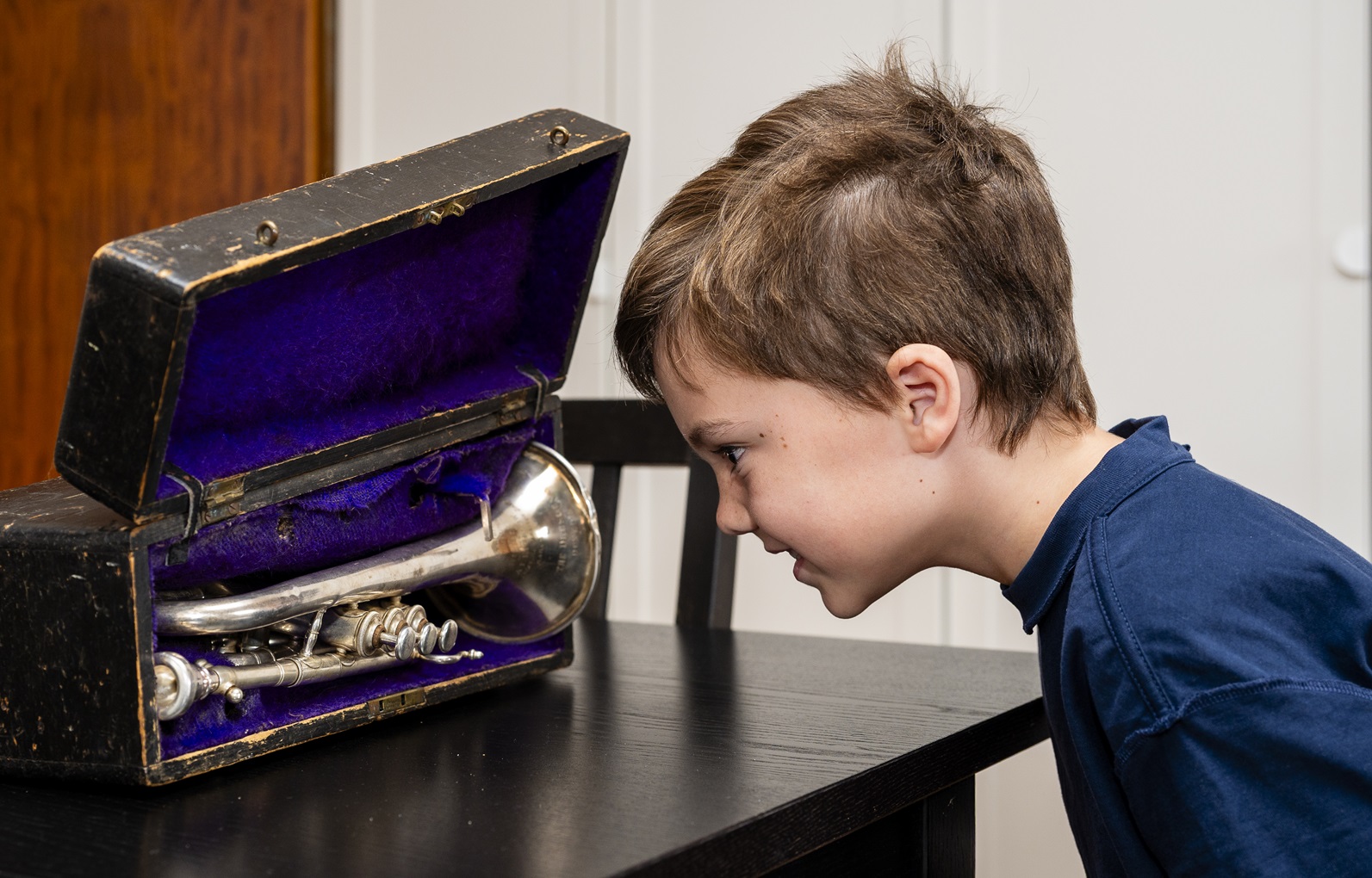
The Lithgow lineage continues today in southern Tasmania – grandson Tim, great grandson David and six-year-old great-great grandson Alex. There are other descendants in the state and interstate. A modern incarnation of Lithgow’s primary Launceston band exists as the 22-piece St Joe’s Big Band.
Invercargill has been described as his living monument. A New York critic wrote, “There is something so different and so wonderfully snappy about the marches of Lithgow” that “once you have heard a Lithgow march you won’t rest until you’ve heard them all.”
The pity is that Lithgow’s music is too rarely played, especially in places where it should be, like Tasmania. Enough of the silent tributes – he needs to be heard!
John Mathew and Geoffrey Harris drew heavily for this article on the book Alex Lithgow 1870-1929 March Music King by his descendants Pat Ward and Diana Fisher, first published in 1990 with a second edition as an eBook in 2022.