
writer and photographer BERT SPINKS
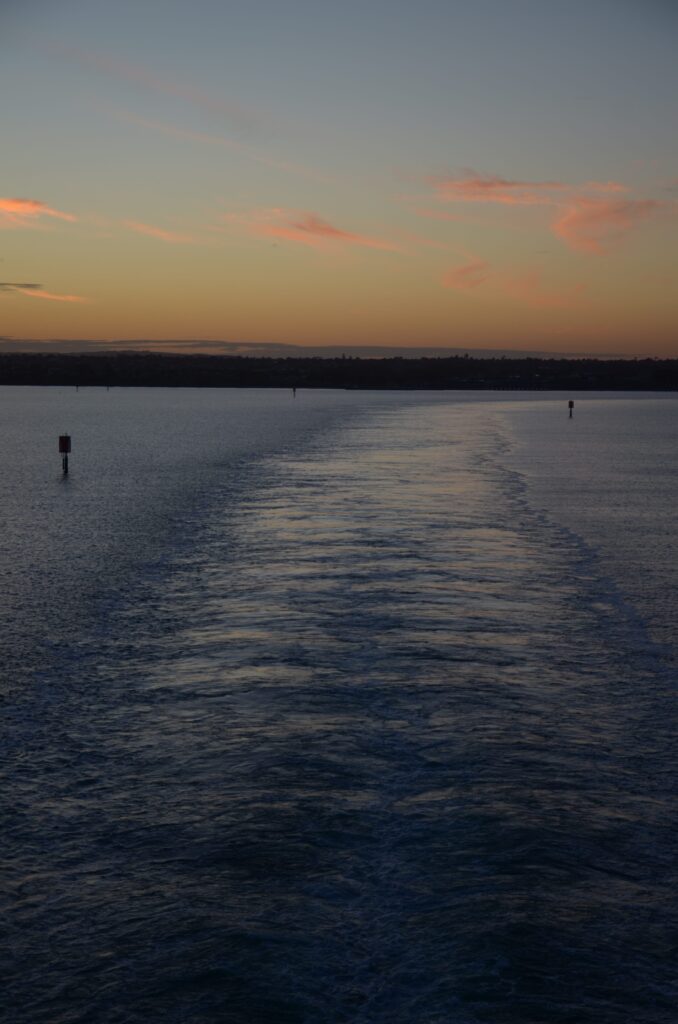
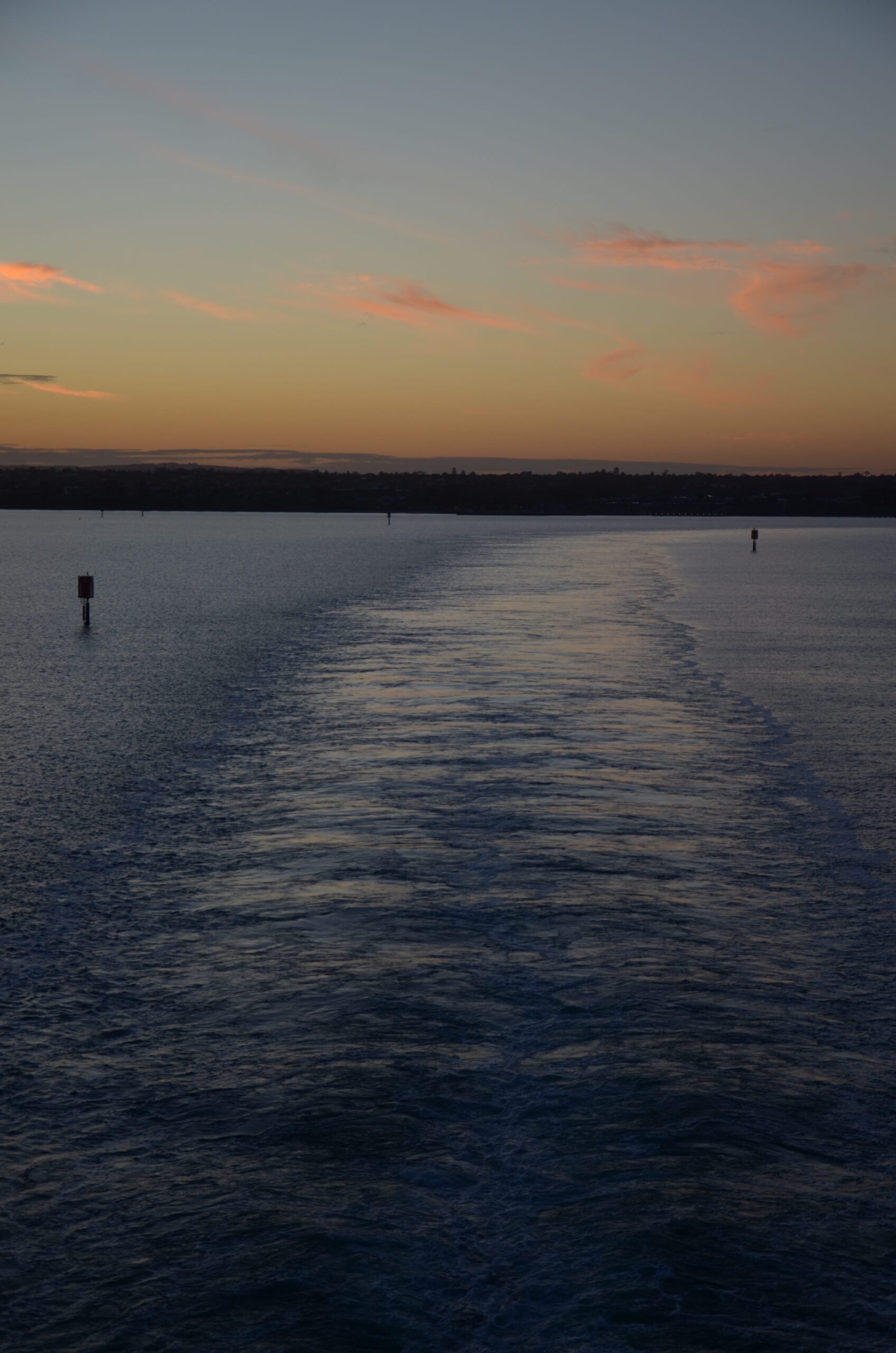
I am standing on the stern of the new ship as she eases into the mouth of the Mersey – facing the wrong way, that is, back onto Bass Strait, squinting as if to see the big country from which I’ve just come.
Swallows swing as if hanging from vines. Seagulls tap dance on the deck. At last, the coastline materialises: it curves outwards on both sides of the river’s mouth, east and west. I pick out some landmarks: the Asbestos Hills, the mouth of the Leven River.
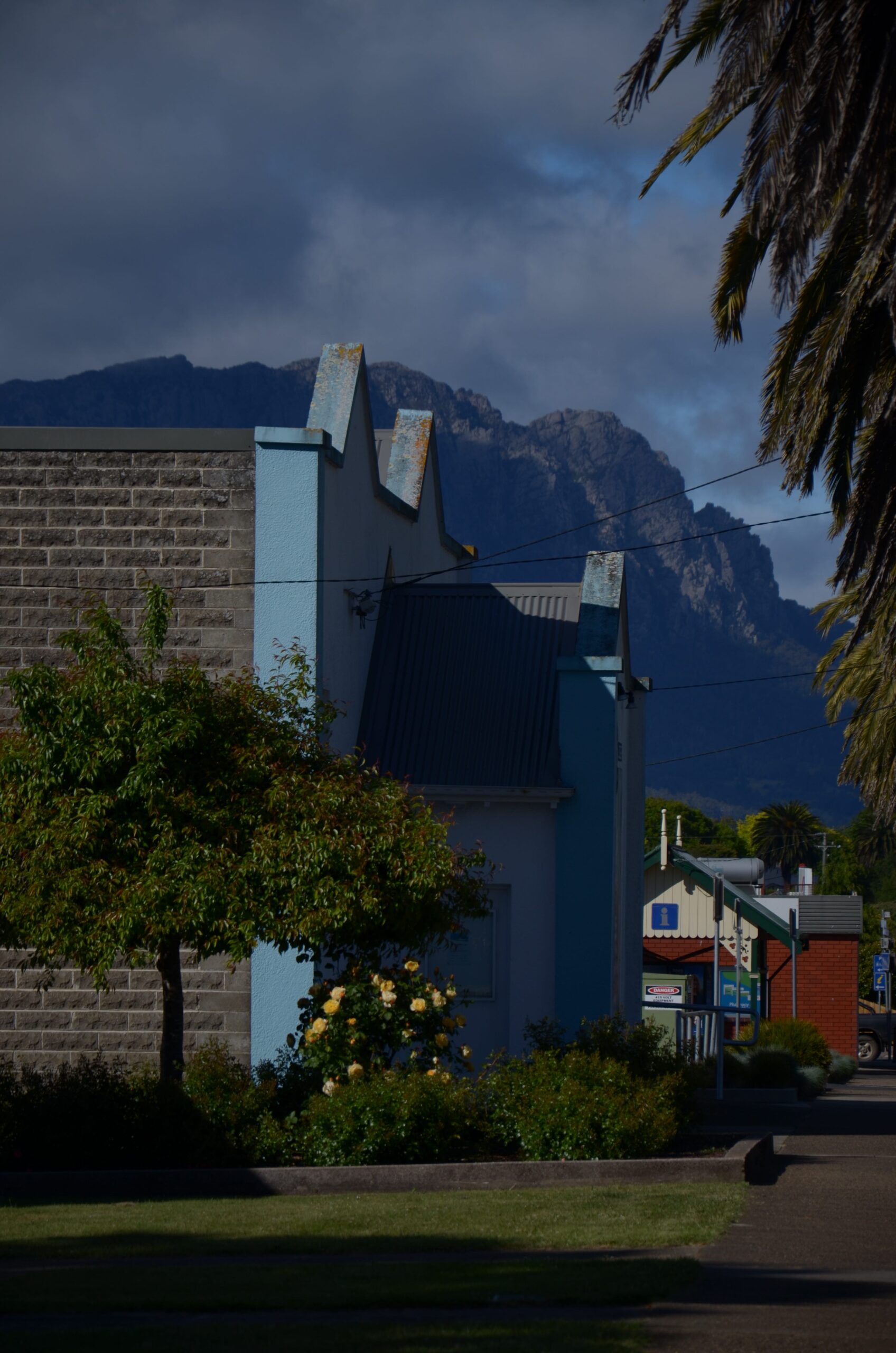
But I keep craning my neck. What I really hope to lay eyes on is Mount Roland, a monolith which rises like a Sphinx from the veggie paddocks of the north of the island that I call home.
You leave here, sometimes for yonks, sometimes for a little while. You go, over and over again. You think the intensity of that experience will fade. It doesn’t; the power accrues. It is like those allergies that do not encourage immunity but accumulate in the body instead, making the sufferer more susceptible to them.
I remember every time I’ve come home.
As a young man, bereft of other dreams, I mentally rehearsed the act of homecoming. This was before I even left the bloody place. But I had plans to buy a one-way ticket, to one destination or another, and wander strange roads until a voice summoned me back.
I had bigger visions of who I might become; that’s why I had to leave, to shake loose the life I’d had hitherto now. So, in the quiet hours in which I formulated my dreams, I foresaw how I would return spontaneously, as if I’d been teleported, and see how much I’d been missed by the look on my friend’s faces.
The triumph never turned out. Instead, after a year away, I was shocked by what had become of the gardens, parks and share-houses in which I’d once wiled away many hours. It was as though the size of those spaces had changed.
My imagination was caught by the quiet. I stood on a street corner near my share-house, startled by the smell of jasmine. The morning calm was only broken by the groaning brakes of a Metro bus as it turned to go up the hill.
So, I thought, these were the sensory experiences from which homecoming was made.
. . .
I once spent a season working on the ship that plies Bass Strait, back and forth like a short-circuiting shearwater.
It was the summer that ended with the sudden closure of all public settings. On the cusp of the pandemic, I told stories in the cinema; I teamed up with the musicians on Deck 9. They covered all the classics. Not a crossing went by without hearing Take Me Home, Country Roads by John Denver.
On my first shift on the vessel I was thrown against a wall as we passed through Port Phillip Heads. I learned to bring a stool to my storytelling sessions.
Over and over that summer I recounted the romance tale of the Weindorfers, a couple who became famous conservationists, more than a century ago. Their affair with the mountains of Tasmania began on Mount Roland. (They were on their honeymoon, so presumably they were already in love with each other.)
Maybe I missed some new lookout on the decks of its replacement, but as I recall, you had a better chance of seeing the hinterland from the old ship as you drew towards the dock. It’s an outcrop of conglomerate – a jumble of quartz clasts set into a dense lump of chameleon rock, changing colours in the light. To my eyes, though, Mount Roland glistens like it was made of crystals. The way I told the stories, if you climbed the mountain you might find the dust of precious minerals encrusted in your boots’ rubber tread.
One of the musos did that song too: Diamonds on the soles of her shoes.
We took the ship when I was a kid. My first road trip – the only one I undertook in childhood – was in the spring school holidays, with my parents.
For most Tasmanians, the only conceivable holiday destination was the Gold Coast. We went there and met with my cousins. There were swimming pools and tennis courts. We went out for counter meals or threw snags on the hotel barbie. Mum laid herself out like a skink in the warm sun.
On the Spirit of Tasmania, my brother and I ran amok. We rode the lifts like they were rollercoasters: elevators weren’t a normal feature of our small town lives. In the games room, there was a lucky air hockey table. You weren’t supposed to receive the puck back once a player had reached the winning score, but on this table, the scoring mechanism was broken, so there was no limit to the game. We occupied it for hours; the table was ours.
My parents encouraged an unbridled attitude. In the morning, we took breakfast at a buffet. My brother and I stuffed ourselves, of course, but it was surprising when mum or dad nudged us and suggested that we pocket a couple of croissants and yoghurt tubs to snack on later. The message was clear: as long as we were on holiday, there would be a different set of rules.
. . .
I’m now no stranger to travel, but there have been a few quirks to this year’s journeys. On two occasions, I took a plane to Tasmania for gigs – once to launch a book, another time to guide a small group of bushwalkers. That’s right: I did FIFO work, on the island that I have called home for all my life.
On both occasions, it meant leaving the mainland and flying in and out of the airport at Hobart. Twice, then, I craned my neck as I soared over the island – on both occasions, the whole landmass (and all its lakes and tarns) was filled with bronze light, cast in the classic tint of nostalgia – and watched those well-known places unravel.
I live in a shack in the bush, wedged between mountains. By picking out the peaks, it was easy to locate my forest home from high above. “I won’t be there for six weeks,” I mused recently. Earlier in the year, I was three months from returning – a curious realisation as you’re being whisked away from it.
That gig on the ship had its oddities too.
At that time, the ship pulled up in Port Melbourne. For the entertainers – that was my job description – there was really only time to pace around the waterfront, or try to do a loop that stretched a few blocks. Once I met with a mate, who brought grapes to share on the sea wall. On another occasion, I went down to the beach with one of the more rascally musicians, who brought along a passenger he’d befriended. A weak joint was passed around; the sun set behind the infrastructure of the docks, like fuel ablaze.
The pandemic was the end of it. It all came screeching to a halt, though not before I spent an entire weekend – four sailings, the ship full to the gunwales – on what seemed like the perfect container for the transmission of a mysterious virus.
Eventually, us entertainers were jettisoned. We were “non-essential”, to use the vernacular of the day. I wasn’t too upset to slink back to my shack in the bush and be useful by staying a hermit.
As much as anything, I missed the drive home. Even though I’d only been gone for a day or two, I still got the chemical release that accompanies every homecoming.
Lucky was the man who got to play out a sentimental reverie every second weekend, driving in his Toyota Camry to a forest home with a colleague’s cover of Country Roads on repeat in his head.
. . .
So that was March 2020. A year before that, I travelled on the ship as a passenger, my first voyage across the waters of Bass Strait as an adult. I had gone with a partner but came back alone.
After circling mainland roads for a couple thousand kilometres, I nudged the Camry into the queue for the ferry. The car idled; someone poked their head through my window. A spindly flower was stuck in the vent of the car’s air-conditioning; the security guard reached in and pinched it, calling the plant a biosecurity risk.
The pretty weed had been plucked from a verge. It was a gift from the lover I’d just farewelled at the port, who was going back to her homeland on the other side of the world.
Without even a wildflower as a souvenir, I went aboard alone. As if it was some ferry plying the Aegean Sea, I ordered an ouzo and waited for the anchors to be raised. curled up on a seat on the ship. The waves of Bass Strait drafted and erased stories as they shifted around the hull. They sloshed so loudly it was like the water cradled my dreaming body.
Yes, even the sea can be enriched with nostalgia. How much so, then, is the land with which I’ve tried to meld myself, which I’ve studied incessantly and on which I’ve travelled so devoutly – the island of my birth, its soil and stone embroidered with yarns?
Once upon a time, of course, Bass Strait was a marshy plain; its granite islands glittering mountains. There are stories in the seabed, submerged campsites, the stone artefacts of families who lived there long ago. The first footpaths resurface on the carved bays of the north coast and wend inland.
The ship pulls up in its brand new dock – built at an enormous cost, after the authorities discovered that the vessel wouldn’t fit at the previous facilities. I jump in the car, another Camry of much the same vintage as the one that I retired years ago. It looks dowdy and dinged-up, but it will be a central character of this summer’s stories.
I am in the passenger seat; the car is not mine. The woman who drives it lets out a squeak of excitement as we roll down the steep ramp into Devonport. A suite of adventures awaits us. We will stretch and change in tandem with each other, in connection with the land.
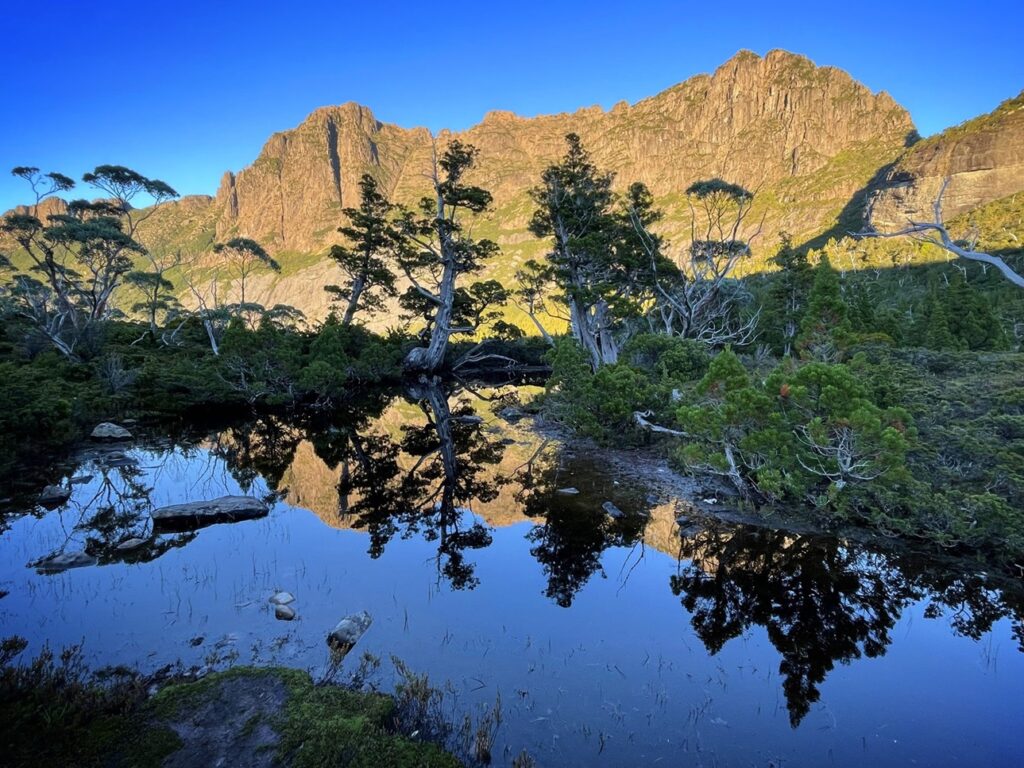
We speed along the country roads to the bush shack that I’ve been lucky to call home for the past seven years. Mount Roland is coy; its diamond noggin is capped with cloud. But the sun soon strips it and makes it shine.
We are encouraged to add our memories to its flanks, like the little cobbles that the aeons have embedded in the matrix of the mountain.
 Heath-blues is available at major Tasmanian booksellers and through the Forty South Bookshop.