
A LOVE LETTER TO TASMANIA’S BEACHES
“When I first came to Tasmania, it felt like a strange, faraway version of life. Now it feels like the real one, and everything else the imitation. Something rare. Something intact. Something other people pay money to glimpse for a week before being funnelled back to their office cubicles and half-price shoe sales.”
writer and photographer KATY ROGERS
Growing up in England, I thought beaches were just places you went to be slightly disappointed in public.
I took my Tasmanian boyfriend (now husband, still barefoot) to one once. South coast, middle of summer, wind sharper than a sneer, sea the colour of dishwater that had already washed several family-sized lasagnes. He limped over the pebbles, gave me a look usually reserved for plumbing disasters, and said, “You call this a beach?”
We lasted 20 minutes before getting back in the car.
In England, the beach is a proving ground for stoicism. You unwrap a sweating cheese sandwich from its clingwrap, stake out your windbreak, and sit there radiating good cheer while your marrow freezes.
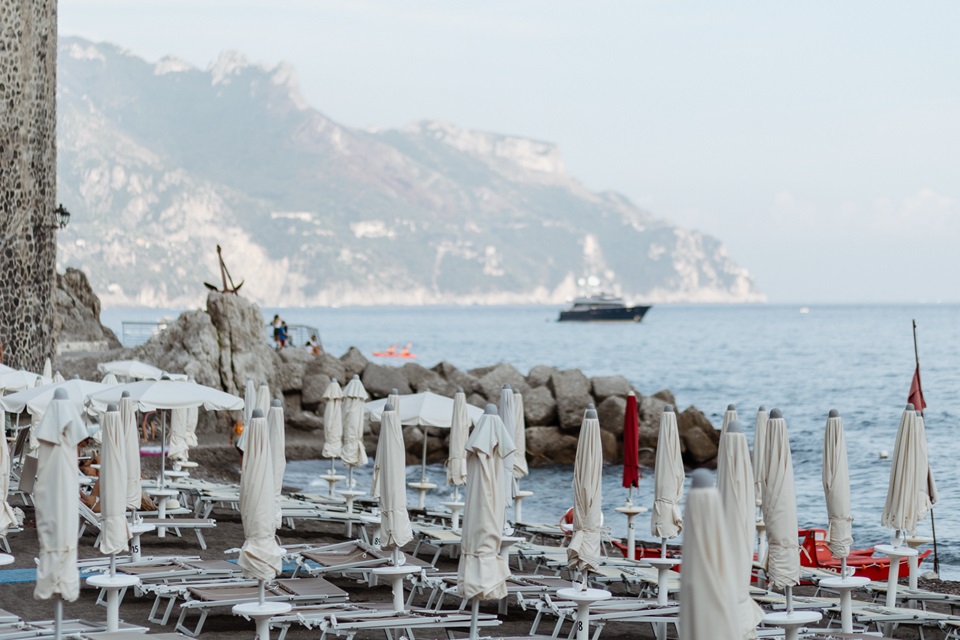
The annual alternative is to join the mass summer migration to Majorca, the Greek Islands or the south of France, chasing the square of sand in the brochure. The result is often a hot slab of tightly packed beach, hemmed in by rental umbrellas, sunburnt limbs, and a man two feet away rhythmically applying tanning oil to his belly. Throw in a lungful of someone else’s cigarette smoke as you try to enjoy a view of the sea through a thicket of human elbows and inflatable flamingos, and the whole glorious, slightly claustrophobic sensory picture is complete.
Tasmania is the opposite.
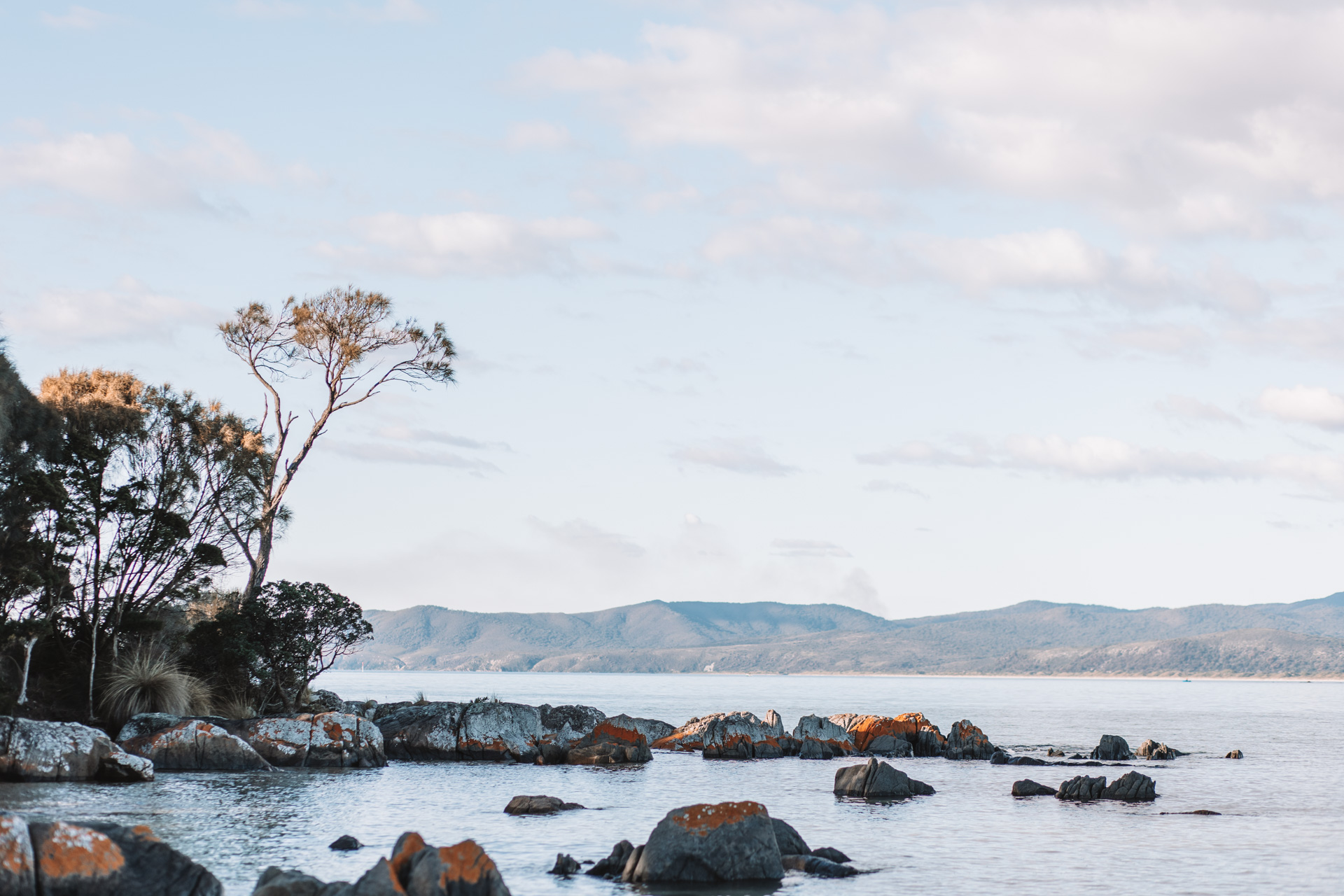
The beaches are enormous, empty, and wild in the way they always were. The sand squeaks like fresh snow under your feet. The sea is so clear it looks like the colouring-in was forgotten. The view from Hawley Beach over to Narawntapu feels like it’s been waiting centuries for someone to notice again.
And behind you: nothing. No chip wrappers in the wind. No arcade music. No cruise-ship tour groups marching in formation like confused ants.
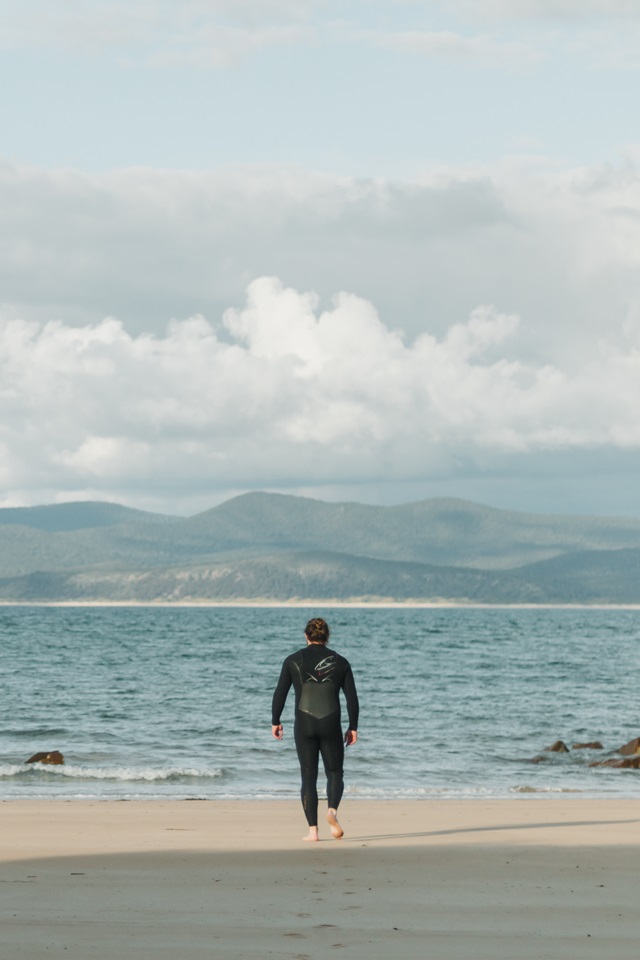
It’s not always warm, of course. Every Sunday morning at the beach down the road, locals hurl themselves into the water without wetsuits. I occasionally join them, and I can confirm that during the colder months my legs feel like they’re being stabbed by a thousand tiny daggers while I time my seven minutes of mandatory cold plunging and try to keep the swearing internal. It is freezing with many capital Fs. Summer feels like a gift by comparison; a reprieve not just from the temperature, but from the existential question of why I’ve willingly walked into Bass Strait at 8.30am, again.
And yet, even in the sharpest cold, there’s something exhilarating about how untamed it all feels. The wildness is what makes it. Some beaches here feel like they’ve made a conscious decision not to join the 21st century. They haven’t been landscaped into submission or supplied with tasteful boardwalks and souvenir shops explaining how to feel about it. They’re busy being themselves: chewing at their own edges, piling up seaweed in odd, baroque sculptures, while bird tracks scribble frantic messages in the sand that no one will ever read.
And at dusk the pademelons arrive: small, suspiciously spherical marsupials that my overseas friends think I’ve made up. But that’s fair enough; even my mainland Australian friends don’t believe they’re real. (They’re very real, and very committed to doing nothing in particular, extremely nearby, at all times.)
Tasmania could easily have bulldozed more of itself by now – turned it into car parks, or resorts, or those tidy holiday villages where wildness is allowed in, provided it stays behind a fence and doesn’t scratch the paintwork. But mostly (thankfully), it hasn’t. There’s an almost mulish determination to keep things raw and slightly inconvenient; whole stretches of coast where the only improvement ever made was to put up a sign politely warning you that the tide might kill you and to pick up your dog poo.
Now, when I think back to that day with my husband on the English coast, him hobbling across the pebbles like a man crossing hot coals, staring at the grey water as if it had personally insulted him, I understand. He wasn’t being fussy; he was just holding out for the kind of shoreline that makes your lungs feel larger, your thoughts quieter, your life less cluttered. And he found it here, in a place that’s not packaged for you, but lets you in anyway.
And once it does, it’s hard to go back to anywhere that has to hire consultants to invent a sense of tranquillity.
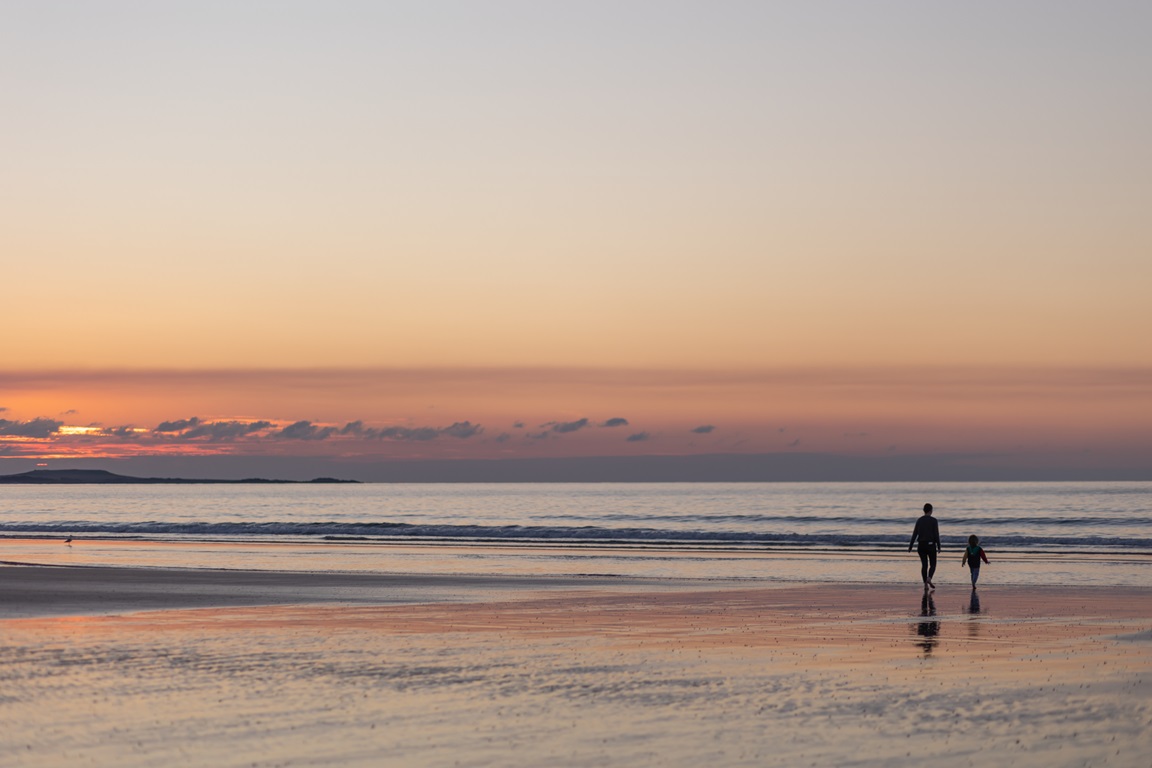
Tasmania gives you space you didn’t know you were missing. It’s in the hush between waves, the stillness of gum trees, the way the mountains just sit there doing nothing in particular but still manage to feel profound. It’s a kind of quiet that elbows supermarket jingles out of your brain and replaces them with birdsong.
That kind of quiet is not a luxury; it’s a necessity. We need wild places in the same way we need sleep or clean water; not as a backdrop for leisure, but as proof that the world is still larger than us, still capable of existing without our permission. Lose that, and we lose not just biodiversity but perspective, the reminder that there are rhythms older and wiser than our own.
People say Tasmania is behind. I think it’s facing just the right way.
When I first came here, it felt like a strange, faraway version of life. Now it feels like the real one, and everything else the imitation. Something rare. Something intact. Something other people pay money to glimpse for a week before being funnelled back to their office cubicles and half-price shoe sales.
It’s not the kind of wildness you can bottle, or schedule, or buy. It just sits there, waiting. And if you stay long enough, it starts to rearrange you instead.