
I suppose it’s not David Attenborough’s fault.But it seems that the patience, brilliance and editing skills of wildlife documentary makers, with Attenborough their shining figurehead, have had an unintended outworking. A trip to Maria Island, off Tasmania’s east coast, provides an example.
We’ve been on the island for the weekend, and are due to catch the ferry back soon. But as we gather our gear, one of the rangers tells us that a southern right whale mother and calf are swimming through Mercury Passage, close to the northern tip of the island. Our group, plus a couple of other campers, quickly follows the ranger to the top of Fossil Cliffs, hoping to get a grandstand view over the water.
And from there we see a large southern right whale, swimming slowly but steadily between Cape Boullanger and the tiny Ile du Nord, just off the coast. Beside her is the calf, dwarfed by her vast bulk, but still probably the size of a dolphin. We watch, enraptured, as these giant marine mammals, their species once driven close to extinction, fin northward through the calm waters.
While we’re oohing and ahhing, I overhear an older couple who have joined us. One is saying to the other, in the tone of a disappointed sports fan, “Is that all they do?”
I think of this as the Attenborough effect. Spoiled by wildlife television shows, we now expect spectacle whenever we’re viewing nature – if we’re viewing nature at all. Seeing a 45-tonne mammal swimming isn’t quite wonderful enough. We want to see it breaching, or at least blowing and fin slapping.
This observation makes me examine my own expectations whenever I wander The Patch, that 150 hectares of peri-urban bush beside which I live. I’ve written before that The Patch is no wilderness, and that although it isn’t exactly an ugly duckling, nor is it a stately swan. So, I wonder, what is it that draws me back again and again? What is it that made me miss this bush so fiercely during a recent home quarantine?
Some helpful light is cast on this by one of my favourite folk songs, The Quiet Joys of Brotherhood. This tender, haunting poem by Richard Fariña was adapted and sung by the wonderful Sandy Denny. It starts with these words:
Where gentle tides go rolling by
Along the salt-sea strand
The colours blend and roll as one
Together in the sand
And often do the winds entwine
To send their distant call
The quiet joys of brotherhood
When love is lord of all
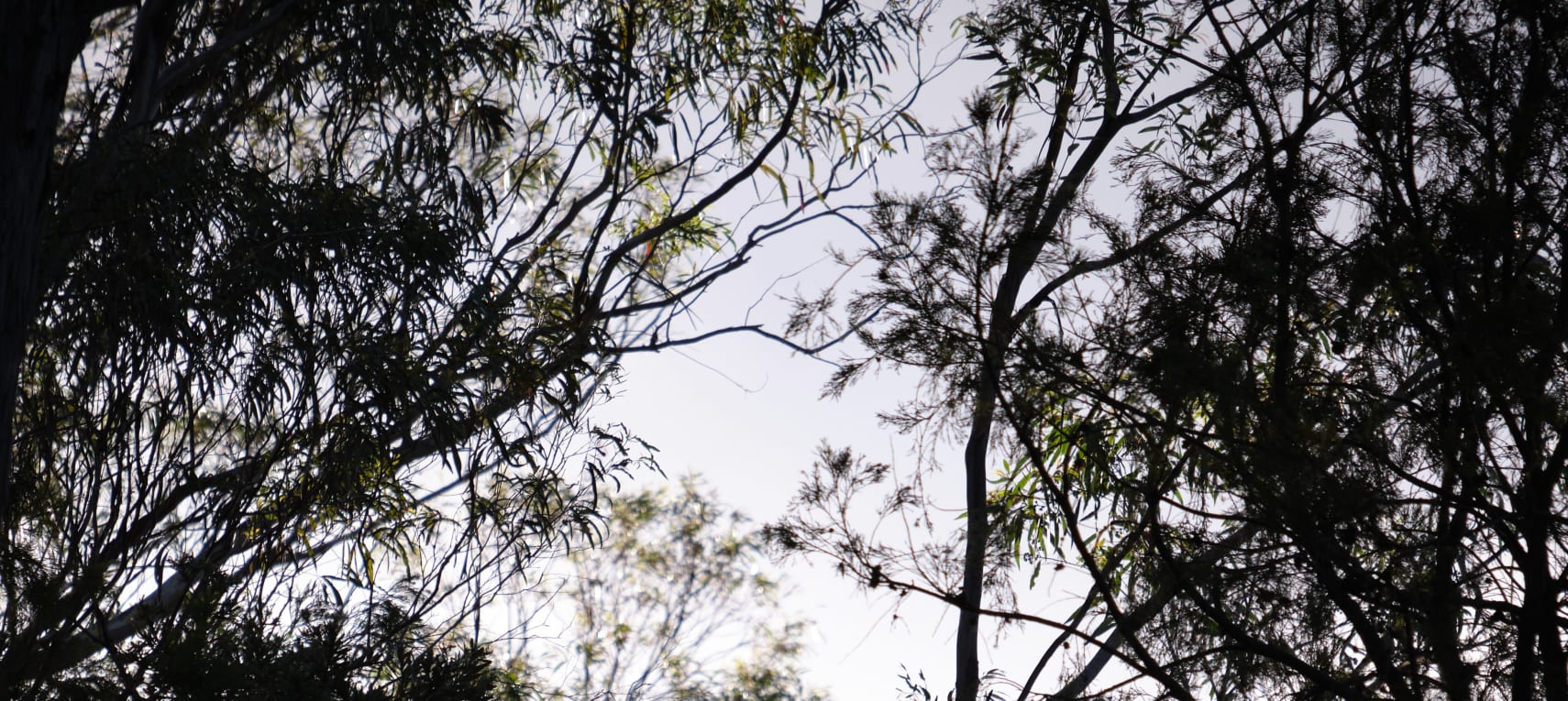
We may think of environmental crises as recent, but this 1966 poem is in part Fariña’s lament for how humans were dominating and crushing nature even then. It’s also a call to quietly enjoy our own place within nature. The song prompts me to recognise afresh that it is the quiet joys of The Patch that have won me. It’s the spring sun shining on and through leaves; the bracing freshness of morning air in my lungs; the thrilling flit of a dozen birds that won’t oblige by pausing for identification; the tang and dazzle of wattle blossom; the alert poise of a wallaby, its paws held just so as it assesses the level of threat I pose.
Or it’s the background hum of wind jagging in trees, of water rasping on the rivulet’s rocks. It’s the invigorating douse of a sudden downpour; the so-nearly-audible flutter of butterfly and dragonfly wings; the unfolding slo-mo of colours over kunanyi at sunset; the unexpected sprout of orchids or flowers or fungi; the moving geometry of cloudscapes and skyscapes; and the unhurried, never-finished opera of a thousand bird calls, with everything from look-at-me divas to quiet chorus chanters.
These and so many more are the unspectacular spectacles; the slow, daily, monthly, annual accumulation of mundane miracles in the living world. They are always there, hidden in plain view, if we care to give them time and attention.
After 37 years experiencing his Kentucky farm, American poet/philosopher Wendell Berry wrote what I feel after a similar span of time near the Patch.
“The life of this place … is unique, given to the world minute by minute, only once, never to be repeated. And then is when I see that this life is a miracle, absolutely worth having, absolutely worth saving.”