
T H E A B E L S
Without a hint of guilt, I played the stroke card, blathered on about how much the summit would mean to me and marched off into the gloom with all the careful consideration of the Titanic’s captain on a chilly April night in 1912.
photographers ROB SHAW, CRAIG SEARLE and LYNNE PHAIR
Tasmania’s highest mountains can be formidable wilderness challenges, buy may also be powerful motivational tools.
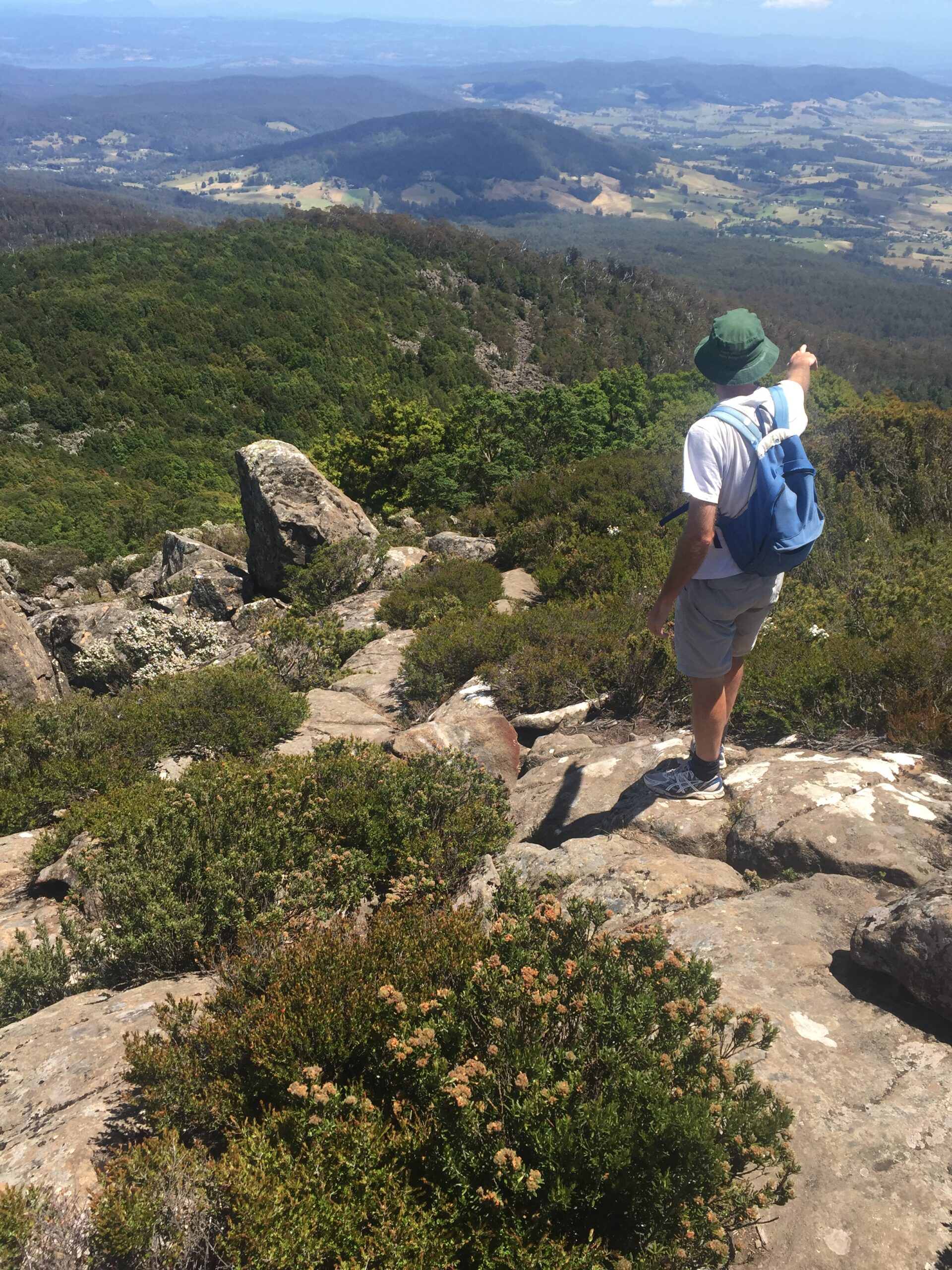
My Launceston home is positioned directly facing one and for 13 months I stared at it daily with a mixture of anger and frustration, like a thirsty man staring at a waterfall. In Abels terms, Mount Arthur is no big deal. It is just 88 metres above the minimum height requirement, sits 108th in our state’s pecking order, presents no major technical difficulty and has a clear track all the way to the summit, half of which can be tackled in a decent four-wheel drive.
One early spring day in 2025, however, it represented perhaps my toughest test and greatest conquest. This is because at about 2am on June 24, 2024, in the words of my darling daughter, I decided to have a stroke. Mount Arthur was there when I was whisked away by ambulance, hadn’t gone anywhere when I returned with a zimmer frame and commode three weeks later, and had moved remarkably little a year on when I felt ready to return to such haunts.
Abels are nothing if not patient.
Coming to terms with a stroke was a steeper learning curve than anything Tasmania’s terrain has thrown at me. The denial stage began with telling my wife and daughter that of course I didn’t need an ambulance; continued through wondering why my left hand was not moving when I was clearly instructing it to; probably peaked en route to Hobart when I asked the helicopter paramedic if we could detour via the summit of Federation Peak as it would save me a lot of inconvenience (I was somewhat doped up); and hit reality when I awoke in the Royal Hobart Intensive Care Unit with a massive operation entry wound near my groin but no knowledge of it getting there.
Anger and fear took over as a career writer with a love for walking realised he could no longer write or walk.
For about nine hours I had lost all use of the left side of my body. Not ideal for a left-hander. The operation I knew nothing about had, at the fourth attempt, cleared a blood clot from my brain to restore that functionality, but everything had to be re-learned, from walking and writing to teeth-cleaning, cup-holding, typing, stepping …
The magnificent physiotherapy teams at both the Royal Hobart and Launceston General hospitals were there, literally, for every step. I can still recall the first one. It took four days to come.
With a perfect balance of support and challenge, they repeated the mantra, “You won’t know what you’re capable of until you try it.” Having begun with objectives as simple as reaching the toilet unaided, my return home saw challenges expand: the street, the neighbourhood, Tamar Island, the significant milestone of the Cataract Gorge zigzag track (complete with 10 rests – fatigue is the hidden enemy for stroke victims).
And all this time, each day began with an envious look in the direction of my personal mountainous motivator, the most northerly Abel, situated across the Tamar River just outside Lilydale. Pre-stroke, I had climbed Mount Arthur three times: once in the snow when my son was about 10 (he’s now 24), once with a visiting cousin who wanted to experience “one of these Abel things you go on about”, and once with a hiking mate keen to get his kids into Abelling. Fond memories all.
Surprisingly, I had not climbed it with my regular Abel accomplices Craig Searle and Ray van Engen. So when I told them I was ready to test my physio’s advice to find out whether I could achieve it, they were both swiftly on board, along with Craig’s wife Debbie and their dog Tilly.
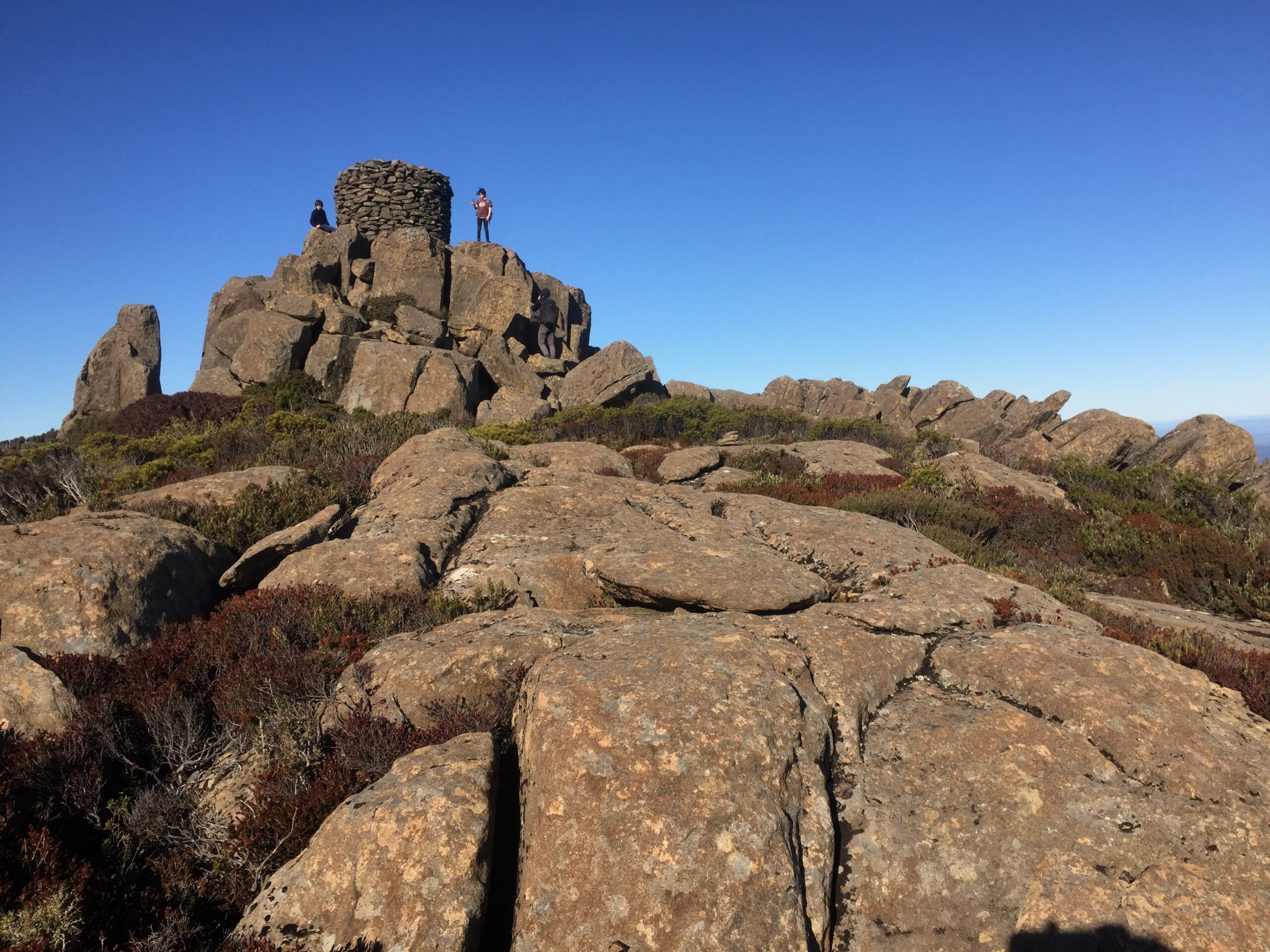
From those previous adventures, I knew there would be three key objectives, much like camps en route to Everest’s summit. At the top of the steep 4WD track (beyond the rough car park reached from Whites Mill Road) is a green tin shed containing basic route information and photos that could, given sufficiently dreadful weather, be termed an emergency shelter. Half an hour of rock scrambling further on is an abandoned fire lookout tower, and another 40 minutes across the plateau is a summit cairn which is gigantic even by Abel standards. If I could make one of these destinations, I’d be happy; two would be better and three would be mission accomplished.
. . .
We fixed a date a week in advance. When it dawned, the weather was less than perfect, but low cloud wasn’t going to stop us. This day was more about accomplishment than views.
The green tin shed was reached with minimal difficulty, but by the time we made the windswept, windowless lookout tower, the pendulum was swinging. Deb and Tilly had already pulled the pin, Ray’s back was protesting, deteriorating weather wasn’t helping the situation and Craig found himself torn between the conflicting aspirations of two companions who by this stage he had rather unhelpfully christened Backman and Stroke Boy.
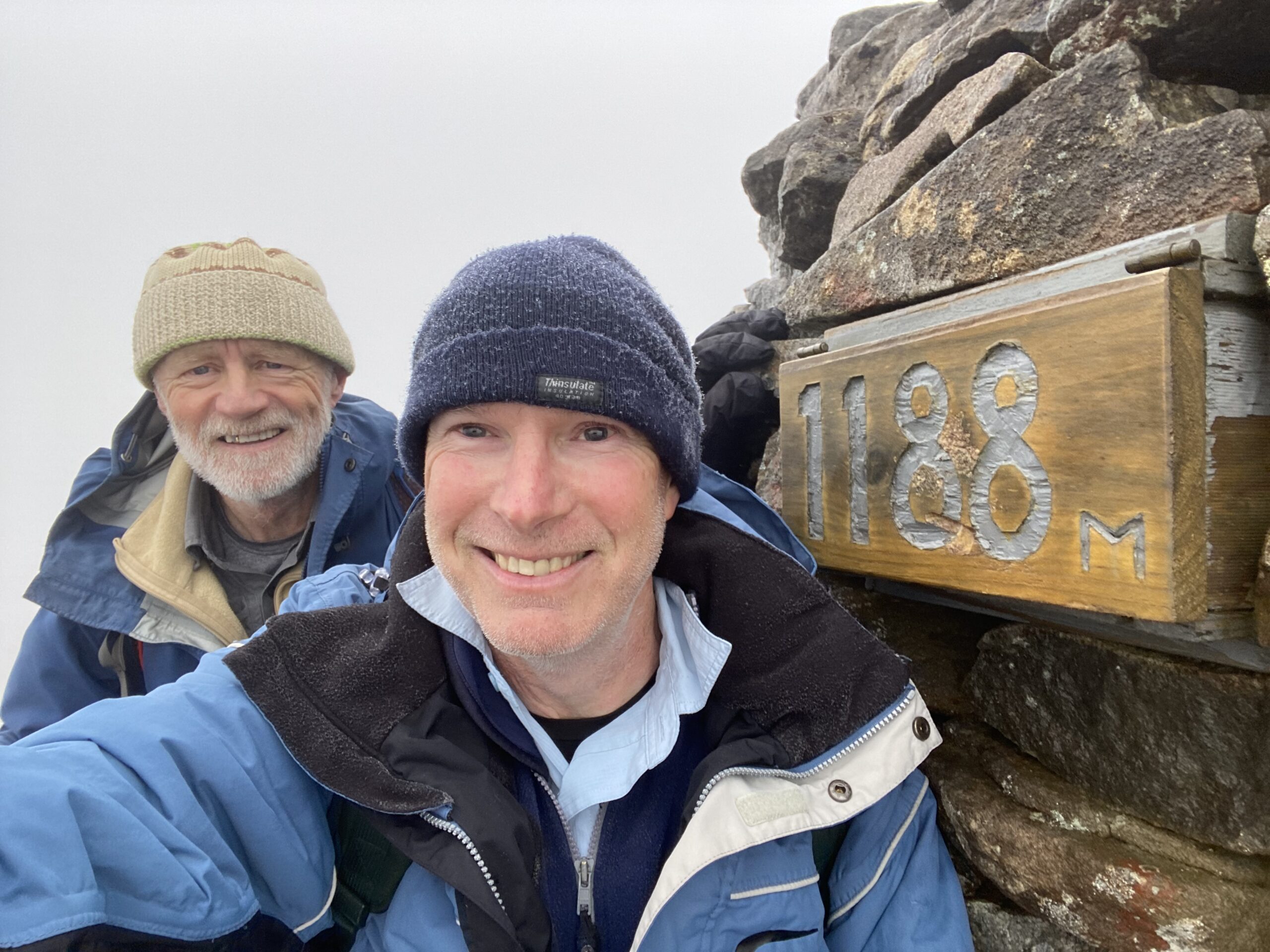
Fearing this might be the limit of our day’s endeavours, I took a selfie which, on subsequent examination, reveals a stark contrast between my cheery optimistic demeanour and the mixture of agony and concern from my companions. So, without a hint of guilt, I played the stroke card, blathered on about how much the summit would mean to me and marched off into the gloom with all the careful consideration of the Titanic’s captain on a chilly April night in 1912.
The decision to abandon Ray was made with surprising ease and little thought for the unfortunate subject as the original expedition party of five was reduced to two – one support person and the by-now laser-focussed Stroke Boy. Buoyed by a long-forgotten feeling of energetic enthusiasm, however, the final third flew by and in no time the summit cairn was looming into view like a giant iceberg just begging to be struck.
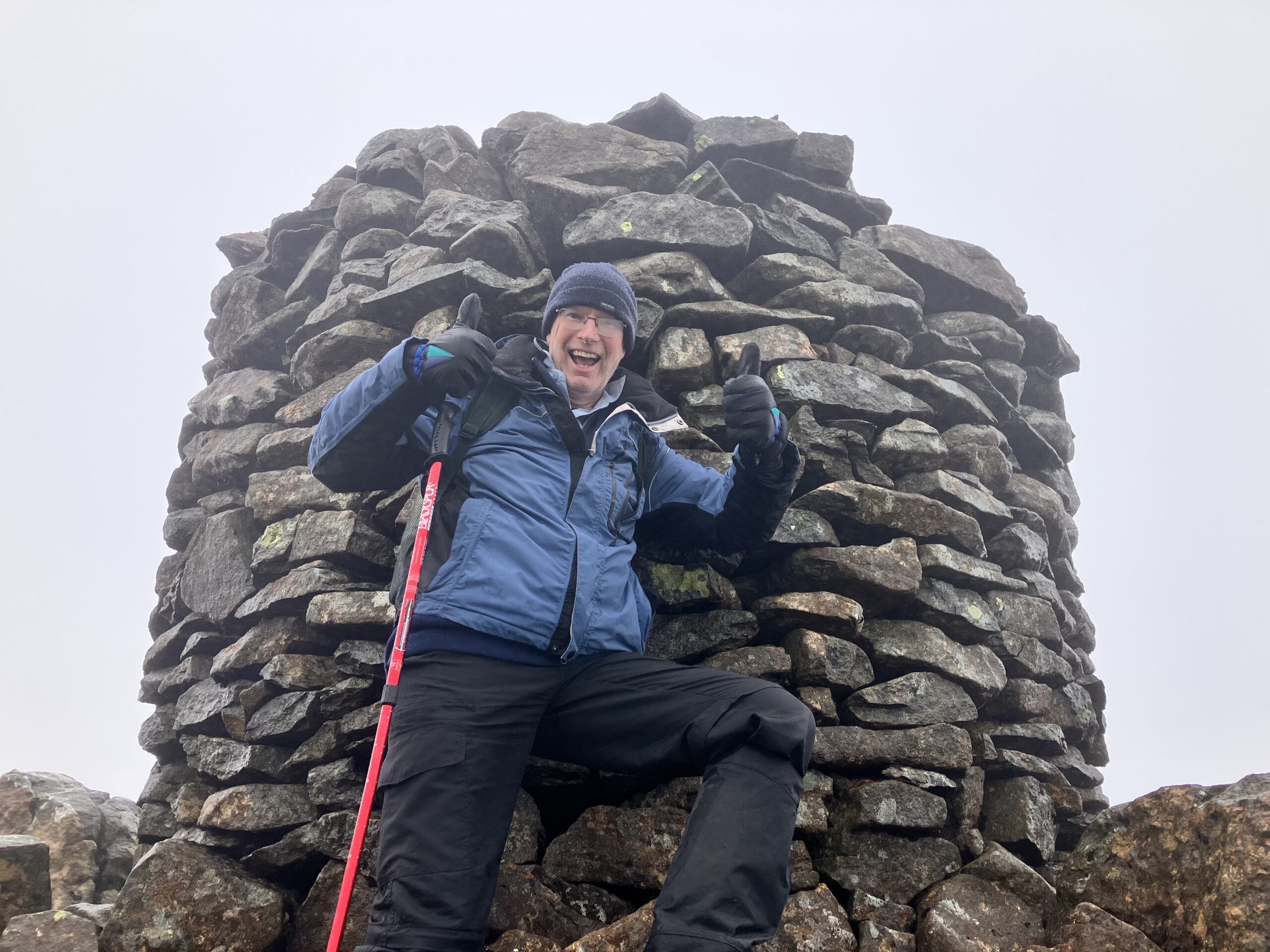
Craig’s summit photo shows me sporting the sort of inane grin reserved for five-year-olds at sugar-fuelled birthday parties complete with an over-the-top double thumbs-up and total unawareness of half-steamed-up spectacles.
I don’t care. It was 16 months since I had last stood atop an Abel and 13 months since I’d woken in a hospital bed suspecting I might never climb another. I was glad to share the moment with my hiking buddies and – as is the modern way – via social media with friends and relatives who helped me get there, many learning new corners of assorted Launceston suburbs along the way.
No sooner had the return journey begun than discussion turned to better weather, longer days and unfinished Abel business (I’m looking at you Pelion West). However, one day I’d also like to return to Mount Arthur under less demanding circumstances. I owe it that.