
Like childhood innocence, in all its messy, wild perfection, once the diversity and richness of the forest is gone, there’s no getting it back.
writer and photographer SONIA STRONG
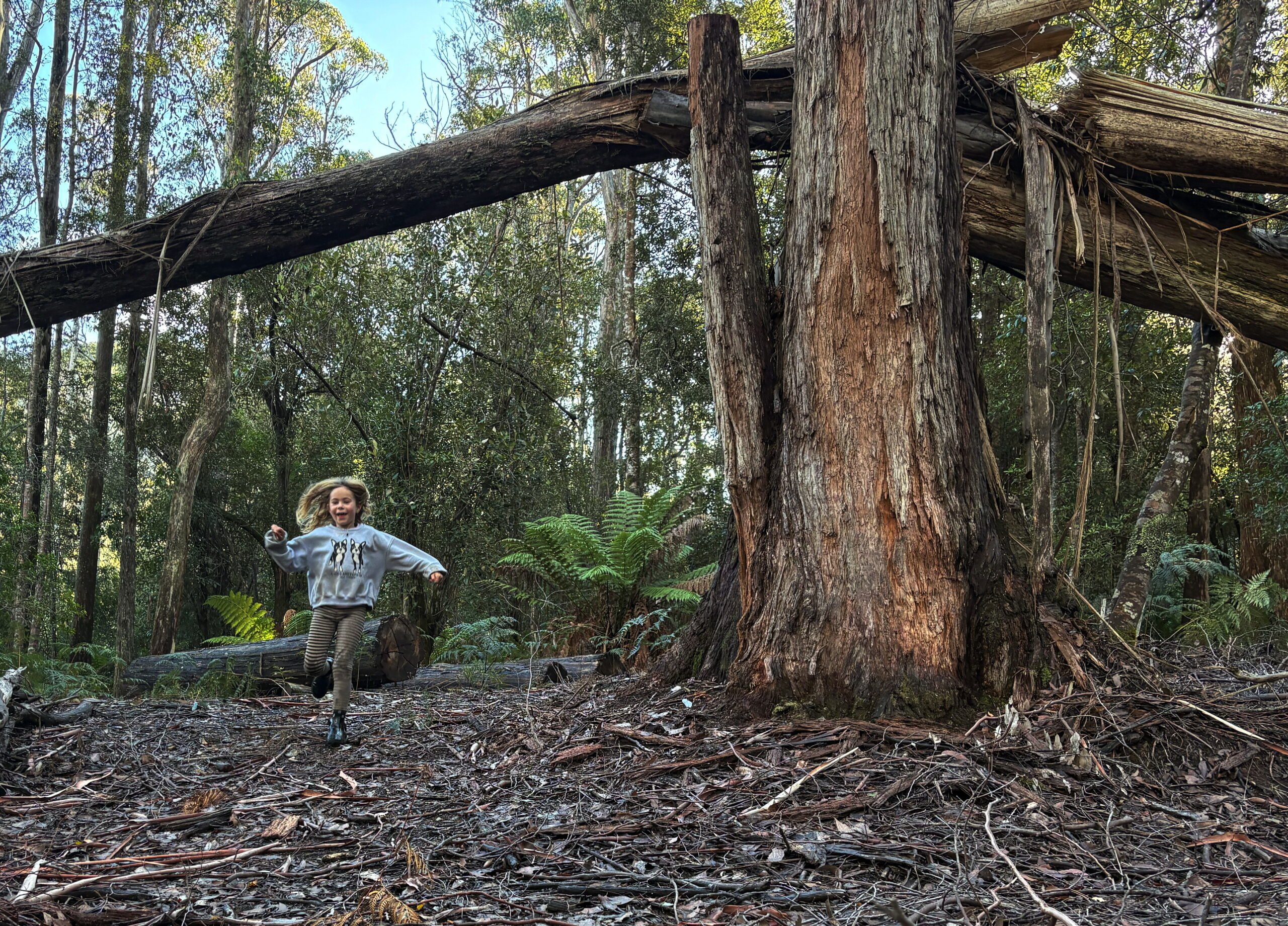
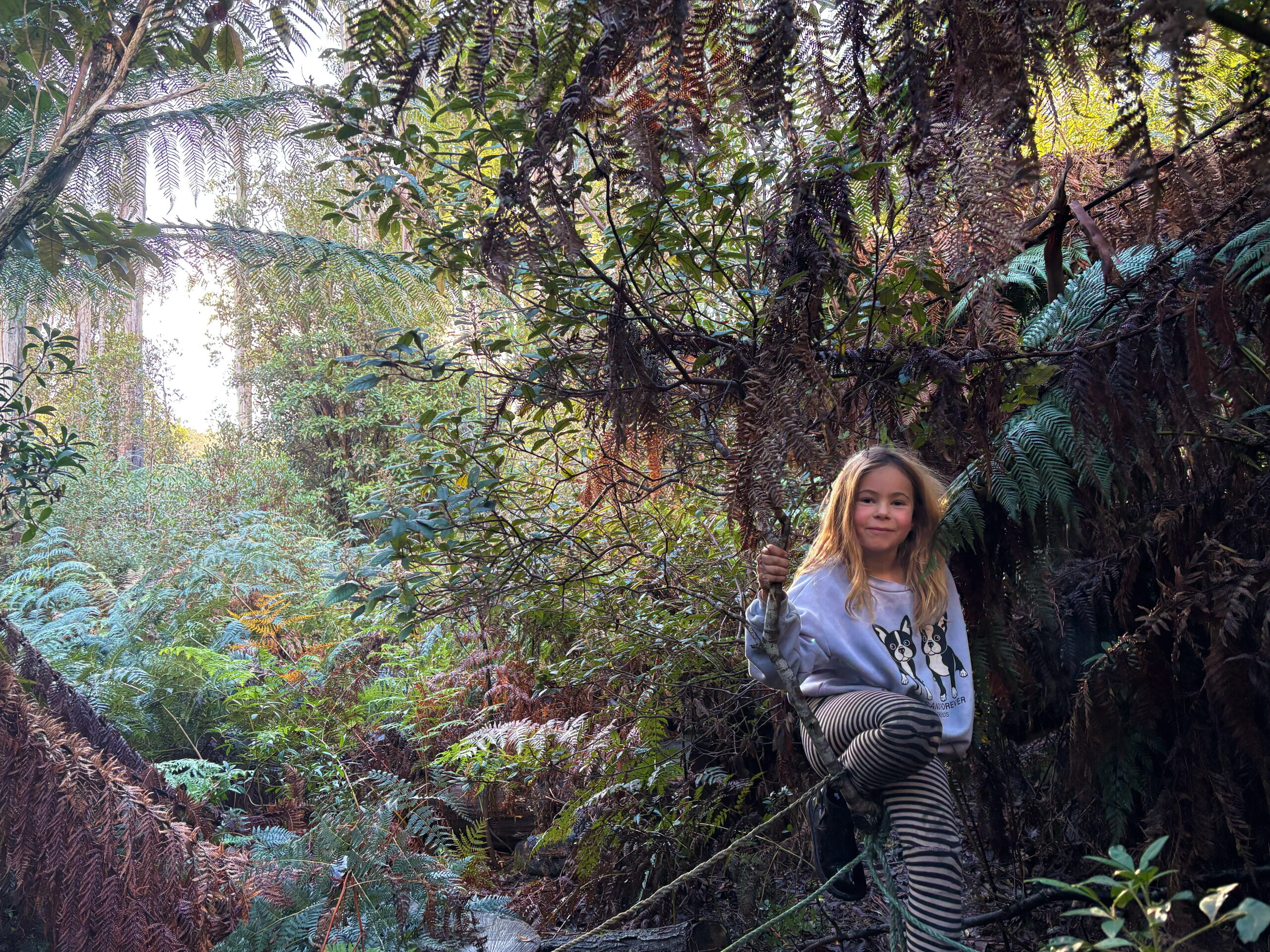
Idunn: not a typo, but a delightful blonde flash of all that is wild and good about childhood. Part Swedish, part Tasmanian, she is named after the Norse Goddess of Immortality, and like her mythological namesake, is gentle, beautiful and kind. She also has the best backyard of any kid I know.
Idunn lives a life of freedom most of us barely remember, or never knew. Beyond the small circle of her house and vegetable garden are thousands of acres of mossy rainforest, sparkling streams, scented gums, scree slopes, alpine moorlands, heath and herb fields. Variously known as rubala mangana, Row Tor and, more recently, Mount Arthur, this expansive garden of plenty is Idunn’s playground. It’s hard to believe we’re only half an hour from Launceston.
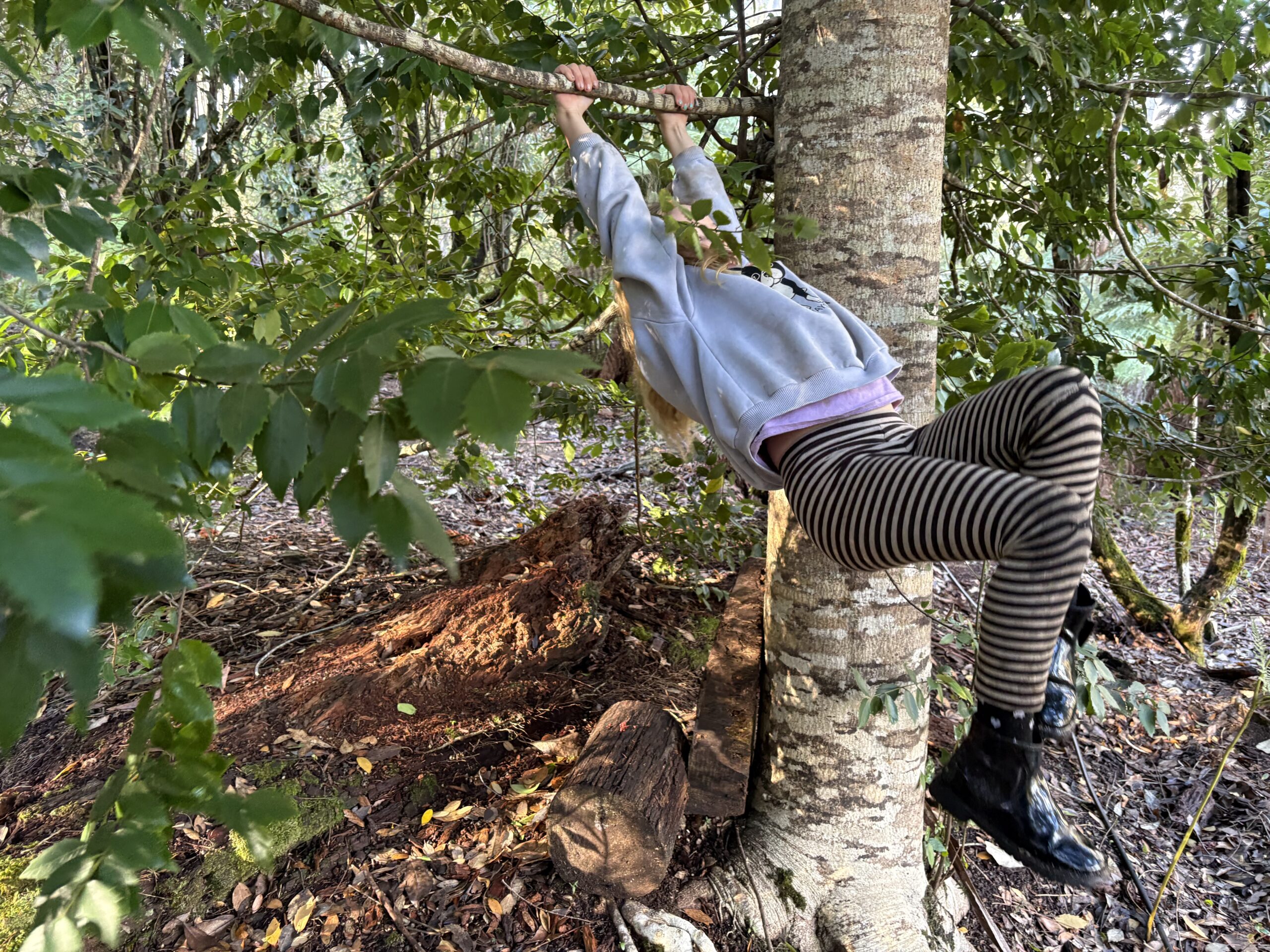
Watching Idunn swing from a native clematis vine, her hair full of leaves and flowers, I feel like I’ve stepped back in time. If, like me, you entered life around the time of frozen Sunny-boys and 20c mixed lolly bags, you may also remember being let out after breakfast to explore the big, wide world. Back then, our imaginations and bodies were allowed to free-range. We hugged trees and talked to birds, built fortresses from rocks and branches, witnessed tadpoles turn to frogs and found sacred fairy circles. We had scrapes on our knees and paths through the undergrowth, shared with creatures we didn’t recognise as “other”.
We had two rules: stay out of trouble; be home for dinner.
. . .
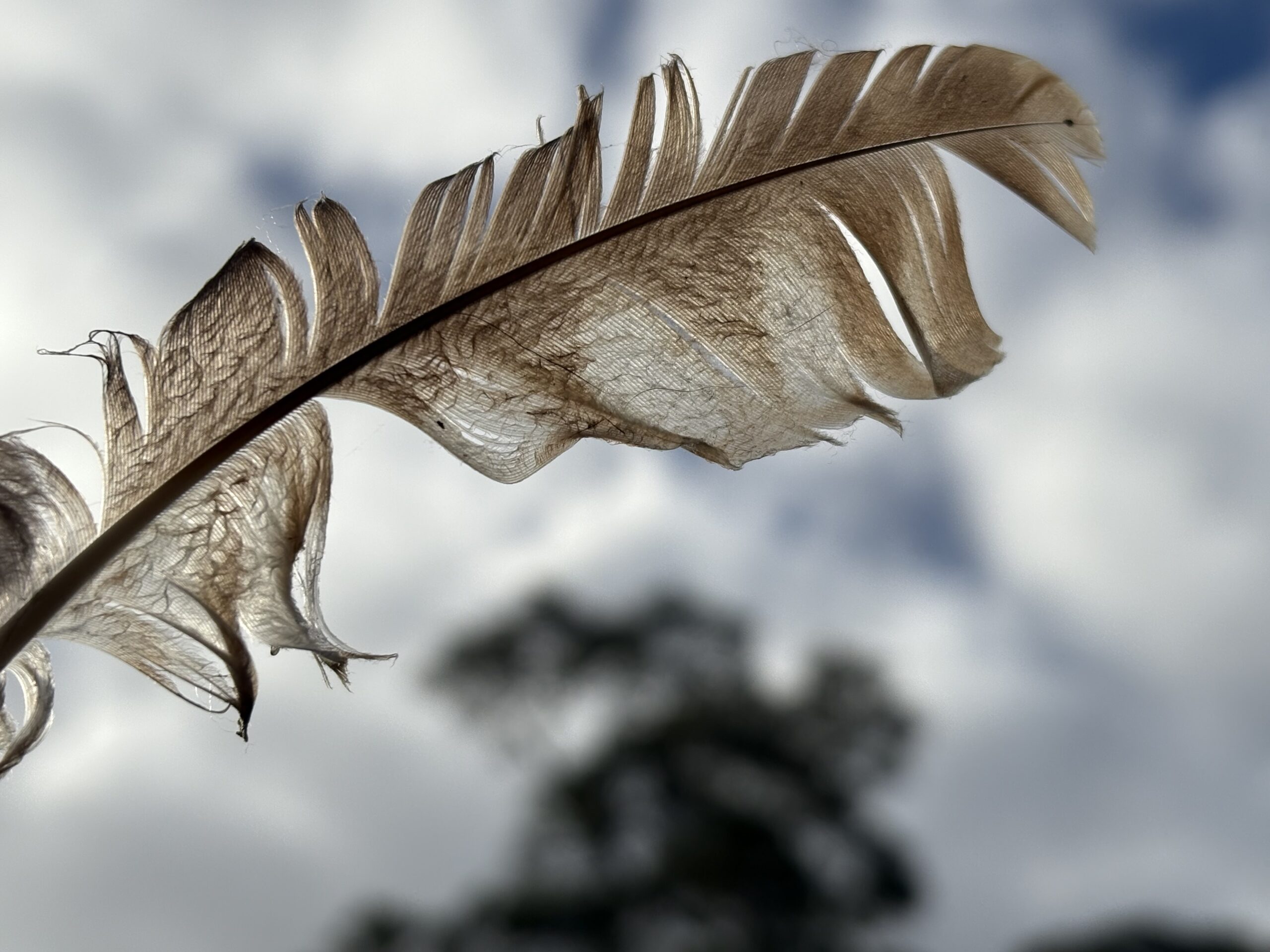
Idunn shows me her feather collection: yellow-tailed black and sulphur-crested cockatoo, green rosella, grey shrike-thrush, southern boobook … “An owl!” I exclaim. “Surely you didn’t find all these here?” She nods proudly. A couple of crafty currawongs yodel at us from a nearby musk, checking to see if the chooks have left them breakfast.
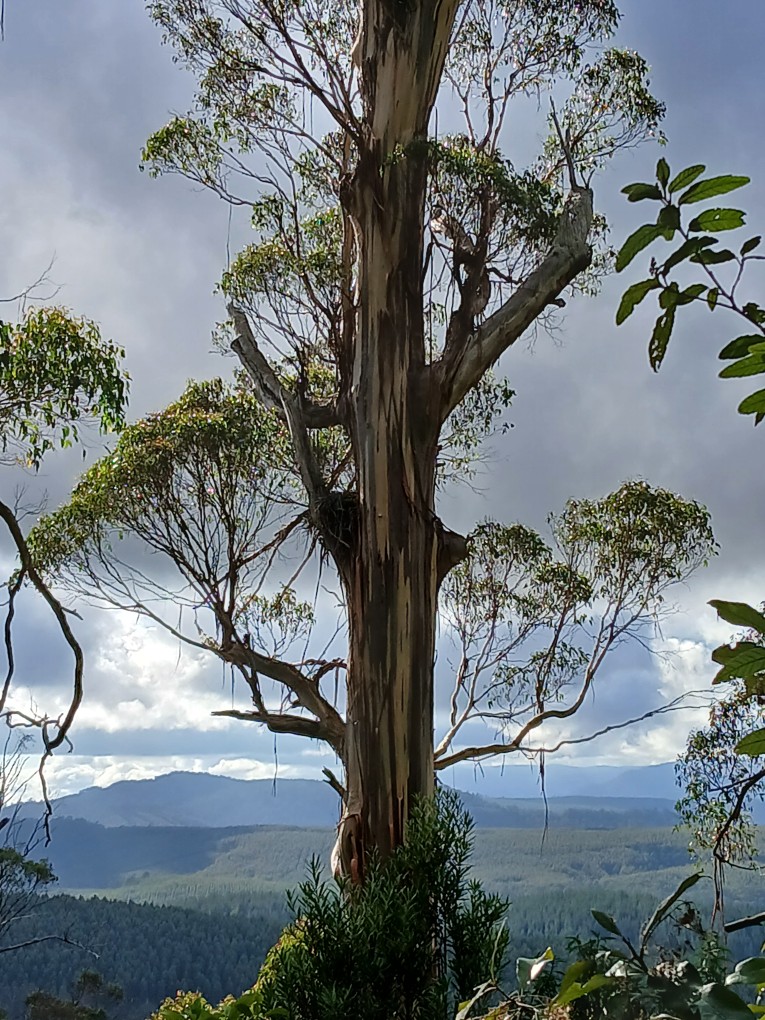
My gaze follows the lifting mist, up beyond towering mountain ash to the clouds rushing over Mount Arthur’s imposing dolerite summit. Some of these arboreal giants are hundreds of years old and nine metres around the base. They are also home to a family of wedge-tailed eagles, that I’ve often admired on sunny days, catching thermals with barely a wing twitch.
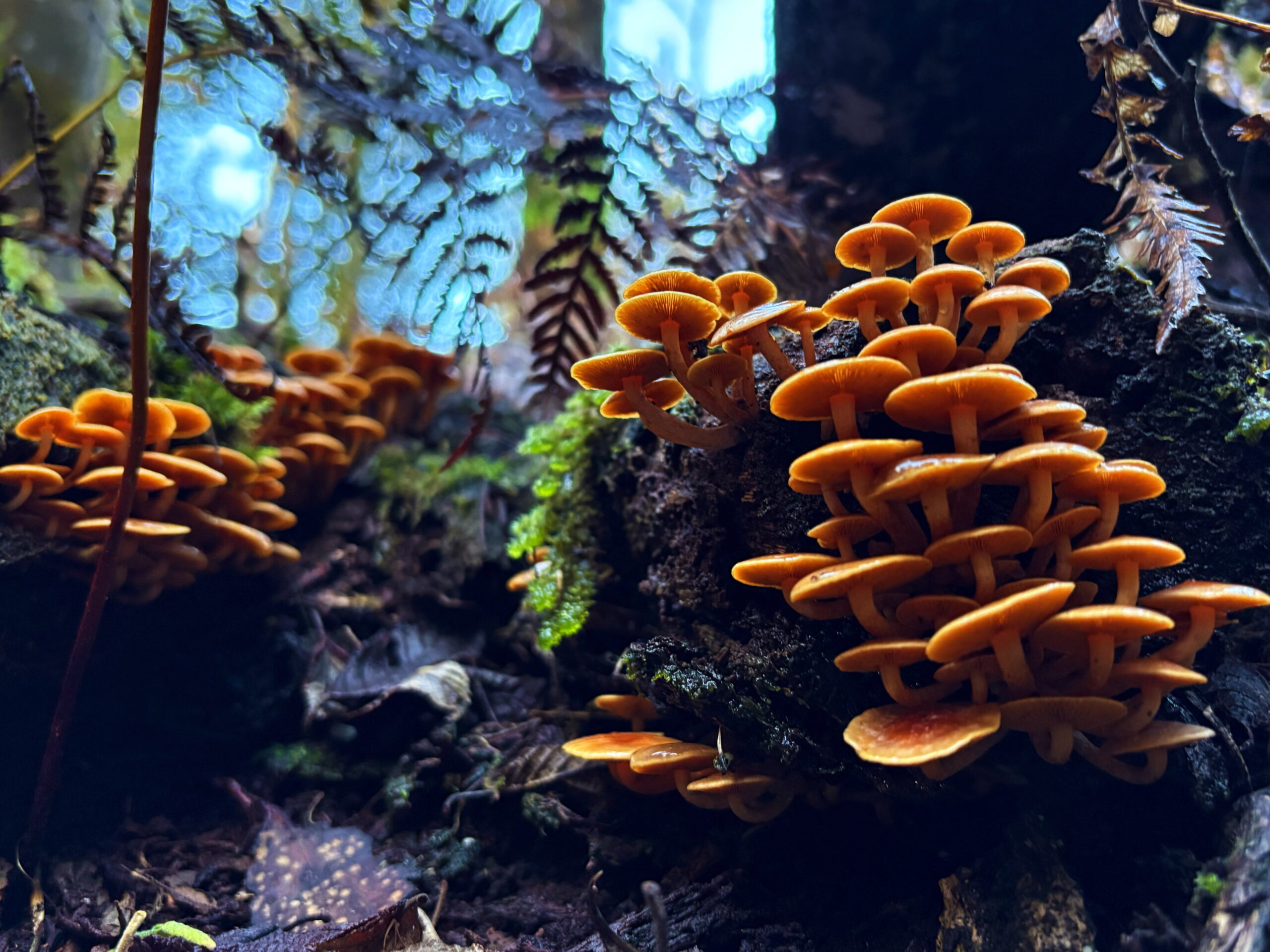
While I’m still searching for raptors in the glare, Idunn is off, darting through the understory with the energy of an eight-year-old. She points to a cluster of bright orange fungi and stops to consider a rotting log, sprinkled in red pittosporum berries. Picking an obviously well travelled route through the hard water ferns to the creek, she shows me the best place to drink. It is delicious.
I’ve occasionally seen a furtive Bassian thrush or shy pink robin amongst these dogwoods, but neither grace us with a visit us today. It doesn’t pay to have expectations. Idunn reminds me, with her simple way of being, how to be alive and alert to what is in the here and now. Today, resting in a tangle of sunlit leaves, we instead have what looks to be a masked owl pellet and the perfect shell of a north-eastern forest snail to consider.
Although I’m not lucky enough to actually live here like Idunn, I have spent many days exploring this wonderland. I know that beneath Mount Arthur’s canopy of sassafras, blackwood and myrtle are flowering waratah, tree fern groves, the largest native olive trees I’ve ever seen, and sweet-water streams where peach-coloured crayfish make sculptures in the mud.
Mount Arthur burrowing crayfish, like the Mount Arthur boronia, are unique to these parts. Somewhere up there nestled into the hillside, is a hidden lake and a large sandstone overhang I encountered once, no doubt used as shelter by Aboriginal people, and now also by adventurous bushwalkers, quolls and wombats escaping the mountain weather.
As a handful of glassy crustaceans sift silt at the bottom of a pool, Idunn’s mother refreshes my memory of the Norse myth responsible for her daughter’s name. There are many synchronicities between the stories of Idunn and Eden. Curiously, both tales feature apples as a plot twist, and have much to say about temptation, greed and selfishness. In the Norse tale, Idunn’s golden apples of immortality are rationed out sparingly to the Æsir (gods and goddesses) in order to sustain their youth and power. Somewhat predictably, Idunn is stolen and imprisoned by a greedy giant, tricked into relinquishing her prized apples by the selfish and short-sighted Loki. Of course, a fight ensues between the various players to regain what each believe to be rightfully theirs.
As for Adam, Eve and the Garden of Eden, you likely know this one. In case you’ve somehow missed the Genesis story though, God creates world, then humans; God gifts humans an idyllic land of plenty and custodianship over the natural wonders within; humans abuse the privilege and suffer the consequences of their selfish actions. Another familiar tale of warning, but we’re slow learners.
Truth, we’re told, is easily as strange as fiction, a sentiment as true in Tasmania as anywhere. Almost 15 years ago, an agreement was made during the Tasmanian Forest Peace Deal that extensive areas of high conservation value native forest were to be reserved for permanent protection. Hundreds of millions in compensation was paid to transition loggers out of the industry. Despite this, it seems these areas are again suddenly on the chopping block. Like multiple other sites across Tasmania, Mount Arthur has recently, and very quietly, been earmarked for a status change to Permanent Timber Production Zone, meaning it could be logged at short notice. It wouldn’t surprise me if this was the first you’ve heard of it.
Fortunately, there are still many who appreciate these forests for their intrinsic value. I’ve spent time walking Mount Arthur’s green slopes with such people. However, sadly there are others who can only see such environments for their economic potential; literally missing the forest for the trees. Whilst Mount Arthur is undeniably valuable from an ecological perspective, like many old-growth forests, it actually contains little economically worthwhile timber. The terrain is steep, and the largest trees are generally gnarly, crooked and hard to access. Even with modern logging equipment, only about 1 per cent of a logged forest’s biomass ends up as sawn timber (Emissions Disaster to Climate Solution, Jennifer Sanger and Steven Pearce). A small per cent is made into low value product and the rest is typically pulped, wasted and burned. It is therefore bewildering, to say the least, that expansion of native forest logging is still being sought, underlined by the fact that even with taxpayer assistance, the industry continues to run at a loss.
Not letting Mount Arthur’s forests mature naturally, on their own timeline, would have far-reaching consequences beyond the loss of individual trees, trees which were here long before Europeans arrived. Where mature forests actually encourage rainfall, single age-class regenerating monocultures consume significantly more water and are highly flammable. The disturbance caused by logging also causes topsoil loss, with downstream impacts on aquatic species. These huge eucalypts, vital habitat for countless species, will of course eventually fall. However, if the forest remains unlogged, its complexity intact, as the ancients die, others will grow to replace them. Seedlings will take root in the bodies of their ancestors, growing into gaps in the canopy left by those who came before. And as they age, their own decaying limbs will nourish invertebrates, fungi, birds and plants.
Like childhood innocence, in all its messy, wild perfection, once the diversity and richness of the forest is gone, there’s no getting it back.
. . .
There’s an Icelandic saying: Fjarlægðin gerir fjöllin blá (distance makes the mountains blue). Whilst you may struggle with the pronunciation, you’ll likely understand its intent – far-away mountains appear bluer than those in front of us; metaphorically, distance can colour our memories, making people, places and times in our lives appear more beautiful the further removed from them we are. Nostalgia (literally, a painful longing for the past or for home) makes us overlook the value of what we still have. We need only look to the thylacine, ironically emblazoned on our number plates, uniforms and tourist trinkets, to understand how much we come to treasure that which is lost.
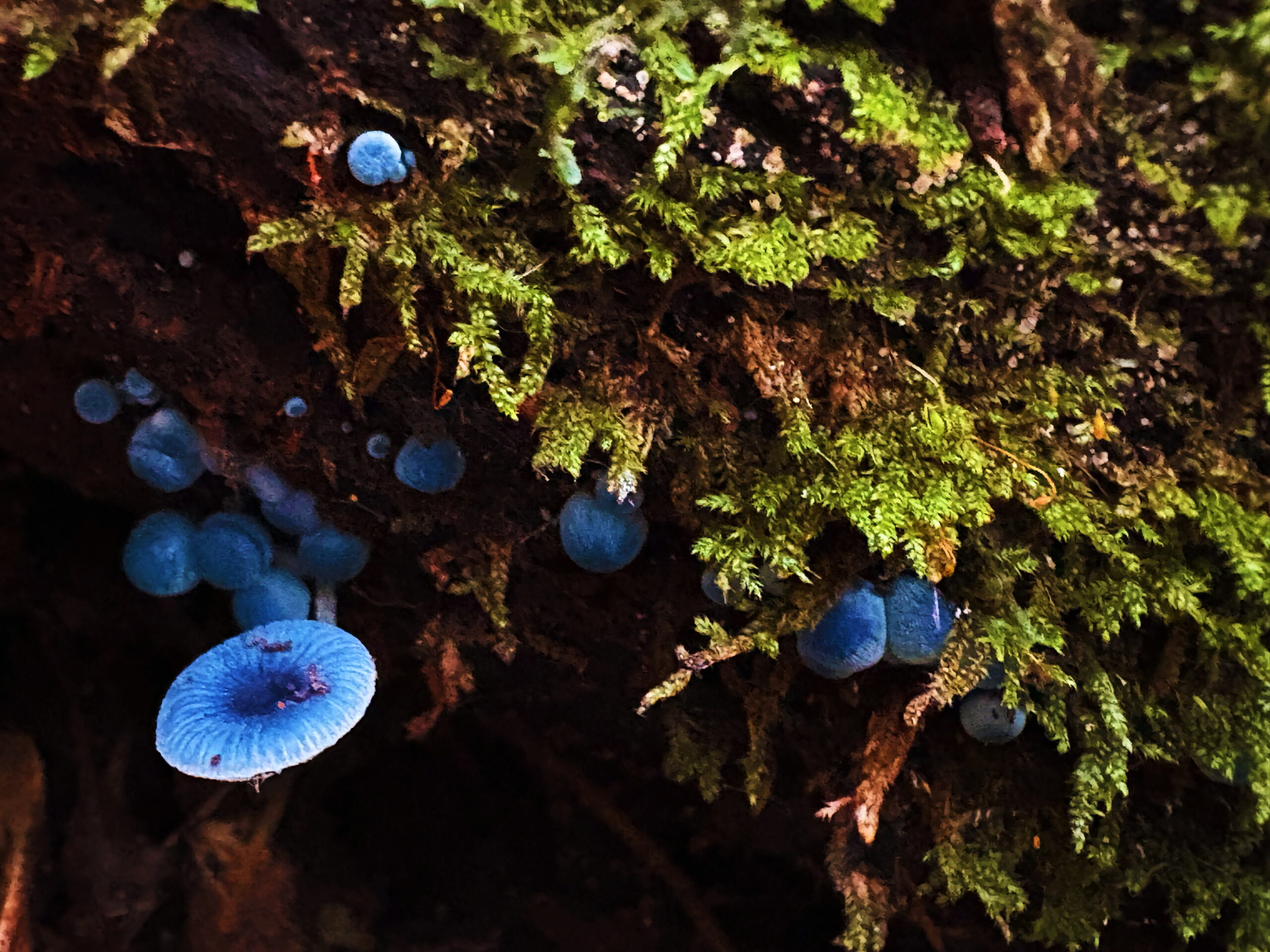
What we have on this island is unique, and we carry the responsibility to hold it in a careful hand. Tasmania’s exceptionally high levels of endemism mean that many species risk extinction before we even know they exist. How many unnamed, unseen and under-appreciated slime-moulds, fungi and cryptofauna live in blissful ignorance on Mount Arthur, unaware of the imminent danger they’re in?
Childhoods like Idunn’s are similarly rare and endangered. However, instead of romanticising them, what if we embraced such a way of living again? What if we truly embodied the role of custodians instead of prioritising capitalism? So much irreversible damage has already been done, and it is a struggle to remain hopeful, but we do still have an opportunity to save what’s left of our forests, and in doing so, what’s left of us.