
It was the best of days, it was the worst of days. The sky was an unblemished blue, the sun was baking my brain. It was the age of reason but I was mad as a hatter. I was struggling up a steep moraine en route to the Anne River and beyond in south-west Tasmania – on crutches. Arms are not made for walking. It takes more effort to lift your body weight with a smaller muscle group. I was battling alone in the heat, carrying only a small day pack. Jane, my girlfriend, carrying most of our gear, had gone on ahead to wait beside the river. It was early 1998, the peak of summer.
writer and photographer ADRIAN FLITNEY
The first time I used crutches, a distance of only two blocks, I had to rest on a park bench, conveniently situated midway. However, in my 30s, it didn’t take long to develop an enviable ability with the sticks. The chronic arthritis in my knees complained about bipedal locomotion, but with crutches I could keep my legs straighter, a position the knees greatly preferred. In addition, elbow crutches allow sufficient flexibility for climbing or descending.
I did several day walks on crutches and now I thought I was ready for an overnight trip. We were going to attempt Schnells Ridge, a trackless, 1,000m grassy peak south of the Anne Range. On my first climb of the ridge, some years earlier, in my conventional bipedal youth, I arrived on the summit plateau in thick cloud. Rain was blowing horizontally. I camped a short distance below the summit. The following day I made a dash for the top in what looked like a break in the weather. However, when I reached the summit, it was sleeting, again horizontally.
It was a change of scene for sure – one of the many faces of summer in south-western Tasmania.
But now, in 1998, the weather was playing proper summer. I reached the high point of the moraine sweaty and cranky. I paused to rest, and here is a squadron of march flies to feast on my blood. I swatted them away furiously, my usual composure crumbling in a swarm of irritation. Having been afflicted twice before, I recognised the symptoms of hyperthermia. My core temperature had risen during the climb.
Anne River
Fortunately, I was only a short distance from the Anne River. On arrival I told Jane, “I need a good cool-off and a rest.”
After lunch, I stripped off and soaked for some time in the cool waters of the Anne River. Once sufficiently chilled, I retired to the tent that we had erected as a fly-free resting zone. As “team” leader I declared a change in plan. “The Ridge is an unrelenting climb at the best of times but I am cooked. Let’s go to Lake Judd instead. It’s not far across the button grass.”
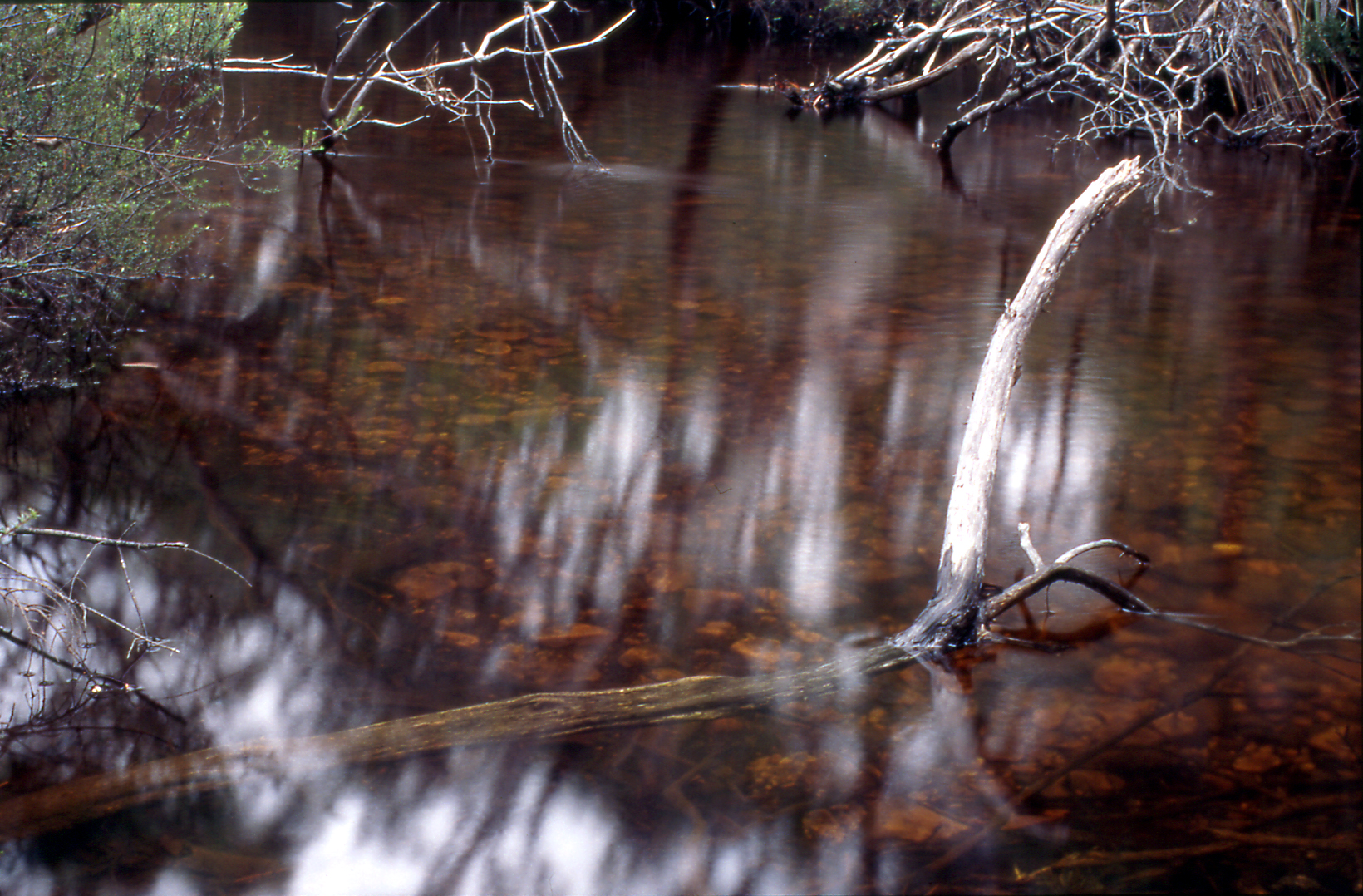
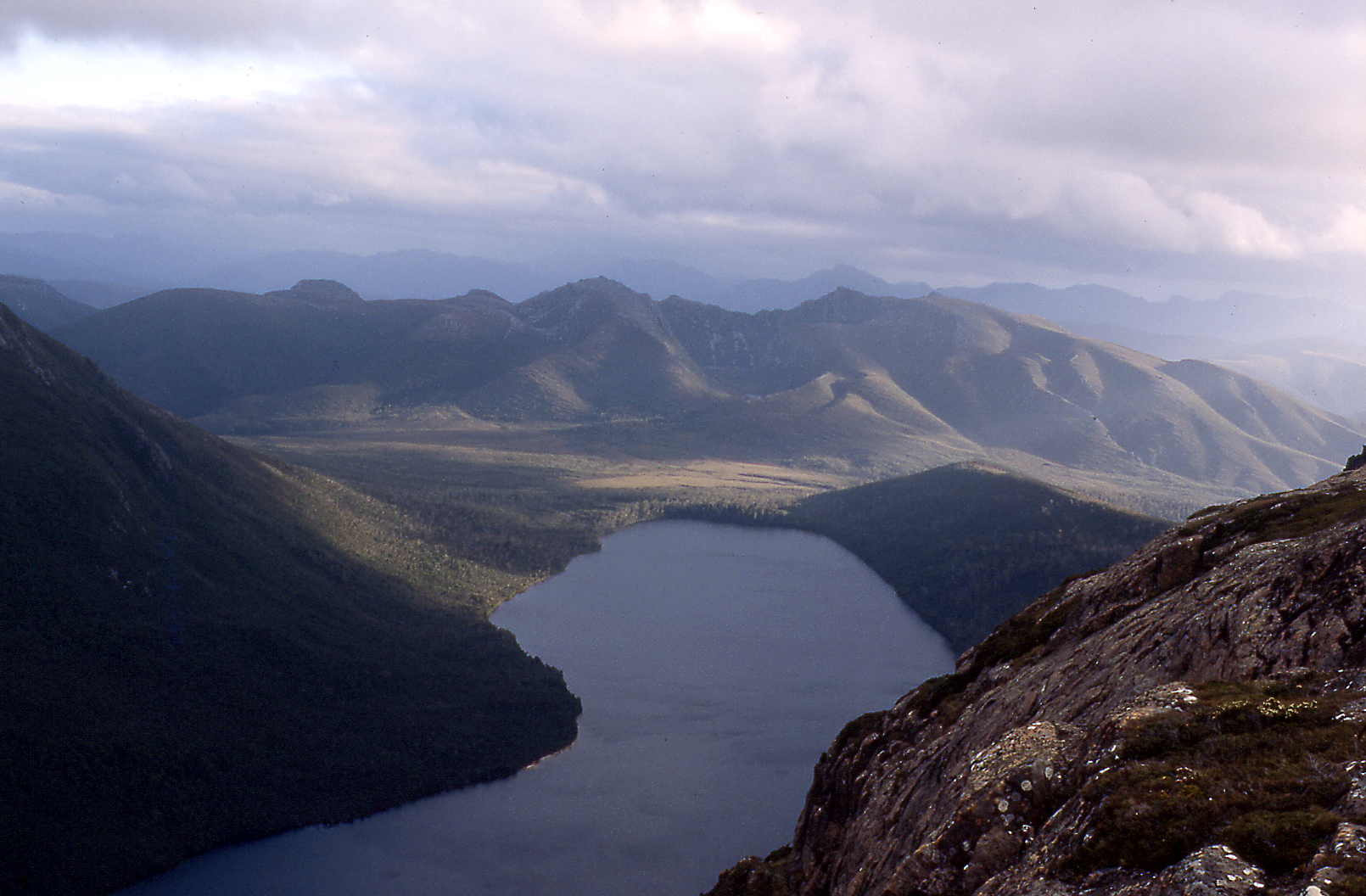
The lake is enclosed on three sides by the stunning cliffs of the Anne Range. We could continue once the sun had slipped from its dominate position in the sky.
By 5pm the air temperature, and my own, had dropped sufficiently that I felt okay to continue. There was still plenty of daylight on the long summer day. The convenient boardwalk soon ran out and we were left with several kilometres of swampy button grass plains.
For those who have not experienced the mud of south-west Tasmania on a pair of crutches, which I presume is the entire readership, I can tell you that it is far from an easy walk. The peat soils in this part of Tasmania are poorly drained and tracks quickly become quagmires. An occasional board placed here or there helped, but the mud frequently swallowed half a crutch which then took considerable effort to pull out. Progress was slow and weary. Jane grabbed my pack and scampered on ahead. So here I was, in the vast south-western wilderness with, literally, only the clothes on my back, and a pair of crutches.
In the final hour of daylight, I climbed the last moraine before the campsite by the lake. There was a fork in the track. To me, born and bred Tasmanian, it was clear which was the main path, but Jane lacked experience in this terrain and I sensed she had taken the wrong route.
“Where are you?” I called to my invisible partner.
A reply came through the trees. “Beside the lake, but there is no room to camp.”
“You have taken the wrong track. Come back uphill.”
It was uncanny carrying on a conversation with someone a considerable distance away and out of sight. Shortly she returned and we completed the small remaining stretch of the main track. We arrived at the campsite nine hours after setting out that morning.
The following day I rose with the sun (hard to believe for those who know the regular early morning somnolence that besets me in civilised locales), keen to take photographs as the mist slowly revealed spectacular, thousand-metre cliffs reflected in the lake. Jane valued her sleep over the unique vista and only emerged from the tent once the rising sun scattered the mist.
“Isn’t it amazing,”I drooled.
“Not bad.”
“Why don’t we stay another night?” I pleaded.
“No! We don’t have enough food.”
Alas, my attempt to persuade my companion that going hungry in return for this unrepeatable natural beauty was a failure. A woman who marches on her stomach. I knew that, but was still a little saddened, for I would never come here again.
Lake Judd
We settled on a compromise – a camp tonight closer to the car. Jane would dump the camping gear at the Anne River and trek the two kilometres to the car to bring more food. We set off mid-morning on a thankfully cooler, cloudier day. The return across the muddy plain was just as energy consuming but it was less frustrating, if only because I knew what to expect. I arrived in solitude at the Anne River late that afternoon. Jane was already well on her way to the car.
I spontaneously burst into tears – tears of joy, tears of sorrow and tears of relief. Joy that I had been reunited, even briefly, with a region, the south-west, that had assumed almost mystical proportions in my imagination after earlier walks in the area followed by an enforced absence. Sorrow for all the trips that I should have done but never did. And relief that I had made the arduous journey without much pain. My knees were still fine and my arms had withstood their greatest test. Yes, I had blisters on my hands despite gloves and all the extra padding on the hand grips of the crutches, but the few remaining kilometres, mostly downhill, to the car would not be troubling.
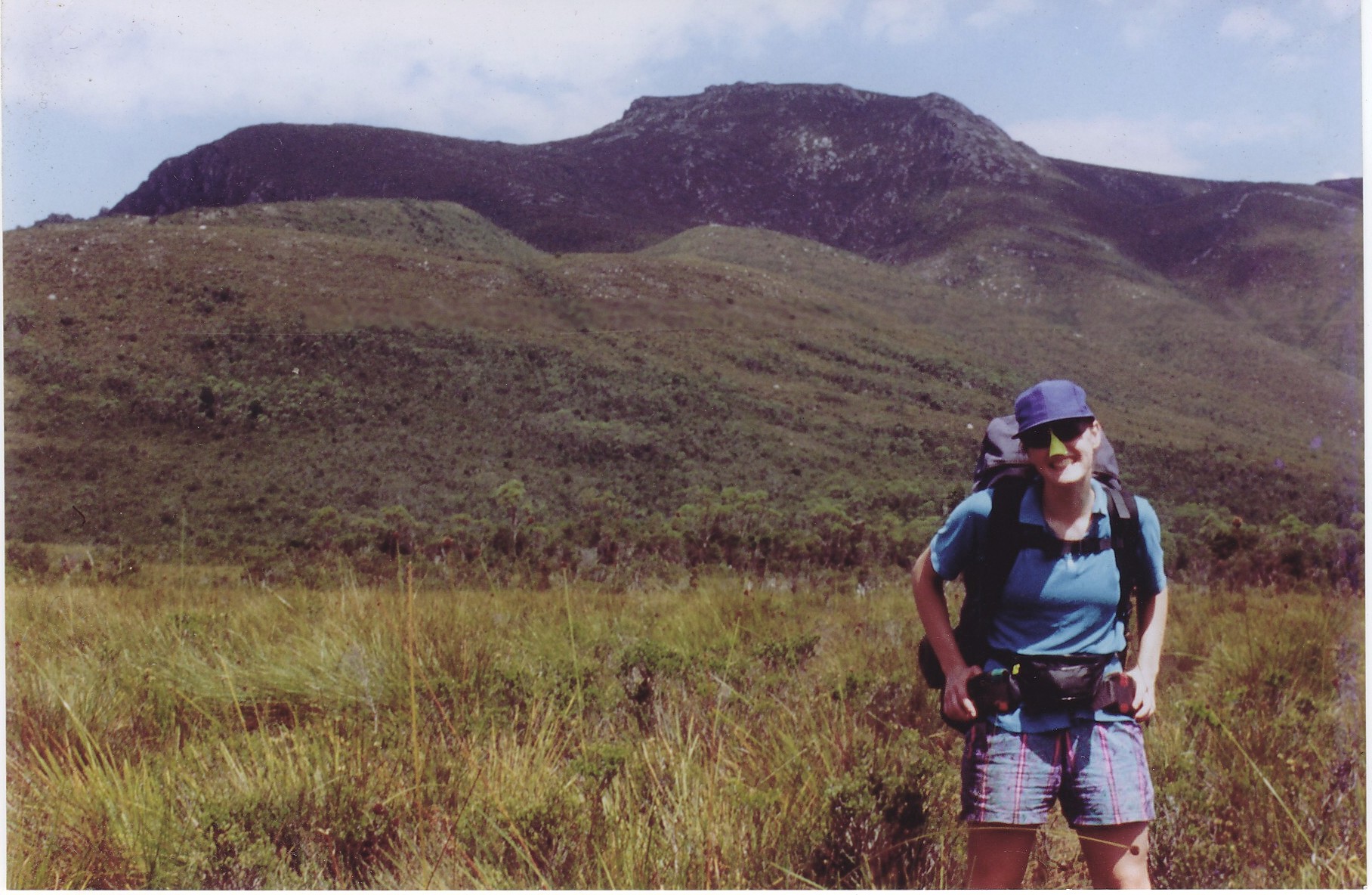
After my catharsis, I erected the tent and then crutched with renewed energy the short distance to the top of the moraine, the one that had troubled me so on the outward journey. From the main track, I followed a short side track up the spine of the ridge. As the sun sank, I sat at a high point and contemplated the expansive view. I saw Jane, complete with sun protection for her nose, returning from the car, crossing the button grass, Schnells Ridge in the background.
She reached the top of the climb and I called, “I am up here.”
“What are you doing there?” she called back.
“What do you think? Admiring the view!”
We laughed as we carried on a conversation at a distance unthinkable in the cacophony of civilisation. How much we have lost in living with our noisy machines.
The final day was a short downhill walk. I was still feeling the effects of heat stress, and Jane was suffering a recurrence of a stomach bug that had bothered her shortly before our trip. So our return was a bit of a slog despite the easy terrain. However, we had good summer walking weather; cool and overcast. Once reunited with the car, we drove to the relative civilisation of Mt Field National Park camping ground to recuperate.
And so ended my last ever overnight bushwalk. There were a few more day-crutching adventures but my knees refused to sustain the activity. A few years later, I pushed my body’s envelope again by bush-wheeling in the Dandenong Range near Melbourne on a wheelchair that I constructed from old bicycle parts, but that is another story.