
T H E P A T C H
writer and photographer PETER GRANT
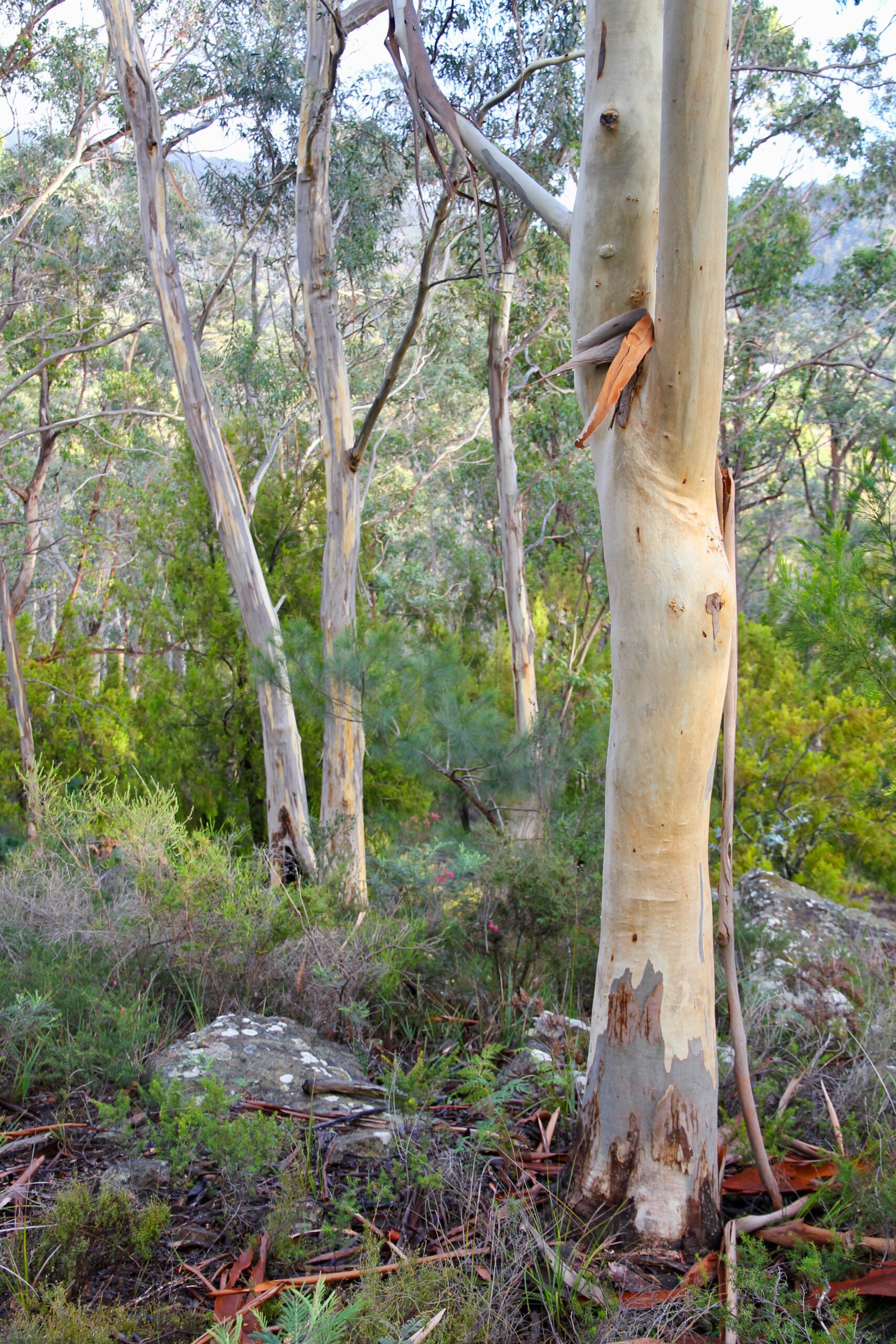
Summer is a time for peeling. If and when the heat finally comes, we’re inclined to peel off warmer layers of clothing. And, if the urge takes us, we may even peel down to little or nothing and dip our pale bodies in Tasmania’s ever-fresh waters. Come mid-summer, parts of The Patch, and especially our silver peppermint trees, are catching that vibe. The peppermint woodland has taken on an exquisitely unruly look. The plain greyish bark of the Eucalyptus tenuiramis has peeled, decorticating extravagantly to uncover the beautifully golden trunks that have lain beneath all year. Cinderella is ready for the ball!
We have a ball of our own, deliberately walking over bits of the prone bark, making them crunch and crackle in a way that satisfies some child-like urge in us. The best sounds, we discover, come from the curly, u-shaped bits of bark, especially after a dry spell.
For a moment I toss around concepts such as parabolic soundwaves, but then I simply surrender to the experience. The sounds we make together – four feet and the curled bark – are varied in such a percussive yet musical way that we imagine we’re creating a piece of music from the sounds. But what to call it? We dismiss A Mid-Summer Symphony on the grounds that it might imply murder, and surely treading on bark is far short of that. For a time A Bark Cantata is a strong contender. But then the frequency of our double crunching, and the coiled shape of the shed bits suggests to us a famous musical duet. Of course! It’s a Barkarolle by none other than Oftenbark.
Decortication is the process of shedding the outer bark, and occurs as a tree matures. Everything that grows has to deal with what it has outgrown. Unless we’ve exposed ourselves to too much sun, we humans generally shed our skin slowly. That gradual form of human skin shedding falls from us almost imperceptibly. Even so it contributes between a third and a half of the volume of house dust. Dusting is partly just cleaning up after themselves.
Spiders and many other invertebrates shed more spectacularly, literally bursting out of their outgrown layer, à la The Incredible Hulk. That exoskeleton, or cuticle, is made of protein and chitin, and is usually translucent and almost weightless once shed. But I’ll confess that didn’t stop me doing a panicked little tarantella when, in a dark corner of our garden shed, a large huntsman’s cuticle dropped on my head.
A peppermint gum tree, rather than climbing out of its former skin (wouldn’t that be something to behold), sloughs off the outer layer in long strips, usually during warmer weather. Besides being a response to a tree’s growth both outward and upward, the shedding of bark may serve other purposes. Some studies suggest that a freshly revealed trunk can actually photosynthesise, albeit at a lesser rate than its leaves. Others suppose that the shed bark also rids the tree of some pests and diseases, the arboreal equivalent of scratching itself. And, of course, the bark adds to the woodland’s fire-promoting litter, advantaging those species, including peppermints, that can germinate and/or regenerate better after bushfire.
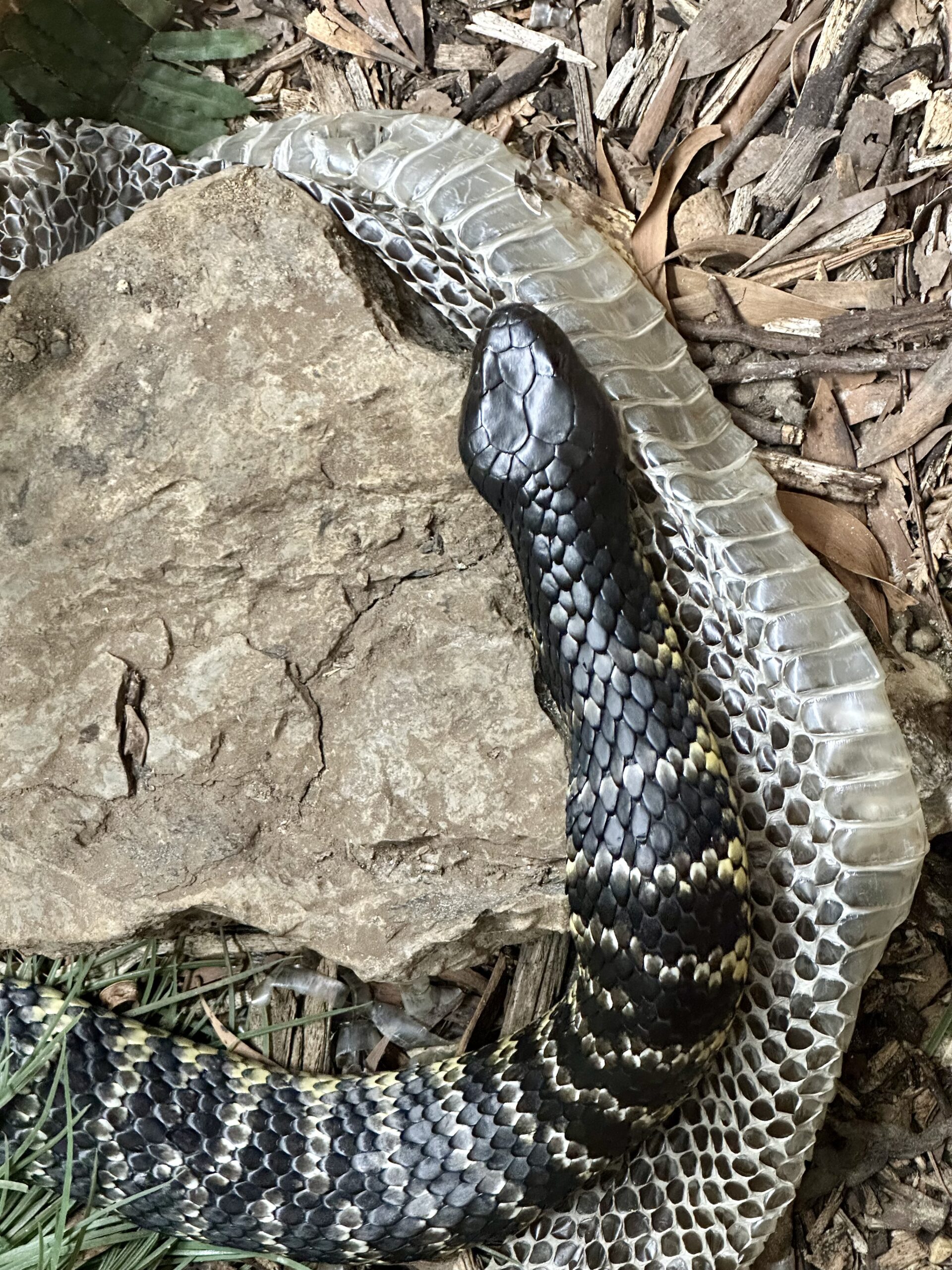
Elsewhere in The Patch, we very occasionally come across some other well-known skin shedders: our reclusive snakes. In the 40 or so years we’ve been walking through this bush, we have seen snakes on only four or five occasions. Most of those were tiger snakes; one a much smaller white-lipped snake. Undoubtedly on the thousands of walks we’ve undertaken here, we will have passed snakes many times without seeing them. Despite all the fear and hype surrounding them, snakes have little interest in coming into contact with humans. We are not their prey, and a snake strike, especially one that injects venom, needlessly uses up its resources.
A snake’s skin shedding is technically known as ecdysis. They shed skin regularly as they grow; the whole skin in one go. They may do this three or four times a year, sometimes more often. As they outgrow their outer layer, it becomes stiff and dry. The growing snake will rub against a stick or rock in order to break open the outer layer, starting at the head end. Once that opening is made, it will wriggle itself out of the constricting caul – bit by bit – by squeezing through tight spots, and flexing its muscles to aid the separation. The whole process may take days, even weeks, and the snake is especially vulnerable to predators at this time. So ecdysis will generally be done in a secluded spot.
The shed skin, or epidermis, is translucent and very lightweight. It still carries the imprint of the snake’s scales, which gives it the look of a slender stocking of bubble wrap. It’s much easier to find than its former owner, given it has neither the need nor the means to slither away.
The renewal that comes through shedding, whether by animal or plant, has long been given a metaphorical slant. Whether we speak of rebirth, renewal, or a fresh start, the shedding of the old to make room for the new has an attractive symbolic power. You can look at it literally or metaphorically, but either way shedding is absolutely necessary to the continuation of a healthy life.