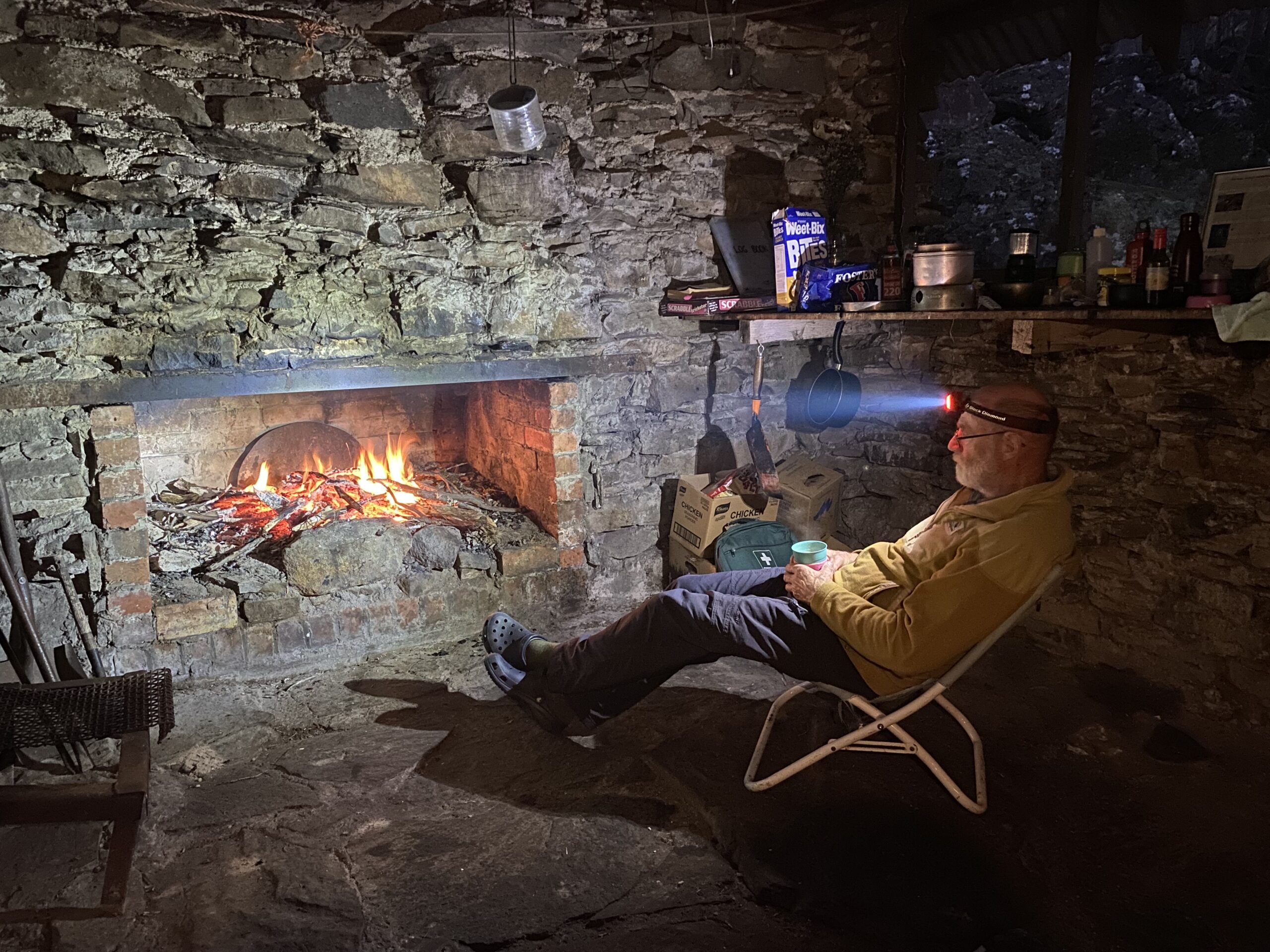
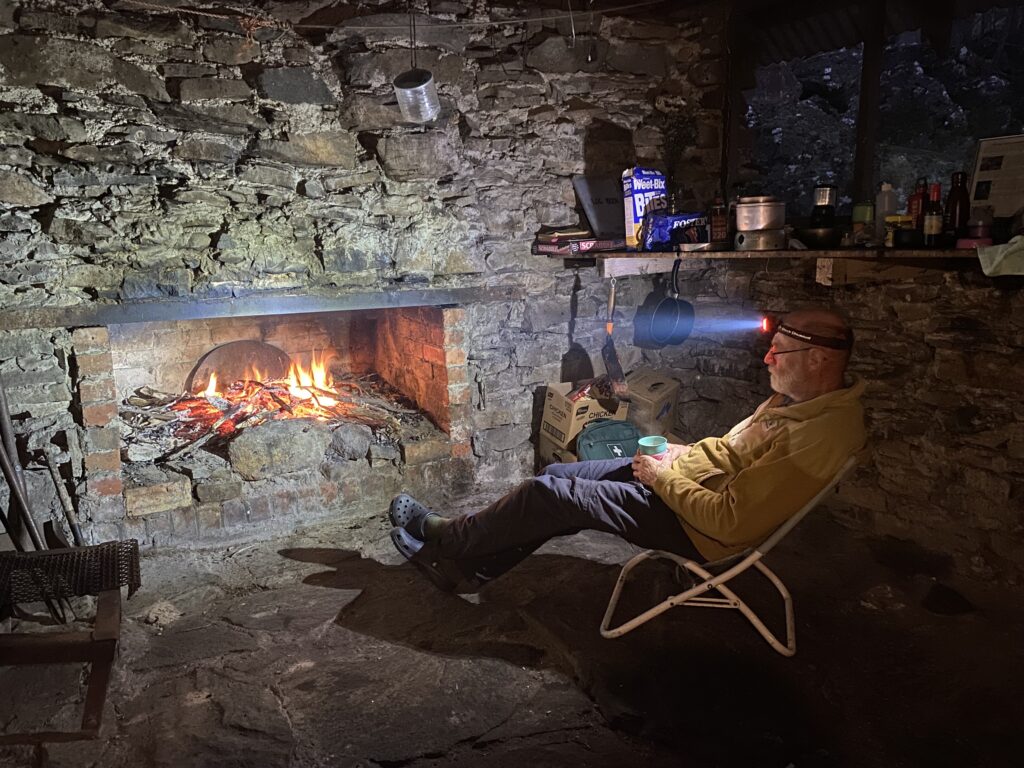
Rob Shaw contemplates a drink, an open fire and life in a Tasmanian wilderness hut
In Tasmania, the definition of the word “hut” is as broad and vague as for the word “shack”. Anything from palatial to decrepit covers both.
writer and photographer ROB SHAW
When unable to sleep, some people count sheep. I count huts. Not just any huts. They have to be remote Tasmanian huts, with preference given to those I have slept in.
Lying in the dark with eyes closed, I transport myself to the many varied constructions of vastly different age and reliability where, paradoxically, I probably yearned for the comfort of the bed in which I’m struggling right now to sleep.
Whether it’s their design, location or simply character, there is something magical about these buildings. As stated in the introduction to the brilliant book Tasmanian High Country Huts, by Simon Cubit and Des Murray, “Stripped of pretension by their necessary practicality, they possess a basic honesty and warmth that resonates with many.”
They certainly resonate with me. I cherish memories of hot chocolate and card games with my kids, or meals of freshly-caught trout accompanied by a glass of port with hiking companions, particularly in areas where roaring fires are allowed and when inclement weather can be heard lashing the building’s exterior.
In Tasmania, the definition of the word “hut” is as broad and vague as for the word “shack”. Anything from palatial to decrepit covers both. A huge contrast exists between state-of-the-art, triple-glazed buildings just a few months old, and run-down former hunting bases which were built in a hurry with limited tools more than a century ago.
The modern luxury of huts on the Three Capes and Overland Tracks have a huge role to play in promoting our state’s wilder side, while the magnificent new Tahune Hut at the base of Frenchmans Cap can lay claim to being one of our most spectacular, and highest, wilderness refuges. These, however, were mostly constructed with tourism in mind, and it is those established generations ago for grazing, hunting, mining or recreation that possess the most charm.
Universally devoid of right angles or level surfaces, they would have modern architects despairing. Comfort is not an abundant commodity, weatherproofness is questionable and local fauna and flora think they belong there as much as visiting humans.
But spending a night in such a place, with like-minded companions, is a quintessential Tasmanian wilderness experience. Sharing meals, stories and maybe a tipple by candlelight, knowing mobile phone reception is as likely to wander in as a thylacine, is a surprisingly liberating way of passing an evening.
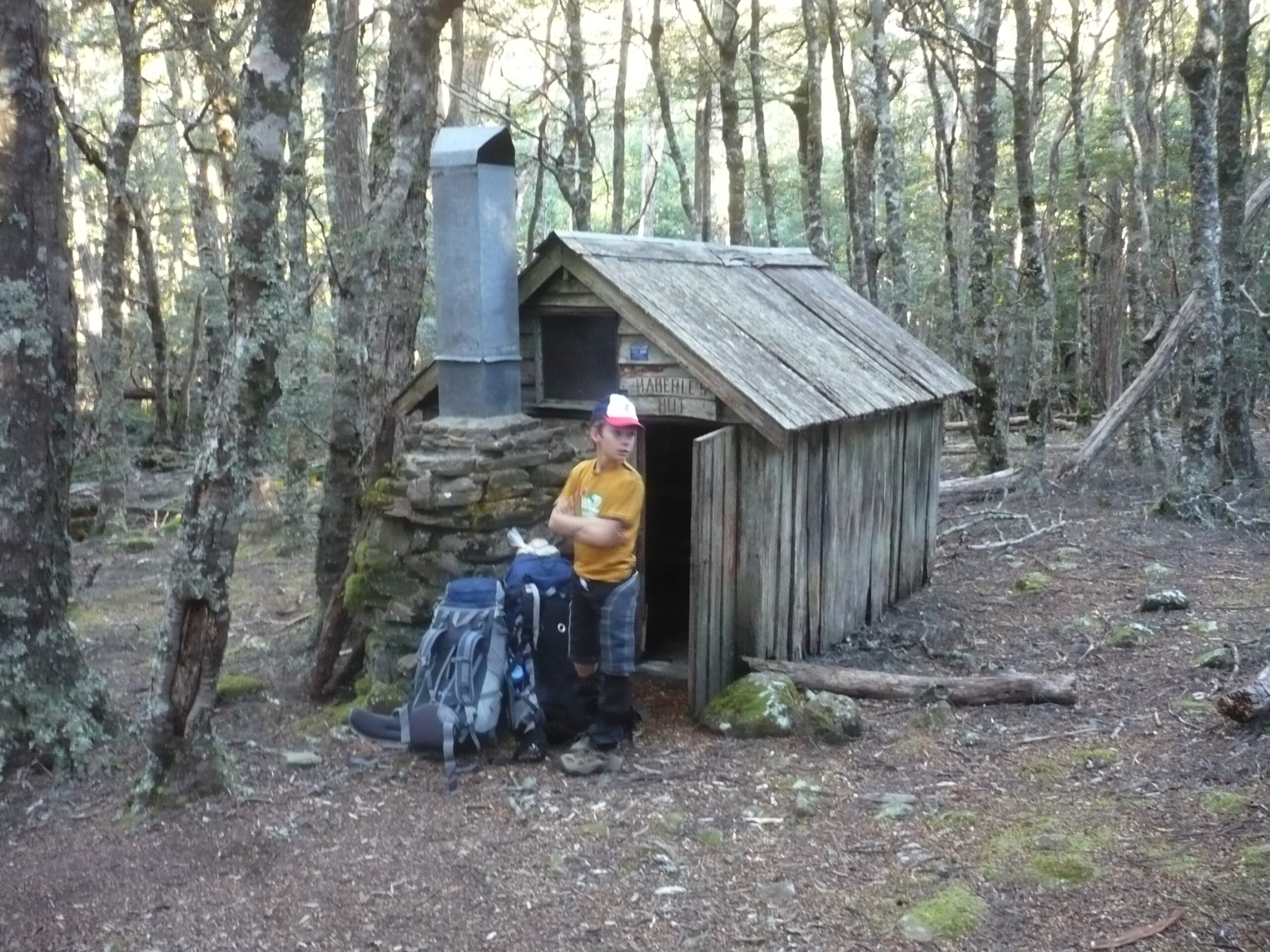
A lovely night with the son in Haberle’s Hut
And there are so many of these huts just waiting to be explored, providing visitors have the energy and inclination to reach them. Cubit and Murray estimated that by the 1940s hundreds of snaring huts existed across the Tasmanian high country, the vast majority of which have long gone. They were established by pioneering characters with remarkable back stories: the likes of Basil Steers, Reg Dixon, George Lee, Ray Miles, Reg Hall, Dick Reed, Bert Nichols and Paddy Hartnett have left a Tasmanian legacy as tangible as any politician.
Although so much of their work has been lost, the huts that remain represent a page of our state’s cultural history that must be preserved – and indeed is by the excellent efforts of the Mountain Huts Preservation Society.
“Part of their charm is their simplicity,” wrote Simon Cubit, who was chairman of the Mountain Huts Preservation Society for 17 years. “These were buildings designed to provide short-term shelter in tough climatic conditions. Typically constructed of local materials, they were often built quickly, generally without any expectation of permanence.
“Those huts that survive … are buildings of significant character. All have fascinating stories. The huts reflect personal stories of the individuals who built them. Many of these stories are quite special, for people who pitted themselves against the unyielding mountain environment often led lives beyond the urban imagination.”
If walls could talk, these would have much to say.
For example, Ironstone Hut, on the shores of the comically-named Lake Nameless, dates to 1917 when, elsewhere in the world, millions were dying in French mud or revolting against Russian tyranny.
Of Steers’ many retreats, Smurf Hut (so-called because of its head-banging dimensions) was cunningly hidden in a dense Wurragarra Valley forest in an effort to avoid detection. Forty years later, it still takes some finding, but subsequently comes with a virtual guarantee of privacy.
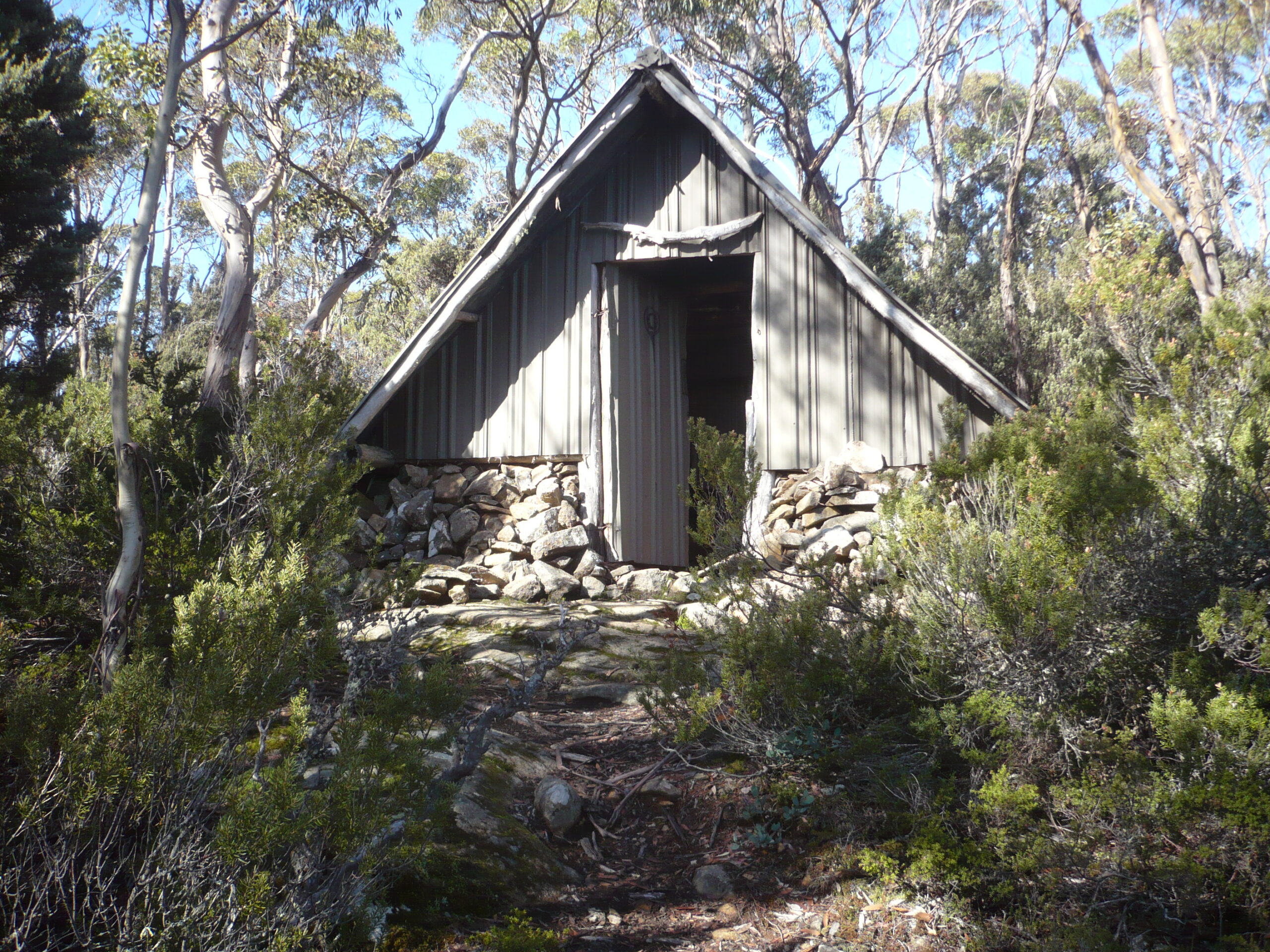
Solitary Man’s Hut on Tiger Lake
Similarly, Solitary Man’s Hut, just across the Mersey Valley, was constructed in 1983 with the intention of remaining undiscovered. When I tracked down and interviewed Solitary Man for The Examiner in 2008, I found him to be jovial, friendly, knowledgeable of bush ways and simply someone who at the time was happier in the company of possums than people. As if to prove the point, my first visit to his hut found one such marsupial sleeping on the cramped bed in the A-framed construction.
Mount Field National Park is quite the ground zero for wilderness huts. While Twilight Tarn (1927) comes complete with fascinating relics of the area’s skiing history and Peterson Memorial (1960) has the momentous claim to fame of being opened by Sir Edmund Hillary just seven years after scaling Everest, it is Lake Newdegate Hut which wins the charm award hands down.
Built by the Tasmanian Ski Club in the mid-1930s, it is located a few paces from the edge of the water surrounded by picturesque pencil pines with a backdrop of the Rodway Range. It is a photographer’s delight, particularly at dawn when the sun turns the mountains orange and the still waters offer perfect reflections. Inside, the hut is most politely described as rudimentary, complete with missing floorboards and easy access for passing wildlife, but the view more than trumps such minor detractions.
Lake Meston and Junction Lake Huts, just a few hours’ walk apart in the Walls of Jerusalem National Park, were both designed by Reg Hall and built by Dick Reed in the early 1970s and were, according to Cubit and Murray “the product of an explicit quest to produce the perfect small mountain hut”. Watching morning sunlight glinting off the Upper Mersey’s crystal waters cascading past the latter, I think they succeeded.
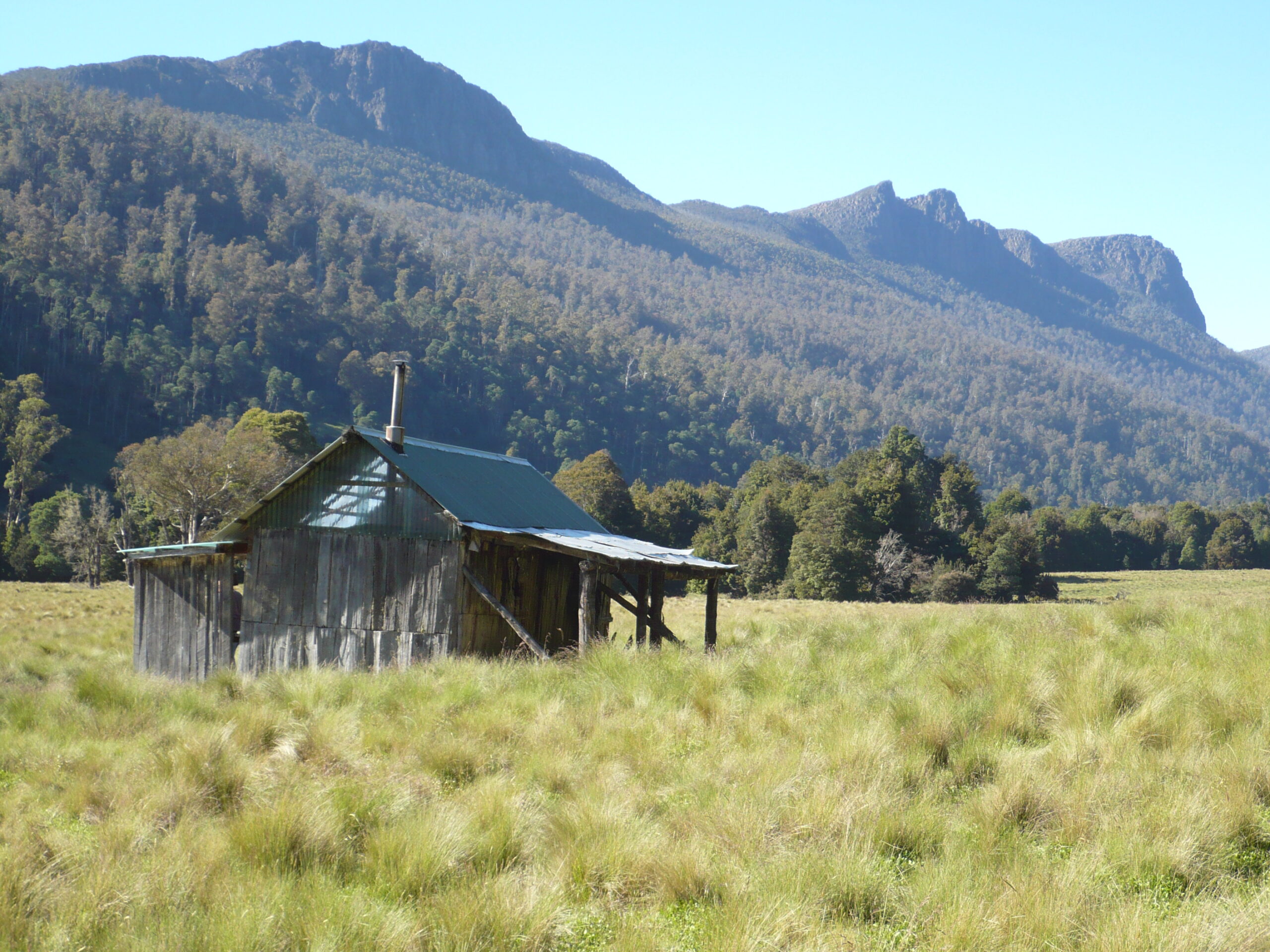
The privately-owned but publicly-available Reg Wadley Memorial Hut (1985) and Lees Paddocks Hut (1940) in the Mersey Valley both command magnificent views of the surrounding Cathedral Mountain and Mount Pillinger and evoke fond memories of innocent nights spent with offspring before our lives were claimed by mobile phones.
Lees Paddocks Hut in the shadow of Cathedral Mountain
The same could be said for Haberle’s Hut on the Great Western Tiers, built in 1931 by Caveside farmer Edward Haberle and lovingly restored over 17 months in 1981-82 by Charles Crowden, while the warm welcome of the Scott Kilvert Memorial Hut on Lake Rodway in the shadow of Cradle Mountain represents a striking contrast to the conditions surrounding the tragic 1965 story which led to its existence.
The list goes on. Mount Wellington/kunanyi is home to several well-built stone huts after fires claimed some of the more spectacular early wooden versions; the thick walls of the High Camp Memorial Hut on the Mount Anne Circuit have provided equally welcome protection from unforgiving elements; and eternal gratitude is owed to the state’s climbing fraternity for the John Jacques Memorial Hut in Ben Lomond NP.
Generally, I can tally up nearly 60 huts I have visited, about 25 I have slept in, a dozen where I have stayed multiple nights. At this point, lying bed counting huts, I either finally nod off or give up, hit the bedside light and resume reading some book about Tasmania’s high country heritage.
Rob Shaw’s 10 favourite wilderness huts
Ironstone Hut (Lake Nameless, Great Western Tiers)
Lake Newdegate Hut (Mount Field NP)
Smurf Hut (near Warragurra Creek, Cradle Mountain NP)
Reg Wadley Memorial (Upper Mersey Valley)
Solitary Man’s (Tiger Lake, Walls of Jerusalem NP)
Junction Lake Hut (Upper Mersey Valley, Walls of Jerusalem NP)
John Jacques Memorial Hut (Carr Villa, Ben Lomond NP)
Scott Kilvert Memorial (Lake Rodway, Cradle Mountain NP)
Haberle’s Hut (Caveside, Great Western Tiers)
High Camp Memorial Hut (Mount Anne Circuit, South West NP)
"Rob Shaw was born and raised in England where he trained and worked as a journalist. Coming to Australia in 2002 with his young family was supposed to be temporary, but Tasmania had other ideas. He has since spent his time working as a sports reporter, exploring our state’s wilderness and realising that he is staying here for the term of his natural life.
"